

Maddy summarySB 270 appropriates $500 million from the general fund to the New Mexico Department of Health for fiscal year 2026 to support the operations of federally qualified health centers (FQHCs). This funding directly affects FQHCs across the state, which provide primary care services in underserved communities. The bill establishes a one-time appropriation with unspent funds reverting to the general fund by the end of fiscal year 2026. It does not create new programs but allocates existing state resources to sustain current FQHC operations.
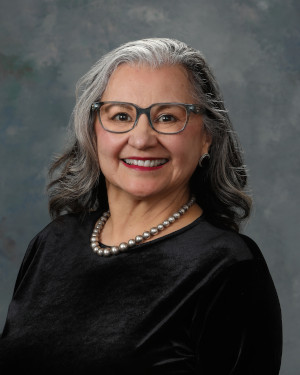
Sen. Antoinette Sedillo Lopez
Sponsored bills
Maddy summarySB 373 requires New Mexico state agencies and courts to notify military installation authorities when a military member is involved in a child abuse, neglect, or domestic violence case. It amends the Abuse and Neglect Act to mandate that law enforcement and child welfare agencies inform designated military officials about such allegations, and updates the Family Violence Protection Act to require remote court appearances for domestic violence protection hearings. The bill also mandates that courts send copies of domestic violence protection orders to military installations if a party (victim or alleged perpetrator) is a service member. These provisions establish new coordination requirements between state legal systems and military authorities in New Mexico.
Maddy summaryThis bill (SJR 9) proposes amending New Mexico's constitution to create an independent commission that would redraw state legislative district boundaries after each federal census. The commission would consist of nine members: three each from the two largest political parties and three unaffiliated members reflecting New Mexico's demographics. It would be required to follow non-dilution rules for minority voting rights and explicitly cannot consider incumbents' addresses or party voting history when drawing districts. If approved by voters, this commission would replace the legislature in creating redistricting plans, aiming to reduce partisan influence in the process.
Maddy summarySB 209 creates a permanent funding source for rural libraries in New Mexico by appropriating $29.5 million from the state general fund for fiscal year 2026 and all future years. The bill directly affects rural libraries across the state, providing guaranteed annual funding to support their operations and services. Key provisions include prohibiting unspent funds from reverting to the general fund at year-end, ensuring the money remains dedicated to the libraries. This is a straightforward funding mechanism with no new regulations or eligibility requirements beyond the existing definition of rural libraries. The bill does not change library services or create new programs, only securing ongoing financial support.
Maddy summarySB 322 restricts strip or cavity searches in New Mexico juvenile detention facilities to cases with probable cause for dangerous contraband and superintendent authorization. It requires detailed incident reports documenting the search rationale, methods, and results, and mandates that searches use the least invasive approach possible. The bill also prohibits cameras or filming in shower and toilet areas of detention facilities to protect youth privacy. These provisions directly affect juvenile detention facilities and the children held within them.
Maddy summarySB 177, the U Visa Certification Act, creates a state process for New Mexico agencies to certify victims of qualifying crimes for federal U visas. It directly affects crime victims who have assisted law enforcement with investigations, including those experiencing domestic violence, trafficking, or assault. The bill requires certifying agencies (like police departments or district attorneys) to process certification requests within 30 days (14 days for urgent cases), provide written denial reasons with appeal options, and establish internal review steps before victims can seek state department of justice review. This replaces the current federal-only certification process with a streamlined state system to help victims access immigration relief.
Maddy summarySB 222 shifts oversight of caregiver background checks from the New Mexico Department of Health to the Health Care Authority. It expands the list of disqualifying felony convictions to include sex trafficking, cruelty to animals, and specific offenses like child abuse, elder abuse, and assault on peace officers. The bill also grants the Health Care Authority power to add more disqualifying crimes through rules and requires care providers to submit fingerprints for nationwide criminal history checks before hiring. All background check results remain confidential, with limited disclosure only for employment decisions and specific appeals processes. This directly affects caregivers, care providers (like hospitals and facilities), and the agencies managing these checks.
Maddy summarySB 429, the "Reinstatement of Parental Rights Act," allows parents whose rights were legally terminated (or relinquished) to petition courts to regain custody of their children. It requires petitioners to prove a material change in circumstances that enables safe parenting, show the child’s best interest, and meet a 12-month waiting period (with exceptions for minors nearing 18 or extraordinary cases). The bill mandates specific documentation, including child consent (if 10+), a transition plan to return the child to the parent within 90 days, and adoptive parent/guardian consent unless their rights are first terminated. It directly affects former parents, children in foster care or adoption, and child welfare agencies by establishing new court procedures for reinstatement petitions.
Maddy summarySJR 4 proposes adding a new constitutional right to clean air, water, soil, healthy ecosystems, a safe climate, and preserved natural/cultural environments for all New Mexicans. It would require state, county, and municipal governments to act as trustees of natural resources for current and future generations. The amendment is self-executing (taking effect without further laws) but prohibits monetary damages for violations. This resolution, currently stalled after being postponed indefinitely in June 2025, must be approved by voters at the next general election to become part of New Mexico's constitution.
Maddy summarySB 105, the Social Work Licensure Interstate Compact, allows social workers licensed in one participating state to practice in other member states without obtaining separate licenses. It directly affects licensed social workers (including clinical, master's, and bachelor's level) and their clients across state lines, particularly supporting military families who relocate frequently. The bill creates a system where a "multistate license" issued by a worker's home state authorizes practice in all compact states, eliminating duplicate application processes and reducing administrative burdens. Key provisions include requiring states to share disciplinary records and enabling social workers to provide services via telehealth across member states while maintaining public safety protections through existing state licensing authority.