

Maddy summaryHB 297 creates a new computer science licensure endorsement for New Mexico teachers, requiring specific qualifications to teach computer science at any grade level. Teachers seeking this endorsement must meet one of six pathways: 15 college credits in computer science, passing a certification exam, having two years of industry work experience with verification, holding an industry certification, completing 60 hours of relevant professional development, or demonstrating three years of teaching experience. The bill appropriates $250,000 from the general fund for teacher professional development related to this endorsement, to be spent in fiscal years 2026-2027. This directly affects current and aspiring teachers who want to add computer science to their license, particularly those in secondary education. The requirement applies to all grade levels but specifies secondary licensure pathways in the underlying statute.
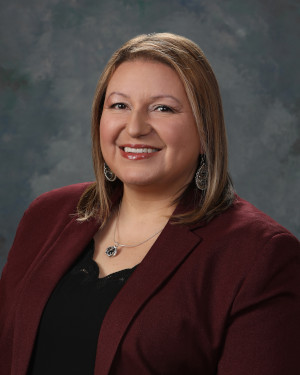
Rep. Anita Gonzales
Sponsored bills
Maddy summaryHB 52 expands New Mexico's existing rural health care practitioner tax credit to include additional health care providers working in underserved rural areas. The bill adds professions like pharmacists, nurse practitioners, clinical social workers, physical therapists, and emergency medical technicians to the list of eligible practitioners who can claim the credit. Eligible providers must work at least 1,584 hours annually in a designated rural health underserved area, with credit amounts set at $5,000 for physicians/dentists or $3,000 for the newly included professions (half that amount for 792-1,583 hours). The credit, which can be carried forward if it exceeds tax liability, requires providers to apply through the Department of Health for certification before claiming it on their tax return.
Maddy summaryHB 126 appropriates $3 million from the general fund to the New Mexico Department of Agriculture for soil and water conservation districts statewide during fiscal year 2026. The funding supports districts' regular operations and programs, as required by state law (Sections 73-20-25 through 73-20-48 NMSA 1978), including activities like erosion control and water management. Any unspent funds at year-end would revert to the general fund. This bill directly affects conservation districts across New Mexico, providing them with dedicated resources for their statutory duties.
Maddy summaryHB 254 modifies New Mexico's rules for retired educators returning to work with school districts. It allows retired educators who haven't worked for at least 90 days after retirement to keep their retirement benefits while returning to part-time or low-salary jobs (under $15,000 annually), without needing to suspend benefits. The bill also extends the maximum return-to-work period from 36 to 84 months and requires an application process for approval. These changes directly affect retired public school employees seeking to return to employment with local school districts. The bill aims to provide greater flexibility for retired educators to rejoin the workforce while maintaining their retirement benefits under specific conditions.
Maddy summaryThis bill creates a five-year pilot program to deliver preventive health care services at public schools in underserved areas of New Mexico. It establishes a "hub-and-spoke" model where a central health center (hub) in San Miguel County partners with five or more school districts (spokes), using cooperative care teams (including school nurses, primary care providers, and mental health specialists) to provide screenings, checkups, sports physicals, and counseling. The program, funded with $1.75 million from the general fund (2026-2030), requires the Department of Health to collect data on student health, academic outcomes, and public health impacts, with final reports due by 2030. It directly affects students in participating schools within the state's northeast region.
Maddy summaryHB 528 creates a state-funded program to provide paid high school internships in New Mexico. It establishes a $10 million grant fund administered by the Workforce Solutions Department, requiring host organizations (like businesses, schools, or nonprofits) to contribute partially toward internship costs while partnering with qualified internship programs. These programs must offer support services (such as career counseling and financial literacy training) and report metrics like internship completion rates and student placement outcomes. The bill directly affects high school students seeking work experience, host organizations providing paid roles, and schools or nonprofits managing internship placements.
Maddy summarySB 107 establishes a STEM Center of Excellence at New Mexico State University (NMSU) focused on innovation in science, technology, engineering, and mathematics (STEM). It creates a statewide STEM Innovation Network with NMSU as the principal hub, connecting up to eight regional hubs and tribal hubs for federally recognized tribes to improve access to STEM education and career opportunities. The bill requires the network to coordinate with schools, employers, and tribes, develop annual reports, and uses $6 million in state funds (2026-2028) to support its operations. This directly affects students, educators, tribal communities, and schools by expanding STEM pathways and collaboration across public institutions.
Maddy summaryHouse Joint Memorial 5 requests New Mexico's legislature to support federal protections for the Upper Pecos Watershed. It urges federal action to permanently withdraw lands from mining claims and advocates for congressional passage of the Pecos Watershed Protection Act to safeguard water resources, cultural heritage (including ties to Pecos Pueblo and Pueblo of Tesuque), and local economies dependent on agriculture, recreation, and clean water. The memorial emphasizes the watershed's ecological sensitivity and recovery from past mining impacts, without opposing mining generally.
Maddy summaryHB 263, the Hospital Price Transparency Act, requires all New Mexico hospitals to publicly post detailed pricing information online. Hospitals must provide a machine-readable digital file showing standard charges (including gross rates, average negotiated rates with insurers, and cash prices) for all services, plus a consumer-friendly list of at least 300 "shoppable" services (like MRIs or lab tests), including the 70 services mandated by federal Medicare. This directly affects hospitals by mandating transparency on costs for both insured and self-pay patients, with penalties for non-compliance including restrictions on debt collection actions during violations. The bill aims to give consumers clear, accessible pricing data to make informed healthcare decisions.
Maddy summarySB 81 creates the New Mexico Property Insurance Program Association Board to administer the state's Fair Plan, which provides property insurance to residents and businesses unable to secure coverage in the regular market. The board, composed of nine members representing insurers, consumers, climate science, and risk management, will set actuarially sound premium rates (capped at $1 million for residential properties and $5 million for commercial properties) and establish operational rules. This directly affects property owners in high-risk areas and insurers required to participate in the Fair Plan. The bill also mandates that rates reflect expected losses, expenses, and reinsurance costs while ensuring equitable access to insurance.