

Maddy summaryHB 491 allows private inspection companies to provide building inspection services to governments, contractors, and homeowners in New Mexico, aiming to improve efficiency and safety. The bill requires private inspection companies to employ certified building officials with specific experience and limits inspector employment to reduce duplication. It clarifies the Construction Industries Licensing Act to eliminate redundant licensing, nonuniform standards, and jurisdictional conflicts between inspection agencies. This directly affects local governments, construction contractors, homeowners, and private inspection businesses by changing how inspections are conducted and licensed.
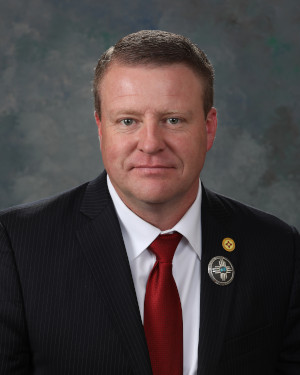
Rep. Jon Henry
Sponsored bills
Maddy summaryHB 511 creates a tax credit for businesses renovating qualifying retail centers in New Mexico, offering a 10% credit on renovation costs (up to $1.5 million per project). It applies to projects renovating at least 50% of a retail center's square footage, including construction, energy efficiency upgrades, and accessibility improvements, provided the center has three or more retail businesses and meets zoning requirements. The credit is capped at $15 million total per year across all claims, with businesses required to apply for certification within one year of project completion. This policy directly supports retail property owners and developers seeking to revitalize commercial spaces through tax incentives.
Maddy summaryHB 432 would require schools to report students with persistent unexcused absences to juvenile probation after interventions, potentially triggering neglect investigations. It would make it a crime for parents to allow continued school absences, with penalties including $50-$100 fines for a first offense or up to six months in jail for repeat offenses. The bill also allows suspending a student’s driving privileges for up to 90 days on a first offense and up to one year for subsequent offenses. This legislation directly affects parents of chronically absent students and school districts implementing attendance enforcement.
Maddy summaryHB 564 establishes the New Mexico-Ireland Trade Commission within the state's economic development department to promote bilateral trade and investment between New Mexico and Ireland. The commission, composed of members appointed by legislative leaders and the governor (including representation from agriculture, energy, tribal communities, and Irish-American groups), will focus on advancing trade in technology, agriculture, and energy sectors. It must submit annual reports to state leaders starting in 2026, detailing findings and recommendations to strengthen economic ties. This bill creates a new administrative body without altering existing laws or imposing direct costs on businesses or residents.
Maddy summaryHB 210, the Vacant Rural Building Act, allows small businesses (employing 50 or fewer full-time employees) to occupy vacant commercial buildings in rural municipalities (populations ≤50,000) without full compliance with standard building codes. It requires rural municipalities or the state construction commission to adopt rules by January 2026 that permit variances only for safety-critical issues, excluding non-essential compliance costs. The bill mandates that property owners or businesses must address only life-safety hazards identified by code officials, not all building code requirements. This aims to reduce renovation costs for small businesses while maintaining public safety standards, using historic building code standards as a model. The act directly affects rural municipalities, small business owners, and property owners of vacant commercial buildings.
Maddy summaryHB 372 amends New Mexico's Off-Highway Motor Vehicle Act to update vehicle definitions and registration fees. It sets a $17 registration fee (with $5 covering division costs and $12 going to a motor vehicle fund) and an optional up to $40 user fee for off-highway vehicles like ATVs, snowmobiles, and recreational off-highway vehicles. The bill also clarifies nonresident permit fees ($17 for two years) and updates safety rules, such as prohibiting operation under the influence and restricting vehicle use near livestock structures. These changes directly affect off-highway vehicle users and improve fee enforcement and fund distribution systems.
Maddy summaryHB 351 provides $200 million in zero-interest loans to political subdivisions (like cities or counties) in Chaves County for repairing or replacing public infrastructure damaged by the October 19, 2024 storm, including flood or debris flow damage. The state funds these loans from the general fund for fiscal years 2026-2027, requiring recipients to repay the loan first using federal funds they receive for the same projects. Any unused funds by the end of 2027 would revert to the state general fund. This bill directly affects Chaves County entities that qualify for federal storm recovery assistance.
Maddy summaryHB 403 increases the percentage of oil and gas tax revenue distributed to New Mexico's Oil and Gas Reclamation Fund from two-nineteenths to 19.7 percent, providing more funding for cleanup efforts. The bill requires that at least $40 million or 5% of the fund's average value over the past three years be used annually for surveying abandoned wells and planning their reclamation, while also capping energy education spending at $150,000 per year. It clarifies that the state can plug wells on federal lands without bonds and later seek reimbursement from oil and gas operators through legal action. This legislation would expand resources for cleaning up abandoned oil and gas sites and improving environmental conditions across New Mexico.
Maddy summaryHB 580 creates a special elk-themed license plate for New Mexico vehicles, allowing owners to pay a $25 initial fee (plus $10 annually) to support wildlife conservation. The revenue splits: $10 covers plate production costs, while $15 (plus all renewal fees) funds the state's "Share with Wildlife" program in the Game Protection Fund. The bill requires the Department of Game and Fish to design the elk logo and mandates that plate issuance may stop after 2031 if annual sales fall below 50% of the 2026-2031 average. This affects vehicle owners who choose the plate, with no personalized designs permitted.
Maddy summaryHB 437 creates a tax credit for New Mexico residents who donate to qualifying foster care organizations. The credit provides $500 for most individuals and $1,000 for married couples filing jointly, with unused portions carried forward for up to five years if they exceed current tax liability. To qualify, organizations must have federal 501(c)(3) status, serve at least 200 foster care youth in New Mexico, and spend at least half their budget on foster care services like medical care, education support, and activities promoting normal childhood experiences. The credit applies to tax years beginning January 1, 2025, and requires documentation from both donors and organizations to verify eligibility.