

Maddy summaryHB 291 makes several specific changes to New Mexico tax procedures. It sets a $5 minimum civil penalty for failures to pay certain taxes (withholding, oil/gas, workers' comp fees), clarifies that taxpayers with approved payment plans aren't considered delinquent for license renewals, and allows attorney fees to be paid from tax revenue distributions. The bill also prevents interest from accruing during granted filing extensions and modifies rounding requirements for tax calculations. These changes directly affect taxpayers, businesses, and the state's tax administration processes.
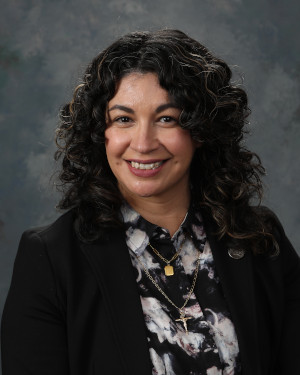
Rep. Sarah Silva
Sponsored bills
Maddy summaryHB 158 requires state agencies receiving funds from the Government Results and Opportunity Expendable Trust to submit detailed accountability and evaluation plans for their programs. These plans must outline goals, evidence-based practices, performance measures, evaluation methods, and public reporting timelines. Agencies must submit initial plans by July 1 each year after funding is approved, with potential revisions by September 1, and final evaluations by July 15 of the program’s last funding year. The bill aims to ensure transparency and measurable outcomes for public spending from this specific trust fund.
Maddy summaryHB 255 creates a dedicated state fund to help counties and public safety agencies recruit and retain workers in law enforcement, firefighting, corrections, and public defender offices. The program provides competitive grants for recruitment bonuses, training, cross-jurisdictional collaboration, and equipment tied to workforce development - *not* for base salaries or new positions. Grant applicants must demonstrate how their initiatives address local staffing gaps, with priority given to areas with high vacancy rates or crime. All funds must be spent within two years, and grantees must submit annual progress reports to the state.
Maddy summaryHB 164 requires lobbyists and their employers to file detailed reports disclosing specific legislation they lobbied on, their position (support/oppose/neutral), and any changes to that position. These reports must be submitted within 48 hours of starting lobbying activity and include the employer's name. The reports will be preserved publicly online for at least ten years, searchable and downloadable on the legislature's website. This bill directly affects all registered lobbyists and their employers who engage in lobbying activities in New Mexico.
Maddy summaryHB 50 creates the Social Work Licensure Interstate Compact, allowing licensed social workers to practice across participating states without obtaining separate licenses. It establishes a "multistate license" system where a social worker's home state license authorizes practice in all compact states, using a shared data system to track licenses and any restrictions. To join, states must require national exams, meet education standards, and have complaint systems in place. The bill directly affects licensed social workers seeking to work in multiple states and their home state licensing authorities, streamlining practice across state lines while maintaining oversight.
Maddy summaryThis bill allocates funds for New Mexico's 2025 special legislative session and fiscal year 2026 operations. It provides $105,000 for House expenses, $70,000 for Senate expenses, and $65,000 for legislative services, with unspent balances reverting to state funds. Major allocations include $1 million for court behavioral health pilots, $5.56 million for educational TV/radio, and $17.3 million for Medicaid premium assistance (pending House Bill 2). All funds must be spent by 2027 or return to state reserves.
Maddy summaryHB 1 is a funding bill that allocates money from New Mexico's general fund for the 2025 special legislative session and specific state programs. It provides $105,000 for House expenses, $70,000 for Senate expenses, and $65,000 for legislative services, plus $1 million for court behavioral health programs, $5.56 million for public broadcasting, and $30 million for food assistance programs like SNAP benefits and food banks. The bill also funds $450,000 for New Mexico State University and $7.88 million to cover operational shortfalls for the Regulation and Licensing Department. Unspent funds for most programs must revert to the general fund by the end of fiscal year 2027, ensuring accountability.
Maddy summaryHR 4 allows newly elected New Mexico state representatives (members-elect) to submit bills for consideration before the legislative session begins. The bill amends House rules to let members-elect deposit legislation with the chief clerk between January 2 and the Friday before the session starts, with prefiled bills numbered starting at HB 10 or higher (reserving lower numbers for priority bills like appropriations). These prefiled bills must be publicly available and formally introduced within 72 hours of the session opening. This procedural change streamlines the start of the legislative process for incoming members.
Maddy summaryHB 523 would require New Mexico public school administrators to review requests from federal immigration agents with a judicial warrant to enter a school. The bill specifies that school leaders must determine if access is permitted by law before granting entry. It directly affects school superintendents and charter school heads who would need to evaluate such warrant-based access requests. The bill was introduced in 2025 but was postponed indefinitely on June 3, 2025, and has not advanced further. This is a procedural measure focused on school access protocols, not a substantive change to immigration enforcement or school operations.
Maddy summaryThis constitutional amendment (HJR 12) would require members of New Mexico's state college and university boards of regents to uphold specific fiduciary duties, including loyalty, careful management, good faith, and compliance with state laws. It also changes removal procedures: district courts - not the Supreme Court - would handle removals filed by the Attorney General or a majority of the board, for causes like breaches of duty or misconduct. The bill directly affects all regents serving on boards for New Mexico's public higher education institutions, including the University of New Mexico. It does not alter board composition rules (like student member requirements) but adds legal clarity to their responsibilities and removal processes.