

Maddy summaryHB 384 would repeal New Mexico's existing seven-day waiting period for firearm purchases, directly affecting individuals buying firearms in the state. The bill targets Section 30-7-7.3 NMSA 1978 (enacted in 2024), removing the requirement that retailers wait seven days before transferring a firearm to a buyer. This change would allow immediate firearm sales without the current waiting period. The bill was introduced in 2025 but was postponed indefinitely by the legislature on June 3, 2025, meaning it did not become law.
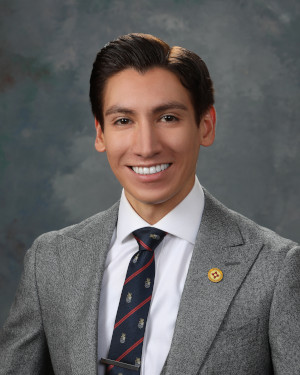
Rep. John Block
Sponsored bills
Maddy summaryHB 573 prohibits New Mexico's Secretary of State or county clerks from sending voter registration eligibility notifications to non-U.S. citizens. It directly affects non-citizen residents who previously received such notices about potential voting registration. The bill amends the Election Code to ban these notifications for individuals or groups containing non-citizens, effective July 1, 2025. This is a procedural change affecting notification practices, not voting eligibility or registration rights.
Maddy summaryHB 485, the School Marshal Act, creates a program allowing school districts to employ retired or former law enforcement officers as "school marshals" who may carry concealed firearms on school premises. To qualify, individuals must have at least three years of law enforcement experience, hold a concealed carry permit, and complete state-approved training. School marshals may only carry weapons with school board permission and are restricted to using force only to prevent serious bodily harm or death. The bill requires school districts to develop policies for firearm storage, mandates notification of law enforcement agencies about marshals, and specifies that marshals do not earn retirement benefits.
Maddy summaryHB 542 creates a $7,000 refundable income tax credit for New Mexico residents who give birth to a child during the taxable year. It directly affects new parents who are state residents, not claimed as dependents by another individual, and requires certification through the Children, Youth and Families Department. The credit is claimed within three years of certification, with any amount exceeding the taxpayer's liability refunded. The policy applies to tax years beginning January 1, 2025, and would be included in the state's tax expenditure budget. (Note: The bill was postponed indefinitely on June 3, 2025.)
Maddy summaryHB 234 requires healthcare providers to provide immediate, medically appropriate care to any infant born alive during childbirth or abortion procedures, regardless of gestational age. It defines "born alive" as an infant showing signs of life (breathing, heartbeat, etc.) and mandates reporting of care failures to law enforcement. The bill creates criminal penalties for intentionally harming or killing such infants and allows civil lawsuits for violations, including triple damages. It also establishes a task force to monitor compliance and requires monthly inspections of abortion facilities. This law directly affects healthcare providers, hospitals, and abortion clinics in New Mexico.
Maddy summaryHB 320 defines necrophilia (sexual acts with a dead body) and criminal desecration of dead bodies as specific crimes in New Mexico. It classifies using a dead body for sexual purposes (e.g., intercourse or penetration) as a second-degree felony, and touching a dead body's intimate parts for sexual reasons as a third-degree felony. The bill also criminalizes dismemberment, disfigurement, or burning of a dead body as a fourth-degree felony. The bill was introduced in 2025 but was postponed indefinitely by the House committees in June 2025, so it did not advance.
Maddy summaryHB 293 would remove income limits for New Mexico residents claiming an exemption on Social Security income under state tax law. Currently, the exemption is capped at $75,000 for married individuals filing separately, $150,000 for joint filers, and $100,000 for single filers. The bill eliminates these caps, allowing all Social Security income to be exempt from state income tax regardless of total earnings. This change would directly affect higher-income Social Security recipients (e.g., retirees) who currently face partial taxation on their benefits. The amendment applies to tax years beginning January 1, 2025.
Maddy summaryHJM 8 is a joint memorial requesting New Mexico's Department of Transportation to create a rest stop and memorial at the Trinity Site entrance on Highway 380 near Bingham. It aims to honor "downwinders" - residents of Socorro and Otero counties affected by the 1945 atomic bomb test - by installing an informational plaque, holding a dedication ceremony on July 16, 2025 (the 80th anniversary), and inviting surviving downwinders to attend. The memorial would acknowledge their unacknowledged sacrifices despite federal recognition efforts. The proposal was referred to a committee but postponed indefinitely in June 2025. This is a symbolic request, not a binding law.
Maddy summaryThis bill, known as the Agritourism Promotion Act, creates legal protections for agritourism operators in New Mexico by limiting their liability for injuries or deaths that result from inherent risks of agricultural activities. It defines agritourism as public recreational experiences involving farming, ranching, harvesting, and related activities, and establishes that operators are not liable for such risks if they post clear warning signs at all entry points and key activity sites. The law maintains that operators remain fully liable if they act with willful disregard for safety, knowingly hide dangerous conditions, or intentionally harm participants, and requires operators to obtain liability insurance coverage. The bill also directs the state insurance office to develop rules about insurance accessibility for agritourism businesses and takes effect on July 1, 2025.
Maddy summaryHB 83 would allow adults aged 18 or older who are not prohibited by law from possessing firearms to carry loaded handguns on their person - either concealed or openly - without needing a permit. It repeals current permit requirements and modifies existing laws to clarify that carrying unloaded firearms remains permitted. The bill does not change restrictions on carrying firearms on buses (requiring company approval) or apply to individuals prohibited by federal/state law or court orders. This directly affects all eligible New Mexico adults seeking to carry firearms in public without a permit.