

Maddy summarySB 172 creates the Immigrant Health Care Workforce Development Act to support underemployed immigrant health care workers in New Mexico, particularly those with prior foreign health care experience seeking licensure. The bill establishes an Acceleration Program providing training in medical English, health IT systems, and licensing pathways, along with financial support for exam fees, living costs, and career navigation. It also creates a Primary Care Physician Readiness Pathway for qualified international medical graduates, including a 6-12 month clinical readiness program and exam preparation assistance. Participants must be New Mexico residents, commit to working in an underserved community for at least one year post-licensure, and meet specific eligibility criteria like having prior foreign health care experience.
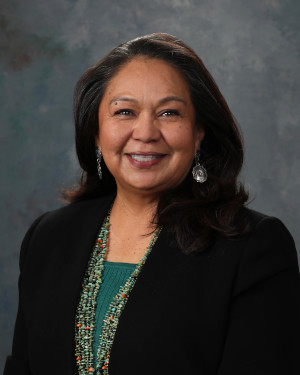
Rep. Wonda Johnson
Sponsored bills
Maddy summaryHB 194 would have prohibited public, private, and charter schools in New Mexico from banning students from federally recognized tribes, pueblos, or nations from wearing culturally significant items like regalia, jewelry, moccasins, beaded caps, or feathers at graduation or promotion ceremonies. The bill directly affects Indigenous students by protecting their right to express cultural identity during school events. Key provisions define "objects of cultural significance" to include specific traditional items, ensuring schools cannot restrict their display. The bill was replaced by a committee substitute and later postponed indefinitely, so it did not become law.
Maddy summaryHouse Memorial 31 is a non-binding resolution requesting the governor declare a "Citizen Science Day" to recognize community science efforts. It asks state agencies (including education, outdoor recreation, and agriculture departments) to review a working group report on expanding citizen science programs, particularly for youth engagement. The resolution acknowledges New Mexico’s natural resources and the role of initiatives like UNM’s Wild Friends program in collecting environmental data through public participation. It does not create new laws but formally encourages agencies to integrate citizen science into their work.
Maddy summaryHB 252 creates a three-year pilot program in New Mexico to support kinship caregivers - such as grandparents, relatives, or emotionally significant non-relatives raising children - across five specified counties (Rio Arriba, Santa Fe, Taos, McKinley, and Dona Ana). The program provides economic support through community partners, referrals to services like legal assistance for custody or guardianship, and access to public benefits, with eligibility based on household income and child needs. It allocates $4.5 million from the general fund for fiscal years 2026-2028 to cover staff, legal aid, and program administration. The department must report annually on the pilot’s impact and outcomes to the legislative finance committee.
Maddy summaryHB 178 amends New Mexico's Nursing Practice Act to clarify which nurses can administer general anesthesia, anesthetics, and sedatives, directly affecting registered nurses, licensed practical nurses, and advanced practice nurses (including nurse anesthetists). The bill defines specific scope-of-practice boundaries for each nurse category and updates licensing procedures to align with these clarifications. It also expands the Board of Nursing's authority, modifies disciplinary processes, and mandates confidentiality for communications related to potential disciplinary actions. These changes aim to provide clearer, more consistent guidelines for nursing practice and administrative procedures.
Maddy summaryThis House Memorial (HM 15) urges the U.S. Congress to support expanded federal compensation for people exposed to radiation through nuclear weapons testing or uranium mining. It specifically calls for backing Senate Bill 243, which aims to extend the deadline for claims and broaden eligibility under the existing Federal Radiation Exposure Compensation Act (RECA). The memorial highlights that current RECA rules exclude many affected individuals, including those working in uranium mining after 1972 or living downwind outside designated areas like Arizona and Utah. It directly concerns communities in New Mexico, the Navajo Nation, and other Western states impacted by historical nuclear activities.
Maddy summaryHB 71 increases the annual mandatory transfer from New Mexico's Early Childhood Education and Care Fund to the Early Childhood Education and Care Program Fund from $250 million to $500 million, effective July 1, 2025. This change directly affects early childhood education and care programs serving young children and families across the state by providing a significant, guaranteed funding boost. The bill mandates that on July 1 each year, the state must transfer the greater of 5% of the fund’s average three-year market value or $500 million to the program fund. The legislation ensures stable, predictable funding for childcare and early learning services without altering other fund management rules or reporting requirements.
Maddy summaryHB 244 sets a minimum age requirement of 28 years for individuals seeking election or appointment as magistrate judges in New Mexico. The bill also requires all magistrate candidates to have a high school diploma or equivalent credential, and for districts with over 200,000 residents, mandates that elected or appointed magistrates must be licensed attorneys in New Mexico. This law directly affects candidates running for or being appointed to magistrate positions, particularly in larger districts. The changes update existing qualification rules without altering judicial procedures or creating new substantive policies.
Maddy summarySB 163 prohibits New Mexico public and charter schools from banning students enrolled in or eligible to enroll at federally recognized tribes, pueblos, or nations from wearing tribal regalia at graduation ceremonies and other school events. The bill amends existing school discipline policies to explicitly state that schools cannot restrict "tribal regalia" - defined as traditional dress, symbols, jewelry, beading, or feathers - along with graduation attire or as part of cultural expression. It directly affects Native American students in New Mexico public schools by protecting their right to display cultural items during formal school activities. The law clarifies that such protections are part of broader anti-discrimination policies already in place for students' cultural and religious expression.
Maddy summaryThis House Memorial (HM 5) designates February 6, 2025, as "Gallup/McKinley County Day" within the New Mexico House of Representatives. It is a ceremonial resolution honoring Gallup and McKinley County's cultural significance, including their Native American heritage, the Intertribal Indian Ceremonial, the continental divide, and Gallup's status as "adventure capital" and "most patriotic small town." The resolution has no policy or funding impact; it solely serves to recognize the region's contributions. Copies will be sent to Gallup's mayor/city council and McKinley County commissioners.