

Maddy summaryHB 84 defines exposure of a child to Schedule I/II controlled substances (including fentanyl) during pregnancy as child abuse, directly affecting parents or caregivers who use illegal drugs during pregnancy and newborns exposed to those substances. The bill requires healthcare providers to report substance-exposed newborns to the Children, Youth and Families Department and mandates "plans of safe care" for these infants. It updates the definition of "neglected child" and specifies that lawful prescription use does not trigger the abuse classification. The law creates new reporting protocols and temporary custody provisions for infants at risk due to prenatal drug exposure.
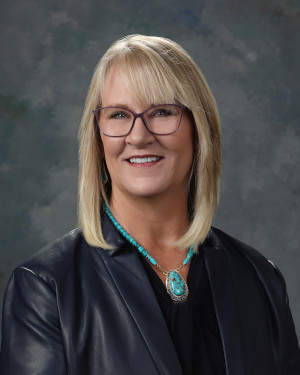
Rep. Gail Armstrong
Sponsored bills
Maddy summaryHB 101 appropriates $200 million from New Mexico's general fund to the Department of Agriculture for a regional farm-to-food bank program. The bill directly affects food banks and agricultural producers by funding connections between farms and food distribution networks, aiming to reduce food waste and improve food access. Key provisions include allocating funds for fiscal year 2026 and future years with no requirement to return unspent balances to the general fund. The bill is declared an emergency to take effect immediately, prioritizing rapid implementation of the program.
Maddy summaryHB 202 requires New Mexico's Children, Youth and Families Department, Health Care Authority, Department of Health, and other state agencies to create a written agreement with the Office of Child Advocate for sharing specific data and system access. The bill mandates that this agreement include security protocols, audit logging, breach plans, and compliance with federal privacy laws like HIPAA and FERPA. It also establishes a working group to develop the agreement by October 2026 and appropriates $75,000 to the Office of Child Advocate for technical support. The law directly affects the Office of Child Advocate and the listed state agencies by structuring how they share sensitive child-related information.
Maddy summaryHB 203 changes how members are appointed to New Mexico's Spaceport Authority board. It shifts appointment authority from the current process to require the governor to appoint two members (with Senate consent), while the Senate President, House Speaker, Senate Minority Leader, and House Minority Leader each appoint one member. The bill also mandates that one appointed member must reside in Sierra County, limits the board to no more than three members from the same political party, and sets new qualifications like experience in aerospace, aviation, or public finance. These changes will take effect on July 1, 2026, for all future appointments.
Maddy summaryHB 114 appropriates $1 million from the general fund to expand New Mexico's Double Up Food Bucks program for fiscal year 2027. The bill directly helps SNAP participants by doubling their purchasing power for meat, nuts, eggs, and fresh fruits/vegetables at New Mexico farmers' markets. It requires the Board of Regents of New Mexico State University to manage the funds, with any unspent balance reverting to the general fund by year-end. This concrete funding increase aims to increase access to fresh, healthy food for low-income residents at local farmers' markets.
Maddy summaryHB 240 creates the Education Opportunity Account Act, allowing eligible New Mexico students (residents without a high school diploma or equivalent) to access state-funded accounts for education expenses. The program deposits state funds - calculated based on average public school spending per grade, adjusted for special needs - into accounts managed by the state education department. Parents can use these funds for approved costs at qualifying private schools (not online schools), tutoring, textbooks, assessments, and transportation, but funds cannot be refunded to families and unspent balances revert to the state treasury after two years or upon graduation. The bill specifies strict usage rules, prohibits personal deposits into accounts, and requires annual contracts detailing approved expenses.
Maddy summaryHB 11 creates the "Audiology and Speech-Language Pathology Interstate Compact" to allow licensed professionals in these fields to practice across participating states without obtaining new licenses. The bill directly affects audiologists and speech-language pathologists who wish to serve patients in other member states, as well as patients seeking these services. Key provisions include mutual recognition of licenses, requirements for criminal background checks during application, and provisions enabling telehealth services to improve access. The compact preserves each state’s regulatory authority while streamlining cross-state practice, particularly benefiting military families and remote patients. (Note: The bill passed the House but was replaced by a committee substitute; this summary reflects the original bill’s intended purpose.)
Maddy summaryHB 13 creates the Occupational Therapy Licensure Compact, allowing occupational therapists and assistants licensed in one participating state to practice in other member states without obtaining a new license. It directly affects licensed therapists seeking to work across state lines, patients accessing services in different states, and military spouses relocating with their partners. Key mechanisms include establishing "compact privilege" for interstate practice, requiring states to share disciplinary and investigative information through a national data system, and supporting telehealth delivery of services. The bill aims to improve access to occupational therapy while maintaining each state's authority to protect public health and safety through existing licensure standards.
Maddy summaryHB 239 appropriates $650,000 from the tribal infrastructure project fund to pay an unpaid contractor invoice (notice of obligation #3) for Tribal Infrastructure Project 23TIF11. The funds are for a prior-year obligation that was not paid, to be spent in fiscal years 2026 and 2027. Any unused balance after 2027 will return to the tribal infrastructure project fund. This bill directly affects the contractor involved in project 23TIF11 by settling a specific unpaid payment. It does not create new infrastructure or policy, but resolves a past financial obligation.
Maddy summaryHB 224 expands New Mexico's tax deduction for unreimbursed medical expenses to apply to all taxpayers, regardless of income level - replacing previous income-based limits. It establishes tiered deduction rates (10%, 15%, or 25% of eligible medical costs) based on filing status and adjusted gross income, with lower-income taxpayers receiving higher percentages. Eligible expenses include doctor visits, prescriptions, medical insurance premiums, and other health care costs as defined in the bill. The law takes effect for tax years beginning January 1, 2026.