

Maddy summaryHB 582 requires New Mexico's Construction Industries Division to create standardized statewide templates and procedures for construction permit applications, affecting builders, developers, and local building departments. Key provisions include mandating electronic submission, setting specific decision timelines (30 days for residential, 90 for multi-unit projects), and automatically approving permits if decisions aren't issued on time. The bill also limits local zoning authority for certain developments like accessory dwelling units and requires all jurisdictions to adopt the division's templates. These changes aim to streamline permitting processes across the state while ensuring consistent, transparent procedures for all construction projects requiring permits.
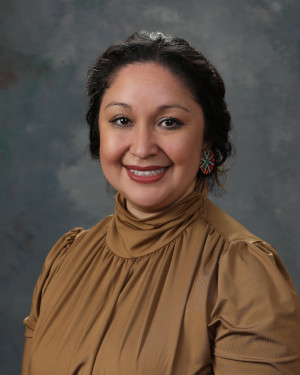
Rep. Linda Serrato
Sponsored bills
Maddy summaryHB 421, the Business Security Assistance Act, provides financial incentives for businesses to improve security by reimbursing certified vendors who sell discounted security equipment (like reinforced doors or surveillance systems) or services (like professional monitoring) at 25% off. The bill creates a $100 million Business Security Assistance Fund to cover rebates (capped at $25,000 per business), allows vendors to deduct these sales from their taxable income, and requires the department to certify vendors based on performance standards. It affects New Mexico businesses operating in nonresidential locations and certified security vendors, with funding sourced from a general fund transfer and annual appropriations. The program is temporary, set to expire on July 1, 2028.
Maddy summaryHB 7 establishes the Children's Future Fund to support New Mexico children born on or after January 1, 2025, with funds intended for education, housing, entrepreneurship, and retirement. The bill creates a nonreverting state trust fund (initially appropriated $5 million for task force operations), exempts distributions from state income tax, and explicitly states benefits are not guaranteed or guaranteed property rights. A task force (appointed by July 2025) will develop implementation details like eligibility, application processes, and investment strategies before benefits are distributed. The fund's administration and disbursement rules will be finalized by the task force, with its report due December 31, 2025.
Maddy summaryHB 575 amends New Mexico's state employee health benefit contribution rules, increasing the state's share of insurance costs for public employees based on salary. It raises the state's contribution to 80% for employees earning under $50,000 (up from 75% for under $15,000), 70% for $50,000-$60,000 (up from 65% for $20,000-$25,000), and 60% for $60,000+ (up from 55% for $25,000+), effective July 2025. School districts and charter schools would similarly increase contributions to 80% for under $50,000, 70% for $50,000-$60,000, and 60% for $60,000+ for their employees. The bill also specifies legislators must pay 100% of their own insurance costs and includes provisions for public safety workers on workers' compensation leave.
Maddy summaryHB 540 establishes new rules for filling vacancies in New Mexico's state House and Senate. It requires county boards of commissioners to appoint eligible candidates (those registered to vote and living in the district since the last general election) within strict deadlines - 5 business days during a legislative session or 3 weeks otherwise. For multi-county districts, county boards submit names to the governor, who must appoint within 7 days. The bill also mandates that county boards adopt a ranking system (ranking top 5 candidates) by January 2026 to ensure transparency in future appointments. This directly affects county officials, governors, and candidates seeking legislative seats.
Maddy summaryBased solely on the provided context, this bill's specific provisions are not detailed in the text or summary. The bill (HB 619) was introduced by Rep. Linda Serrato in New Mexico's 2025 legislative session, relating broadly to public peace, health, safety, and welfare. However, the bill's progress was halted when its action was "postponed indefinitely" on June 3, 2025. Without specific policy language or a substantive summary in the provided context, no concrete description of its mechanisms, affected groups, or policy changes can be given. The bill's status indicates it did not advance beyond committee consideration.
Maddy summaryThis memorial (HM 56) designates May as "National Maternal Mental Health Awareness Month" in New Mexico. It requests the New Mexico Department of Health to collaborate with health organizations to improve awareness, education, and access to screening for prenatal and perinatal depression and related mood disorders. The resolution directs the health department to explore using screening tools and enhance access to treatment, support services, and community resources. It applies to all women and teenage girls in New Mexico affected by maternal mental health issues, which impact 10-20% of new and expectant mothers. This is a symbolic resolution, not a law, and focuses on raising awareness and improving health system coordination.
Maddy summaryHouse Memorial 31 is a non-binding resolution requesting the governor declare a "Citizen Science Day" to recognize community science efforts. It asks state agencies (including education, outdoor recreation, and agriculture departments) to review a working group report on expanding citizen science programs, particularly for youth engagement. The resolution acknowledges New Mexico’s natural resources and the role of initiatives like UNM’s Wild Friends program in collecting environmental data through public participation. It does not create new laws but formally encourages agencies to integrate citizen science into their work.
Maddy summaryThis memorial requests the New Mexico Legislative Council to form an interim committee to study how to implement a 2022 voter-approved constitutional exception allowing state funds for essential utility services (like internet, electricity, water, and wastewater). The committee will examine structural questions - such as whether to create a single entity or separate entities for different services, funding criteria, and oversight mechanisms - to develop concrete proposals for the 2026 legislative session. It directly affects communities lacking access to essential utilities due to infrastructure costs, but does not create new law or funding itself. The bill is procedural, focusing solely on planning for future legislation.
Maddy summaryThe provided context does not include the actual text or specific provisions of HB 618. While the bill was introduced by Representative Linda Serrato, passed through committee, and signed into law on April 8, 2025, the summary lacks details about its concrete policy changes, affected parties, or mechanisms. Without the bill's text or a substantive summary describing its content, a factual policy description cannot be generated. Procedural details (e.g., committee actions, signing) are noted, but the core policy elements are missing from the context.