

Maddy summaryHB 40, titled the "Traveling with Dignity Act," requires all state-funded facilities serving 2,500+ annual visitors - including public buildings and large commercial venues like theaters or convention centers - to install at least one gender-neutral, accessible universal adult changing station in single-occupancy restrooms. Covered facilities must comply by July 1, 2032, with earlier deadlines for renovations costing over $50,000 or new constructions receiving state funding. The bill defines these stations as height-adjustable, adult-sized changing tables available to all genders. Currently pending after being postponed indefinitely on June 3, 2025, the law aims to improve accessibility for people with disabilities or caregiving needs during public outings.
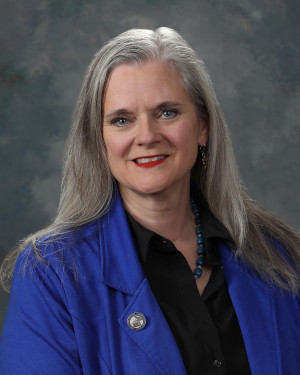
Rep. Kathleen Cates
Sponsored bills
Maddy summaryHB 30 amends New Mexico's Motor Carrier Safety Act to establish specific safety requirements for companies that transport railroad employees. The bill requires these motor carriers to implement annual driver training covering vehicle operation, emergency procedures, and safety belt use; conduct criminal background checks for drivers; maintain $5 million liability insurance per vehicle; and equip vehicles with safety features including seat belts, spare tires, emergency kits, and GPS devices. It also limits drivers to a maximum of 10 consecutive driving hours, 15 total on-duty hours, and 70 hours in any eight-day period. These provisions apply specifically to motor carriers of railroad employees and take effect January 1, 2026.
Maddy summaryHB 74 creates a legal framework for fire and emergency medical services (EMS) agencies in New Mexico to establish confidential peer support programs for their employees and volunteers. The bill requires peer support team members to complete state-approved training covering issues like trauma, substance use, and grief, and mandates that all communications during support sessions remain confidential - except in limited cases involving imminent danger or court orders. It also provides limited liability protection for peer support providers and their agencies, shielding them from most lawsuits related to their support services. This directly affects firefighters, EMS personnel, and volunteers who face high-stress emergencies, offering them a structured, confidential resource to address behavioral health challenges.
Maddy summaryHB 375 creates the Graduate Behavioral Health Scholarship Act, providing debt-free education for New Mexico graduate students pursuing master's or doctoral degrees in behavioral health fields (counseling, psychology, social work, psychiatric nursing, or addiction medicine). The scholarship covers tuition, fees, books, and licensing costs after other state aid is applied, but recipients must commit to practicing in New Mexico for a number of years equal to the scholarship duration. The Higher Education Department will administer the program using $10 million appropriated for fiscal year 2026, with unspent funds rolling over annually. Students who graduate but fail to fulfill their practice commitment face penalties up to three times the scholarship value.
Maddy summarySB 103 requires Medicaid personal care service providers (including agencies and self-directed programs) to submit detailed workforce data to New Mexico's Health Care Authority by March 1, 2026, and annually thereafter. This data includes staffing numbers, wages, benefits, demographics, and overtime hours for direct care workers providing services to Medicaid recipients. The Health Care Authority must analyze this data and publish annual reports, including a 2030 study to recommend reimbursement rates that aim to stabilize the workforce and ensure wages reach 150% of the state minimum wage. The bill directly affects agencies administering Medicaid personal care services and seeks to address workforce challenges through data-driven policy recommendations.
Maddy summaryHB 43 requires landlords in New Mexico to adjust income screening for rental applicants by subtracting federal, state, local, or tribal housing assistance payments from the total rent before calculating the income-to-rent ratio. This means landlords must evaluate an applicant’s income against the remaining rent amount after housing assistance is applied (e.g., if rent is $1,500 and housing assistance covers $500, the screening uses $1,000). The bill specifies that valid income sources for screening include wages, pensions, alimony, or child support, provided applicants document these. It directly affects landlords performing tenant screenings and applicants receiving housing assistance, aiming to make rental eligibility more accessible for those using government aid. The bill is still pending after being postponed indefinitely on June 3, 2025.
Maddy summaryHB 38, introduced by Rep. Kathleen Cates, creates a new third-degree felony offense for knowingly possessing or transporting a "weapon conversion device" - parts designed to convert semiautomatic weapons into fully automatic weapons. The bill defines key terms, including that a "semiautomatic weapon" fires one round per trigger pull and a "fully automatic weapon" shoots multiple rounds with a single trigger pull. Each device found in violation constitutes a separate offense. The bill was referred to committees and passed their reports but was postponed indefinitely on June 3, 2025.
Maddy summaryHB 39 modifies New Mexico's firearm possession laws by prohibiting adults with certain juvenile firearm offenses from receiving, transporting, or possessing firearms. It directly affects adults aged 18+ who had a juvenile court disposition involving firearm use that would be a felony if committed as an adult, provided less than 10 years have passed since the disposition and no pardon was granted. The bill adds this category to existing prohibitions under Section 30-7-16 NMSA, expanding background checks to include these juvenile records. This change ensures such individuals remain barred from firearm access even if their juvenile record was later sealed under Section 32A-2-26.
Maddy summaryHB 122 requires that for condominiums created on or after July 1, 2025, at least 55% of units must be owner-occupied (meaning the resident owns the unit), and at least 35% of the governing board members must own and live in units within that same condominium. This applies directly to developers creating new condos after the effective date and the homeowners associations managing those properties. The bill amends New Mexico's Condominium Act to include these requirements in the declaration documents for new condominiums. It does not apply to existing condos or those created before July 1, 2025.
Maddy summaryThis bill (HM 28) is a symbolic memorial declaring March 17, 2025, as "Irish-American Day" within the New Mexico House of Representatives. It does not create new laws or affect residents; instead, it formally recognizes Irish Americans' historical contributions to New Mexico, citing figures like Stephen Kearny, Billy the Kid (born to Irish parents), and artist Georgia O'Keeffe. The resolution directs the House to celebrate Irish-American heritage and sends a copy to the Irish-American Society of New Mexico. As a commemorative measure, it has no regulatory or financial impact.