

Maddy summarySB 87 prohibits New Mexico state or local governments from adopting laws, ordinances, rules, or regulations that restrict the use of personnel or resources to assist federal immigration enforcement or interfere with such enforcement. It directly affects counties, cities, and state agencies by preventing them from passing policies that limit cooperation with federal immigration authorities. The key provision bans any local or state measure that would block officials from using staff or funding to support federal immigration enforcement efforts. This bill does not change federal immigration law but aims to remove state-level barriers to federal enforcement coordination.
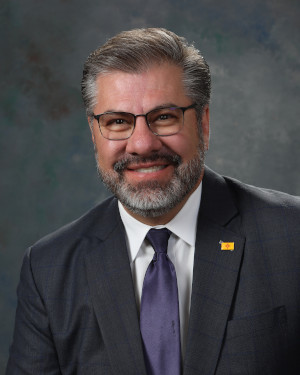
Rep. Luis Terrazas
Sponsored bills
Maddy summaryHB 379 limits punitive damages in medical malpractice cases by requiring patients to prove "deliberate disregard" for safety with "clear and convincing evidence" before punitive damages can be awarded. It caps punitive damages at 30 times New Mexico's median annual household income and specifies these damages must be paid personally by the health care provider - not from insurance or the state medical fund - starting January 1, 2027. The bill directly affects patients filing malpractice claims and health care providers (hospitals, clinics, doctors) by changing how punitive damages are awarded and paid. It does not prevent settlement agreements for medical care but explicitly states punitive damages cannot be imposed where not otherwise authorized by law.
Maddy summaryThis bill (HM 18) is a House Memorial requesting New Mexico’s state auditor to create a task force addressing the shortage of certified public accountants (CPAs) in the state. The task force, including state departments and stakeholders like the American Institute of CPAs, will study solutions such as integrating accounting into STEM education, expanding K-12 and college programs, and improving workforce training. It specifically aims to tackle barriers like the 150-hour education requirement and declining interest in accounting careers, with recommendations due by November 2025. The bill directly affects New Mexico’s CPA workforce, accounting employers, and students pursuing accounting careers.
Maddy summaryHB 371 allows local and county governments in New Mexico to authorize off-highway motor vehicles (OHVs) like ATVs to operate on paved streets and highways within their boundaries, subject to specific safety requirements. It mandates that authorized OHVs must have headlights, taillights, brakes, mirrors, mufflers, valid operator licenses, insurance, eye protection, and helmets for minors under 18. Local authorities may also set separate speed limits and operating restrictions for these vehicles. The bill does not require authorization but provides a framework for communities to permit OHV use on public roads while maintaining safety standards.
Maddy summaryHB 446 creates New Mexico's first state-funded paid parental leave program, providing eligible workers with wage replacement to bond with a newborn, adopted child, or foster child. The bill establishes the "Supplemental Paid Parental Leave Fund" (funded through the Early Childhood Education and Care Fund) to pay applicants 60-70% of their wages for up to 12 weeks of leave. It directly affects most New Mexico employees and self-employed individuals (excluding railroad workers and certain others), administered by the Workforce Solutions Department. The program requires workers to apply through the department, with payments covering bonding time within 12 months of the child's arrival, and excludes employers already offering comparable benefits.
Maddy summaryHB 432 would require schools to report students with persistent unexcused absences to juvenile probation after interventions, potentially triggering neglect investigations. It would make it a crime for parents to allow continued school absences, with penalties including $50-$100 fines for a first offense or up to six months in jail for repeat offenses. The bill also allows suspending a student’s driving privileges for up to 90 days on a first offense and up to one year for subsequent offenses. This legislation directly affects parents of chronically absent students and school districts implementing attendance enforcement.
Maddy summaryHB 515 appropriates $1.5 million from the state general fund to the Board of Regents of Western New Mexico University (WNMU) to create and support a men's baseball program during fiscal years 2026 and 2027. Any unspent funds at the end of 2027 would revert to the general fund. The bill, introduced by Representatives Terrazas, Ramos, and Brantley, was referred to committees but was postponed indefinitely on June 3, 2025. This is a funding measure for a specific university sports program, not a policy change affecting broader public interests.
Maddy summaryHB 176 creates a tax credit covering 50% of the purchase and installation costs for New Mexico residents and businesses that permanently install backup power generators (devices that provide power during main grid failures). The credit is limited to $5 million total per calendar year, with applications processed in order of receipt until the cap is reached. It applies to taxable years beginning on or after January 1, 2025, and expires on January 1, 2035. Taxpayers must apply for certification through the state Energy, Minerals and Natural Resources Department, and any unused credit amount exceeding a taxpayer's liability will be refunded.
Maddy summaryHB 372 amends New Mexico's Off-Highway Motor Vehicle Act to update vehicle definitions and registration fees. It sets a $17 registration fee (with $5 covering division costs and $12 going to a motor vehicle fund) and an optional up to $40 user fee for off-highway vehicles like ATVs, snowmobiles, and recreational off-highway vehicles. The bill also clarifies nonresident permit fees ($17 for two years) and updates safety rules, such as prohibiting operation under the influence and restricting vehicle use near livestock structures. These changes directly affect off-highway vehicle users and improve fee enforcement and fund distribution systems.
Maddy summaryHB 562 appropriates $3 million from the general fund to the New Mexico Health Care Authority for fiscal year 2026 to increase Medicaid reimbursement rates specifically for independent rural health care providers. This funding directly benefits rural clinics and healthcare professionals serving underserved communities by improving their payment rates under Medicaid. The bill requires all allocated funds to be spent by the end of fiscal year 2026, with any unspent balance reverting to the general fund. It does not change Medicaid eligibility or provider qualifications, focusing solely on increasing reimbursement amounts through dedicated funding.