

Maddy summaryHB 296 increases New Mexico's Working Families Tax Credit to 50% of the federal Earned Income Tax Credit (EITC) for eligible residents, up from previous rates of 20-25%. It directly affects low-to-moderate income New Mexico residents who file individual state tax returns and qualify for the federal EITC, including those aged 18-24 who previously faced age-based barriers. The bill allows the credit to reduce state tax liability, with any excess refunded to taxpayers. This change takes effect for tax years beginning January 1, 2026, as specified in Section 7-2-18.15 of New Mexico's tax code.
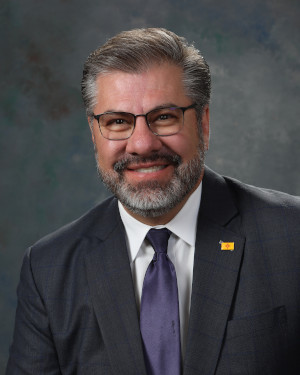
Rep. Luis Terrazas
Sponsored bills
Maddy summaryHB 299 appropriates $350 million from the state general fund to the New Mexico Department of Transportation for the second phase of expanding U.S. Highway 180. The funding will cover rights-of-way acquisition, planning, design, and construction to widen the highway from two to four lanes between Bayard and Deming during fiscal years 2026-2029, with unspent funds reverting to the general fund by 2029. This bill directly affects drivers traveling between Bayard and Deming, as well as the state transportation agency responsible for implementing the project. The project is specifically identified as infrastructure project 1101841.
Maddy summaryHB 143 expands tax credits for healthcare providers working in New Mexico's rural underserved areas. It increases the rural health care practitioner tax credit to $15,000 annually for physicians/dentists/optometrists (requiring 1,584+ hours of service) and $9,000 for other providers like nurses, pharmacists, and therapists. The bill also creates a new Medical Residency Loan Repayment Act to award loan repayment assistance to qualifying medical residents and fellows. These provisions directly target healthcare professionals in rural communities to improve provider recruitment and retention.
Maddy summaryHB 106 creates a New Mexico income tax credit for parents who provide home-based child care for children under age 5, instead of enrolling them in state-funded or private child care or pre-kindergarten programs. The credit provides $1,000 per month per child for months the child is not eligible for public school, with annual inflation adjustments starting in 2027. Parents must apply for certification through the state's early childhood department to claim the credit, and any unused portion can be refunded. This policy directly affects New Mexico taxpayers with young children who choose home-based care over licensed facilities.
Maddy summaryHB 75 would allow New Mexico judges to reduce criminal sentences if they find strong evidence of mitigating circumstances (like personal hardship or rehabilitation efforts) during sentencing. It requires judges to use clear and convincing evidence for reductions, while limiting sentence increases to one-third of the original term (except for serious youthful offenders, who may get larger reductions). The bill also specifies that certain factors - such as prior convictions, hate crimes, or firearm use - cannot be used to justify harsher sentences. This directly affects defendants facing sentencing in New Mexico courts, particularly those with circumstances that could lead to a lower sentence under the proposed rule.
Maddy summaryHB 52 corrects outdated cross-references in New Mexico law to ensure consistency between statutes related to criminal competency procedures. It updates references to Section 33-2-34 NMSA 1978 (the criminal competency statute) in multiple other sections, including those governing firearm restrictions (30-7-16) and GPS data for pretrial release (31-3-12). The bill makes purely procedural changes to legal citations without altering any substantive rules or requirements. This affects court staff, legal professionals, and law enforcement who rely on accurate statute references.
Maddy summaryHB 74 removes the ten-year time limit for counting prior felony convictions toward habitual offender sentencing in New Mexico. Currently, only convictions within ten years of the current offense count; this bill changes that so any prior felony conviction, regardless of when it occurred, can be used to increase sentences. It directly affects noncapital felony offenders with prior convictions, potentially increasing their sentences by 1, 4, or 8 years based on the number of prior offenses. The bill modifies the legal definition of "prior felony conviction" in sentencing law but does not change the sentencing structure itself.
Maddy summaryHB 58 updates New Mexico's harassment law to cover modern digital communications, expanding the definition of "telephone" to include texts, social media posts, emails, and instant messages. It makes it illegal to use these platforms to send obscene, threatening, or harassing messages with intent to terrify or annoy, or to repeatedly disturb someone's peace through anonymous digital contact. Penalties range from a misdemeanor for first offenses to a fourth-degree felony for repeat violations. The law directly affects individuals who use digital means to harass others, aligning penalties with where the communication originated or was received.
Maddy summaryHB 73 allows New Mexico courts to defer or suspend up to two-thirds of the basic sentence for defendants convicted of a second or third-degree felony who have prior felony convictions. It directly affects repeat felony offenders by giving judges flexibility to reduce sentence execution while still requiring consideration of mitigating or aggravating factors. The bill amends existing sentencing law to specify that courts may suspend no more than 66.7% of the sentence for these repeat offenders, without altering the full sentencing range. This change applies only to second or third-degree felony cases with prior felony convictions, not first-degree offenses or non-repeat offenders. The bill is currently pending in the House Judiciary Committee.
Maddy summaryHB 72 makes it a crime for anyone 18 or older to intentionally give Schedule I or II controlled substances (like certain narcotics or methamphetamine) to a person under 18. It increases penalties for this offense, classifying first-time violations involving these specific drugs as a first-degree felony, while other Schedule I-IV drugs carry a second-degree felony for a first offense. The bill targets distributors who supply dangerous substances to minors, with harsher penalties for narcotics, methamphetamine, or their analogs. This law directly affects adults distributing such substances to minors in New Mexico, changing sentencing under existing criminal code.