

Maddy summaryHB 176 creates a tax credit covering 50% of the purchase and installation costs for New Mexico residents and businesses that permanently install backup power generators (devices that provide power during main grid failures). The credit is limited to $5 million total per calendar year, with applications processed in order of receipt until the cap is reached. It applies to taxable years beginning on or after January 1, 2025, and expires on January 1, 2035. Taxpayers must apply for certification through the state Energy, Minerals and Natural Resources Department, and any unused credit amount exceeding a taxpayer's liability will be refunded.
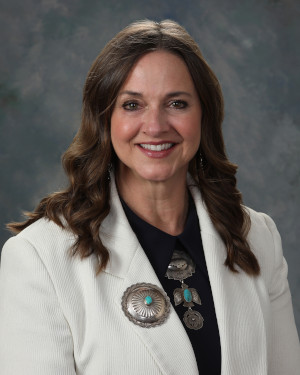
Rep. Rebecca Dow
Sponsored bills
Maddy summaryHB 210, the Vacant Rural Building Act, allows small businesses (employing 50 or fewer full-time employees) to occupy vacant commercial buildings in rural municipalities (populations ≤50,000) without full compliance with standard building codes. It requires rural municipalities or the state construction commission to adopt rules by January 2026 that permit variances only for safety-critical issues, excluding non-essential compliance costs. The bill mandates that property owners or businesses must address only life-safety hazards identified by code officials, not all building code requirements. This aims to reduce renovation costs for small businesses while maintaining public safety standards, using historic building code standards as a model. The act directly affects rural municipalities, small business owners, and property owners of vacant commercial buildings.
Maddy summaryHB 343 requires hospitals and birthing centers to create written "Plans of Safe Care" for newborns affected by prenatal substance exposure (e.g., drugs or alcohol in utero). These plans must be shared with the child’s doctor, a care coordinator (if insured), and the parent/guardian at discharge, outlining needed services like substance use treatment, mental health support, or early intervention. The bill updates reporting rules to ensure hospitals share data about these cases with the Children, Youth and Families Department without triggering child abuse investigations. It directly affects hospitals, newborns with prenatal exposure, and their families by coordinating healthcare and social services post-discharge.
Maddy summaryHB 556 amends New Mexico's public school code to explicitly include "community health workers" in the definition of "instructional support provider" (Section 22-1-2(F)) and requires them to meet existing licensing standards for such roles (Section 22-10A-17). This change directly affects community health workers employed in New Mexico public schools, mandating they hold appropriate professional licenses alongside their instructional support provider licensure. The bill updates definitions and licensing requirements to formally integrate community health workers into the existing framework for school support staff. It does not create new requirements but clarifies that community health workers must comply with the same licensing processes as other instructional support providers like counselors or nurses. The bill was introduced by Representative Rebecca Dow and postponed indefinitely in June 2025.
Maddy summaryHB 262 requires law firms advertising settlement or judgment amounts in civil cases to also disclose the specific fees charged to the client for that case. It directly affects attorneys and law firms that use monetary figures (e.g., "$50,000 settlement") in promotional materials. The bill mandates this disclosure in all such advertisements, with violations subject to a $500 civil penalty per offense assessed by the attorney general. Penalties collected must be deposited into the state school fund, and enforcement can be pursued by the attorney general or district attorneys with permission. The bill was introduced in 2025 but was postponed indefinitely in June 2025.
Maddy summaryHB 372 amends New Mexico's Off-Highway Motor Vehicle Act to update vehicle definitions and registration fees. It sets a $17 registration fee (with $5 covering division costs and $12 going to a motor vehicle fund) and an optional up to $40 user fee for off-highway vehicles like ATVs, snowmobiles, and recreational off-highway vehicles. The bill also clarifies nonresident permit fees ($17 for two years) and updates safety rules, such as prohibiting operation under the influence and restricting vehicle use near livestock structures. These changes directly affect off-highway vehicle users and improve fee enforcement and fund distribution systems.
Maddy summaryHB 510 requires New Mexico counties to maintain accurate voter lists through updated duties for Boards of Registration. It mandates these boards meet quarterly, verify deceased voters using state-compiled death lists, confirm address changes via motor vehicle records, and certify registration cancellations. County clerks must also provide annual training to boards on voter list maintenance. The bill directly affects county election offices and Boards of Registration, focusing on procedural accuracy in voter registration records.
Maddy summaryHB 277 modifies how much local funding school districts must contribute for state-funded building projects. It specifically reduces the required local share for small, high-poverty districts with limited ability to raise funds through property taxes. To qualify, districts must have residential tax rates of $8 or less per $1,000 valuation, fewer than 800 students, and over 70% of students eligible for free/reduced lunch. The bill adjusts the existing funding formula to provide greater state support to these districts, making capital projects more accessible. This change directly affects struggling school districts that cannot meet standard local contribution requirements.
Maddy summaryHB 479 proposes to prevent non-physician health care providers (such as psychologists, physical therapists, or dentists with doctoral degrees) from using the title "Doctor" without clearly identifying their specific profession. The bill would require these providers to use only titles authorized by their licensing laws (e.g., "Dr. Jane Smith, Physical Therapist") in advertisements, patient communications, or clinical settings - banning standalone use of "Doctor." Violations could lead to disciplinary action, including license suspension or revocation. The bill, introduced in New Mexico's 2025 legislative session, was referred to committees but postponed indefinitely on June 3, 2025.
Maddy summaryHB 498 revises New Mexico's rules for transferring liquor licenses between locations. It limits annual transfers to no more than ten licenses per local option district and requires voter approval via petition (signed by 5% of registered voters) and election before new transfers can occur. This affects businesses seeking to relocate licenses and gives local governments the power to block transfers through voter decisions. Transferred licenses will now count toward future license limits in the new district, as specified in the bill's amendments to existing liquor control statutes.