

Maddy summaryHB 83 requires New Mexico's Health Care Authority to set minimum Medicaid reimbursement rates for personal care services: $23.50 per hour for consumer-delegated care and $19.78 per hour for consumer-directed care. It mandates that personal care service agencies using Medicaid funds must spend at least 70% of the reimbursement on direct care worker costs, including wages, benefits, training, and supervision. The bill defines "direct care workforce expenditures" to cover all employee-related expenses and requires agencies to maintain records for audits. A $51.4 million appropriation from the general fund supports this fee schedule update for fiscal year 2027. This directly affects agencies providing Medicaid-covered personal care services to individuals needing assistance with daily living activities.
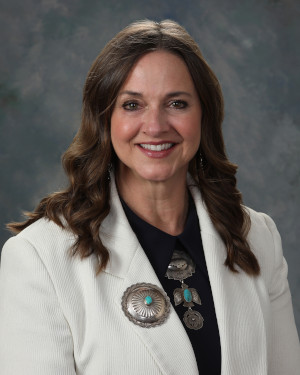
Rep. Rebecca Dow
Sponsored bills
Maddy summaryHB 85 creates a program to increase healthcare providers in New Mexico's underserved areas by offering loan repayment and loan-for-service agreements. It establishes a Medical Provider Recruitment Trust Fund (initially funded with $5 million from the general fund) that invests money and distributes 5% of its annual value to a separate Program Fund. This Program Fund, supported by an additional $1 million annual appropriation, provides financial assistance to physicians, physician assistants, and advanced practice nurses who agree to work in designated underserved communities. Priority is given to applicants who graduated from New Mexico state universities or bordering states universities and to those specializing in primary care.
Maddy summaryHB 48 allocates $2 million from the state general fund to the New Mexico Institute of Mining and Technology (NM Tech) for seismology equipment and expanding earthquake monitoring capabilities. The funding supports the Bureau of Geology and Mineral Resources at NM Tech, working with the Oil Conservation Division of the Energy, Minerals and Natural Resources Department. The bill requires all funds to be spent by the end of fiscal year 2027, with any unspent money reverting to the general fund. This directly affects NM Tech's geoscience operations and state agencies responsible for monitoring seismic activity and oil industry compliance. The measure focuses on upgrading physical equipment and network infrastructure for earthquake detection.
Maddy summaryHB 93 increases New Mexico's standard income tax deduction to 205% of the federal standard deduction amount. This change directly affects individual taxpayers who file state income taxes and claim the standard deduction instead of itemizing deductions. The bill amends the state's tax code to adjust "net income" calculations by expanding the deduction, lowering taxable income for qualifying filers. This policy change would reduce the state income tax liability for eligible taxpayers without requiring them to itemize expenses. The bill is currently pending referral to relevant legislative committees.
Maddy summaryHB 176 creates a new "Zero Interest Down Payment Loan Fund" in New Mexico to provide first-time homebuyers with zero-interest loans covering up to 20% of a home's purchase price. The fund will be financed by redirecting specific state revenues - excess oil and gas tax receipts and federal Mineral Leasing Act funds - that would previously have gone to the Early Childhood Education and Behavioral Health funds. Starting in 2026, these redirected funds will instead support the loan program, with the first-time homebuyer loans secured by a 30-year mortgage lien (requiring repayment if the property sells before 30 years). The bill modifies existing distribution rules for these revenue streams to prioritize housing affordability for qualifying New Mexico residents.
Maddy summaryHB 181 requires New Mexico's Children, Youth and Families Department (CYFD) to report on children in their custody who stay overnight in CYFD offices. The bill appropriates $100,000 to fund weekly reports to the Office of Child Advocate and monthly reports to three legislative committees, detailing the number of children, reasons for overnight stays, duration, and current status. It does not change placement policies but mandates regular data collection on this specific practice. The reporting obligation applies to fiscal years 2027-2028, with unspent funds reverting to the general fund.
Maddy summaryHB 101 appropriates $200 million from New Mexico's general fund to the Department of Agriculture for a regional farm-to-food bank program. The bill directly affects food banks and agricultural producers by funding connections between farms and food distribution networks, aiming to reduce food waste and improve food access. Key provisions include allocating funds for fiscal year 2026 and future years with no requirement to return unspent balances to the general fund. The bill is declared an emergency to take effect immediately, prioritizing rapid implementation of the program.
Maddy summaryHB 202 requires New Mexico's Children, Youth and Families Department, Health Care Authority, Department of Health, and other state agencies to create a written agreement with the Office of Child Advocate for sharing specific data and system access. The bill mandates that this agreement include security protocols, audit logging, breach plans, and compliance with federal privacy laws like HIPAA and FERPA. It also establishes a working group to develop the agreement by October 2026 and appropriates $75,000 to the Office of Child Advocate for technical support. The law directly affects the Office of Child Advocate and the listed state agencies by structuring how they share sensitive child-related information.
Maddy summaryHB 56 appropriates $1 million from the general fund to New Mexico's Veterans' Services Department for fiscal year 2027. The funding directly assists veterans and their families in identifying and accessing existing behavioral health care services. Key provisions include a one-time allocation with any unspent balance reverting to the general fund by the end of 2027. This bill does not create new services but provides resources to help veterans navigate available care options. It is a funding measure, not a policy change affecting service delivery.
Maddy summaryHB 77 creates a corporate income tax credit for businesses renovating vacant buildings or lots in New Mexico that have been unoccupied for at least two years. The credit covers 30% of renovation costs for properties vacant 2-5 years (capped at $2 million per business) or 40% for properties vacant 5+ years (capped at $4 million), provided at least 15% of new housing units are affordable for low/moderate income residents (defined as ≤85% of local median income). Businesses must get pre-certification before work begins and post-completion certification, with the credit being transferable or carry-forwardable for up to five years. The credit expires in 2038, has an annual spending limit of $100 million (with $50 million reserved for non-rural areas), and applies to projects starting in 2026.