

Maddy summarySB 30 provides a two percent annual cost-of-living adjustment (COLA) for certain retired New Mexico state employees. It directly affects normal retired members over age 65 who retired from state government before July 1, 2025, by increasing their pension payments by 2% each July 1. The bill appropriates $10 million from the general fund for fiscal year 2026 and beyond to fund this adjustment, with unspent funds not reverting to the general fund. This replaces a previous reduction in COLA rates for this specific group of retirees.
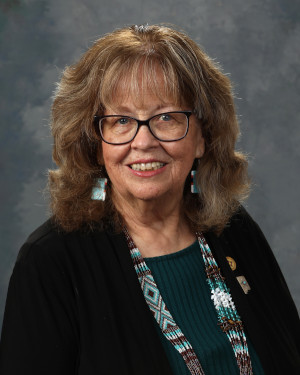
Rep. Joy Garratt
Sponsored bills
Maddy summaryHB 68 requires a one-to-one ratio of apprentices to journeyman supervisors in New Mexico's construction industry trades. It mandates that each apprentice must be directly supervised by a certified journeyman holding the relevant trade certification, as recognized by the state's licensing department. The bill amends existing law to explicitly limit the apprentice-to-journeyman ratio to 1:1 for building and construction trades, ensuring individualized supervision. This directly affects construction apprentices and their certified supervisors within registered trade programs. The law would take effect July 1, 2025, if enacted.
Maddy summaryHB 422 would increase stipends for teaching residents in New Mexico's teacher residency programs to at least $35,000 annually (80% of a level 1 teacher's minimum salary) and require health insurance coverage through the public school insurance authority. It also provides $2,000 annual stipends for mentor teachers, principals, and program coordinators, plus $4,000 per faculty member at participating colleges for co-teaching training. The bill mandates a three-year service commitment for teaching residents at their sponsoring school district and allocates funding for institutional costs. This proposed legislation aims to strengthen residency programs by improving financial support for participants and educators, though it was postponed indefinitely in June 2025.
Maddy summaryThis House Memorial (HM 39) requests the New Mexico Higher Education Department to study compensation for both temporary and non-tenure-track instructional staff at public colleges and universities. The study will examine current salaries, benefits, workloads, and institutional policies, while gathering input from faculty, administrators, and staff. It aims to assess issues like low pay (with 25% earning under $26,500 annually) and job insecurity, and will propose funding solutions if compensation changes are recommended. The Higher Education Department must submit findings by December 1, 2025. (Note: This is a procedural memorial requesting a study, not a law changing policy.)
Maddy summaryHB 306 allocates $2 million from New Mexico's general fund to the Crime Victims Reparation Commission for sexual assault services programs during fiscal year 2026. The bill directly affects organizations providing these services by funding their operations, with any unspent funds reverting to the state treasury by year-end. It contains no new policy provisions - only a funding mechanism for existing programs. The bill was introduced by Representatives Lujan, Stewart, and Garratt but was postponed indefinitely by the House on June 3, 2025.
Maddy summaryHB 496 increases penalties for individuals convicted of serious violent felonies who possess a firearm. It requires a minimum six-year prison sentence for a first offense and classifies second and subsequent offenses as first-degree felonies. This applies to those convicted of specific violent crimes (e.g., aggravated assault or robbery) within the last ten years without a pardon or deferred sentence. The bill does not change penalties for regular felons (who remain subject to a third-degree felony) or for other prohibited groups, who face misdemeanor charges for firearm possession.
Maddy summaryHB 454 provides a temporary, non-compounding 2% payment on existing retirement payments to retired educators under New Mexico's Educational Retirement Act for fiscal years 2026 and 2027. This additional payment is calculated as 2% of a retiree's current annual retirement amount (including prior cost-of-living adjustments). It directly affects retired public school employees and other eligible educators who receive benefits under this specific retirement system. The provision is temporary and does not alter the standard cost-of-living adjustment formula for future years.
Maddy summarySB 206 amends New Mexico's procurement rules to increase minimum spending thresholds for public works projects (e.g., raising architectural/engineering service requirements from $50,000 to $100,000). It creates new requirements for chief procurement officers, including certification and training, and expands exemptions allowing state/local agencies to bypass standard bidding for specific purchases like IT equipment, child care services, digitized records, and appraisals. The bill also defines "public-private partnership agreements" and modifies bidding procedures, contract terms, and cost documentation rules. These changes directly affect state agencies, local governments, and contractors working with public funds. The bill is pending in committee and has not yet been enacted.
Maddy summaryHB 67 defines "reasonable assurance" for higher education employees to prevent denial of unemployment benefits during academic breaks. It affects faculty and staff at New Mexico educational institutions who have a clear expectation of returning to similar or higher-level roles after summer or semester breaks. The bill clarifies that benefits cannot be denied if an employee has a written, oral, or implied offer of continued employment for the next academic term, based on historical reemployment patterns and reasonable anticipation of availability. The bill passed the House but was postponed indefinitely in the Senate on June 3, 2025.
Maddy summarySB 259 amends New Mexico's Charitable Solicitations Act to impose new requirements on professional fundraisers and third-party solicitors who raise money for charities. It directly affects individuals or companies paid to solicit donations or sell nonperishable goods for charitable organizations (excluding religious groups). Key provisions require these entities to register with the Attorney General ($200 fee), post a $25,000 surety bond, and submit detailed contracts outlining compensation, solicitation methods, locations, and materials before working with charities. The bill aims to increase transparency and accountability in fundraising activities.