

Maddy summaryHB 319 amends New Mexico law to clarify that domestic strains of quail are no longer classified as "game birds" under state wildlife regulations. This change directly affects residents who raise quail for meat or eggs, removing the previous requirement for a permit to do so. The bill's key provision, added as Section 2, explicitly states that "a person may raise quail for the purposes of producing meat or eggs without a permit." The legislation updates the existing definition of game birds to exclude domestic quail, aligning regulations with common agricultural practices for this specific bird. This policy change simplifies compliance for quail raisers without altering hunting or conservation rules for wild quail populations.
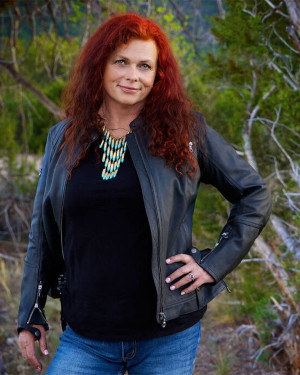
Rep. Stefani Lord
Sponsored bills
Maddy summarySB 183 appropriates $100,000 from the state general fund for fiscal year 2026 to support economic development in the Lower Estancia Valley. The funds would contract with a local economic development organization to strengthen business income potential, promote civic and cultural programs, and address barriers to business growth in the community. This one-time appropriation expires at year-end, with unspent funds reverting to the general fund.
Maddy summaryThis bill proposes amending New Mexico's constitution to change bail rules. It would allow all courts - not just "courts of record" - to deny bail for any criminal offense (not just felonies), based on strong evidence that a defendant might flee or pose a safety risk. The amendment removes current requirements that only prosecutors can request bail hearings and that courts must follow specific procedures for denial. It also maintains protections against excessive bail and prevents detention solely due to inability to pay financial conditions. The change requires voter approval at the next general election.
Maddy summaryHB 576 would update New Mexico law to extend free admission to state museums and parks, camping passes, and fishing licenses to adopted children under 18, alongside existing eligibility for foster children and others. It requires proof of residency, identity, and adoption status through specific state departments (cultural affairs, natural resources, or game commission). The bill, introduced by Rep. Stefani Lord, would take effect July 1, 2025, if enacted. However, it was postponed indefinitely on June 3, 2025, and is currently inactive. This policy change directly affects adopted children and their families seeking access to state recreational and cultural resources.
Maddy summaryHB 322 increases penalties for severe sexual crimes in New Mexico, specifically adding the death penalty for aggravated criminal sexual penetration of children under 13 and human trafficking of minors under 18. The bill amends statutes to create new first-degree felony charges for these offenses, with the death penalty as a potential sentence. It also imposes stricter penalties for school employees committing sexual crimes against students, making such acts a first-degree felony regardless of the child's age. The law directly affects perpetrators of these specific crimes, particularly those involving children under 18 in trafficking or sexual assault cases.
Maddy summaryHB 318 increases penalties for resisting, evading, or obstructing law enforcement officers in New Mexico, upgrading the offense from a misdemeanor to a fourth-degree felony. It directly affects individuals who knowingly interfere with officers during lawful duties, such as fleeing arrest, refusing to stop a vehicle when signaled, or physically obstructing officers. The bill amends New Mexico law to specify that these actions - covering obstruction, evasion, vehicle refusal, or resisting officers - now carry felony-level consequences. This change represents a concrete policy shift in criminal penalties for interference with law enforcement.
Maddy summaryHB 580 creates a special elk-themed license plate for New Mexico vehicles, allowing owners to pay a $25 initial fee (plus $10 annually) to support wildlife conservation. The revenue splits: $10 covers plate production costs, while $15 (plus all renewal fees) funds the state's "Share with Wildlife" program in the Game Protection Fund. The bill requires the Department of Game and Fish to design the elk logo and mandates that plate issuance may stop after 2031 if annual sales fall below 50% of the 2026-2031 average. This affects vehicle owners who choose the plate, with no personalized designs permitted.
Maddy summaryThis bill creates a special "Iron Horse" license plate for motorcycles that are at least 35 years old and owned as collector's items. To qualify, owners must pay a $7 fee and provide a witnessed bill of sale or affidavit showing the motorcycle was assembled from parts of 35+ year old motorcycles. The plate will display "Iron Horse," "Land of Enchantment," and "New Mexico" and must be attached to the rear of the vehicle. Starting July 1, 2029, owners will need to pay a $5 fee to revalidate the plate, and violations of these provisions are considered penalty assessment misdemeanors with a $25 penalty.
Maddy summaryHB 437 creates a tax credit for New Mexico residents who donate to qualifying foster care organizations. The credit provides $500 for most individuals and $1,000 for married couples filing jointly, with unused portions carried forward for up to five years if they exceed current tax liability. To qualify, organizations must have federal 501(c)(3) status, serve at least 200 foster care youth in New Mexico, and spend at least half their budget on foster care services like medical care, education support, and activities promoting normal childhood experiences. The credit applies to tax years beginning January 1, 2025, and requires documentation from both donors and organizations to verify eligibility.
Maddy summaryHB 383 amends New Mexico's child abuse law to automatically treat knowing exposure of a child to fentanyl (or methamphetamine) as evidence of abuse. This means that if a parent, guardian, or caregiver intentionally exposes a child to fentanyl use, it will be considered direct proof of child abuse in legal cases. The bill also appropriates $500,000 to the Department of Public Safety for fiscal year 2026 to expand investigations of child abuse cases involving fentanyl. The law, effective July 1, 2025, will apply to caregivers who expose children to these drugs, potentially leading to criminal charges under existing child abuse statutes.