

Maddy summaryHB 208 allows New Mexico residents applying for a hunting or fishing license at the Department of Game and Fish to register to vote simultaneously. It adds the department of game and fish to existing state agencies (like motor vehicle offices) where eligible voters can register or update their registration during service interactions. The bill requires the department to appoint license vendors to accept voter registration forms, with all registrations transmitted to election officials within 10 days. This policy change directly affects people seeking hunting/fishing licenses who are not already registered to vote, expanding access points for voter registration without altering voting rights or requirements.
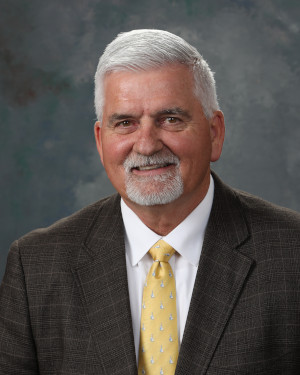
Rep. Mark Duncan
Sponsored bills
Maddy summaryHB 52 expands New Mexico's existing rural health care practitioner tax credit to include additional health care providers working in underserved rural areas. The bill adds professions like pharmacists, nurse practitioners, clinical social workers, physical therapists, and emergency medical technicians to the list of eligible practitioners who can claim the credit. Eligible providers must work at least 1,584 hours annually in a designated rural health underserved area, with credit amounts set at $5,000 for physicians/dentists or $3,000 for the newly included professions (half that amount for 792-1,583 hours). The credit, which can be carried forward if it exceeds tax liability, requires providers to apply through the Department of Health for certification before claiming it on their tax return.
Maddy summaryHB 400 requires New Mexico's Health Care Authority to conduct cost studies every three years for each type of health care provider reimbursed by Medicaid (such as hospitals, clinics, and doctors). These studies must analyze actual costs, including competitive wages and inflation, to recommend fair reimbursement rates. The bill also mandates that the Authority include the latest study in its annual budget requests to the legislature. This applies to all Medicaid-reimbursed providers, ensuring rates better reflect current costs without requiring all studies to be done simultaneously each year. The bill does not change Medicaid eligibility or funding levels but aims to improve how reimbursement rates are set.
Maddy summaryThis non-binding joint memorial (HJM 6) expresses New Mexico's legislative support for strengthening U.S.-Taiwan and New Mexico-Taiwan relations. It specifically advocates for Taiwan's meaningful participation in international organizations (like the WHO and UN climate talks), supports ongoing U.S.-Taiwan trade negotiations, and encourages educational exchanges between New Mexico and Taiwan. The resolution does not create new laws or obligations but formally endorses existing efforts, citing New Mexico's $62 million in exports to Taiwan and companies like Admiral Cable operating in the state. The memorial passed the New Mexico House but was postponed indefinitely in the Senate in June 2025.
Maddy summaryHouse Memorial 51 requests the Consensus Revenue Estimating Group (CREG) to study how static scoring (which assumes no economic changes from tax policies) and dynamic scoring (which accounts for economic shifts like job growth) affect New Mexico's budget decisions. The study, due by September 1, 2025, will include specific examples like the revenue impacts of personal income tax cuts paired with adjusted state spending and infrastructure projects. This memorial does not change policy but aims to inform future fiscal analysis by comparing these two evaluation methods.
Maddy summaryThis joint resolution proposes amending New Mexico's constitution to permit state funding for home or private school education. It would remove constitutional barriers (currently in Article 4, Section 31) that prohibit state funds from going to non-state-controlled educational institutions. If approved, it would enable future legislation to create a program providing state funds directly to parents or guardians for school-age children's education in home or private settings. This is a constitutional amendment proposal, not an operational bill.
Maddy summaryHB 512 creates a program to help New Mexico medical residents and fellows repay student loans by providing direct payments to their lenders. It requires recipients to complete medical training in New Mexico and agree to practice medicine in the state for five consecutive years. The program excludes loans from state service programs, personal loans, and loans already covered by other repayment initiatives. Funds for the program will come from state appropriations and repayments, managed by the Higher Education Department through a new "Medical Residency Loan Repayment Fund."
Maddy summaryHB 437 creates a tax credit for New Mexico residents who donate to qualifying foster care organizations. The credit provides $500 for most individuals and $1,000 for married couples filing jointly, with unused portions carried forward for up to five years if they exceed current tax liability. To qualify, organizations must have federal 501(c)(3) status, serve at least 200 foster care youth in New Mexico, and spend at least half their budget on foster care services like medical care, education support, and activities promoting normal childhood experiences. The credit applies to tax years beginning January 1, 2025, and requires documentation from both donors and organizations to verify eligibility.
Maddy summaryHB 399 would allocate $19.7 million from the state general fund to the Health Care Authority for fiscal year 2026 to increase Medicaid payment rates for nursing homes in New Mexico. This funding directly affects nursing homes that serve Medicaid patients by raising the reimbursement rates they receive for care. The bill specifies that any unspent funds at year-end would revert to the general fund. As of June 3, 2025, the bill was postponed indefinitely by the legislature and is no longer active.
Maddy summaryHB 415 amends New Mexico's earned sick leave law to clarify that employees must notify employers of non-foreseeable sick leave use (e.g., sudden illness) orally or in writing as soon as practicable, following the employer's written policy. This applies to all employers and employees covered by the Healthy Workplaces Act. The bill does not change existing rules for accruing, carrying over, or using sick leave. It specifically addresses communication protocols for unexpected absences without altering core benefits or employer obligations.