

Maddy summaryHB 182 amends New Mexico's judicial retirement system to adjust service credit requirements for judges retiring under the current plan. It reduces the required years of service for judges joining after July 1, 2014, from eight to five years at age 65 (or fifteen years at age 60), aligning with earlier provisions for other judge groups. The bill also updates how retirement fund income from investments is credited and distributed among different account types (like member contributions and retirement reserves). These changes directly affect current and future New Mexico judges participating in the judicial retirement system.
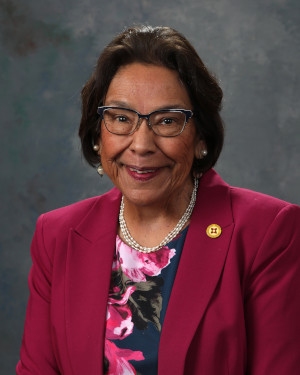
Rep. Pat Roybal Caballero
Sponsored bills
Maddy summaryHB 487 amends New Mexico's Hispanic Education Act to explicitly protect and preserve the state's heritage Spanish language and culture as part of the law's purpose. It requires the Hispanic Education Advisory Council to meet at biannual Hispanic Education Summits and allows council members to receive travel and daily allowances (per diem and mileage) for their service. The bill directly affects the advisory council, public schools, and educational institutions serving Hispanic students across New Mexico. Key provisions update the act's goals to include cultural preservation and formalize council meeting requirements with compensation for members. The changes aim to strengthen collaboration between schools, communities, and policymakers to support Hispanic student success.
Maddy summaryHB 91 amends New Mexico's public utility law to allow utilities to propose new rate structures for specific purposes. It specifically permits the Public Regulation Commission to approve rates designed for economic development, retaining existing customers, reducing energy costs for low-income households, decreasing outstanding bills (arrears), and increasing payment frequency to improve service continuity. These changes directly affect utilities (like electricity and gas providers) and low-income customers who may benefit from more affordable service options. The bill takes effect July 1, 2025, and was signed into law after passing both legislative chambers.
Maddy summaryHB 120, the "Accessibility Act," requires all New Mexico state agencies to make their websites, mobile apps, and physical facilities compliant with digital (WCAG 2.1 AA) and physical (ADA) accessibility standards by April 2026. It creates an Office of Accessibility within the governor’s commission on disability to enforce these standards, provide training, and oversee agency compliance through regular reports. The bill directly affects people with disabilities by ensuring equal access to state services and empowers individuals to file lawsuits against non-compliant agencies. The bill passed both legislative chambers in March 2025 but was vetoed by the governor on April 11, 2025, preventing it from becoming law.
Maddy summaryHB 6 requires contractors working on municipal or county projects funded by industrial revenue bonds to pay workers the local prevailing wage and benefits, directly affecting construction workers on these projects over $60,000. It mandates that wage rates be based on collective bargaining agreements for similar work in the area, with the director determining rates annually by October 1. The law requires contractors to post wage rates publicly, withhold payments if underpaid, and allows workers to file complaints for unpaid wages, with investigations completed within 75 days. This amendment to New Mexico’s Public Works Minimum Wage Act ensures fair pay standards for workers on publicly funded construction projects.
Maddy summaryHB 54 requires every high school in New Mexico to install an automated external defibrillator (AED) by January 1, 2026, and maintain them according to manufacturer guidelines. The bill also mandates annual AED training for all high school employees, following American Heart Association standards, to ensure staff can use the devices during cardiac emergencies. This law directly affects all public and private high schools and their employees across the state. HB 54 was signed into law on April 10, 2025, after passing both chambers of the legislature.
Maddy summaryHB 128 establishes a $60 million Local Solar Access Fund within New Mexico's Finance Authority to provide grants for solar energy systems. The fund supports eligible entities like counties, municipalities, school districts, and tribal nations in planning, installing, and upgrading solar systems for public buildings and infrastructure. Grants prioritize projects in rural areas, low-income communities, and those serving community services or emergency needs, with rules requiring transparency in allocation. The fund’s money does not revert to the general fund annually, ensuring ongoing support for solar initiatives.
Maddy summaryHB 89 amends New Mexico's Graduate Scholarship Act to expand access for underrepresented groups, including women, minorities, and people with disabilities. It changes scholarship funding to cover 100% of tuition and fees (previously a fixed $7,200) and requires recipients to maintain a 3.0 GPA while completing at least six credit hours per semester. Recipients must also complete 10 hours per week of unpaid work (internship or assistantship) at approved institutions or agencies. The bill caps funding at eight semesters or until a terminal degree is earned, directly affecting New Mexico graduate students at eligible state universities.
Maddy summaryHB 93 requires New Mexico electricity companies to submit detailed "advanced grid technology plans" to the Public Regulation Commission alongside their regular resource plans. These plans must identify transmission congestion points, propose specific technology projects (like dynamic line ratings or advanced power flow controllers) to address them, and include cost analyses. Approved projects can recover costs through rate increases (tariff riders or base rates), with the Commission reviewing plans to ensure they save ratepayers money, improve grid reliability, support renewable energy integration, and benefit low-income communities. The law applies to most utilities but excludes rural electric cooperatives.
Maddy summaryThis memorial requests the New Mexico Legislative Council to form an interim committee to study how to implement a 2022 voter-approved constitutional exception allowing state funds for essential utility services (like internet, electricity, water, and wastewater). The committee will examine structural questions - such as whether to create a single entity or separate entities for different services, funding criteria, and oversight mechanisms - to develop concrete proposals for the 2026 legislative session. It directly affects communities lacking access to essential utilities due to infrastructure costs, but does not create new law or funding itself. The bill is procedural, focusing solely on planning for future legislation.