

Maddy summaryHB 98 increases the minimum hourly wage for New Mexico state employees to $15 starting July 1, 2027, with future annual adjustments tied to the consumer price index. It also establishes new annual leave accrual rates based on years of service (ranging from 4.62 to 7.39 hours per pay period) and mandates 12 weeks of fully paid parental leave for eligible employees beginning July 2027. The bill requires state agencies to create remote work programs to improve recruitment and retention, particularly for rural New Mexico residents, while maintaining performance standards. These changes apply to all state employees except student workers and may be superseded by existing collective bargaining agreements.
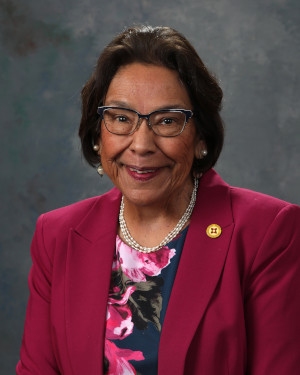
Rep. Pat Roybal Caballero
Sponsored bills
Maddy summaryHB 26 prohibits public libraries in New Mexico (operated by state, county, or municipality) from removing or banning books based on content disagreement or protected characteristics like race, religion, or sexual orientation. It requires libraries to create written procedures for challenging materials deemed obscene or unlawful, while banning retaliation against staff who refuse to remove books due to policy compliance. The law also blocks funding cuts or disciplinary action against libraries or staff for adhering to these rules, and libraries violating the ban lose eligibility for state funding. Enforcement falls to the Library Division of the Cultural Affairs Department, effective July 1, 2026.
Maddy summaryHB 25 prohibits adults who received a juvenile disposition for a firearm-related offense (that would be a felony if committed by an adult) from possessing firearms or destructive devices. It treats such juvenile dispositions as criminal convictions for the purpose of firearm background checks, requiring law enforcement to access these juvenile records during background screenings. The bill directly affects adults with these specific juvenile court records, preventing them from legally obtaining or possessing firearms. Key mechanisms include amending firearm possession laws to include this category of individuals and mandating access to juvenile delinquency records during background checks. The law does not change juvenile sentencing but alters how past firearm-related juvenile cases impact adult firearm rights.
Maddy summarySenate Memorial 9 requests the Legislative Finance Committee to study whether New Mexico state investment funds should purchase equity in New Mexico Gas Company and TXNM Energy (parent of PNM), examining financial, environmental, and economic impacts. The study must be completed by December 2026, including input from agencies like the Public Regulation Commission, and requires the commission to delay private equity acquisition approvals until the study concludes. This procedural resolution does not change policy but directs a review of potential state ownership for revenue diversification and influence over utility operations.
Maddy summaryThis bill bans the installation of decorative, non-recreational grass (nonfunctional turf) on state properties managed by the General Services Department or Legislative Council Service starting in 2028. It requires all existing nonfunctional turf to be replaced with drought-resistant landscaping (like native plants or efficient irrigation systems) by 2033 and restricts irrigation to recycled water for such areas after that year. Exceptions include cemeteries and tree canopy zones where replacement isn’t feasible. The state allocates $3.5 million to cover implementation costs for these changes.
Maddy summaryThis joint memorial (HJM 1) expresses New Mexico's legislative support for strengthening ties between Taiwan and both the U.S. and New Mexico. It specifically encourages cooperation in trade, technology, education, and Taiwan’s meaningful participation in international organizations like the WHO and UN climate talks. The memorial calls for creating a "New Mexico-Taiwan friendship caucus" to coordinate regular official exchanges, trade missions, and academic partnerships. It directs New Mexico’s economic agencies and universities to develop joint programs with Taiwan, aligning with U.S. policy on Taiwan engagement.
Maddy summaryThis House Memorial requests the Legislative Finance Committee to form a task force to study whether New Mexico should amend its constitution to make the Children, Youth and Families Department (CYFD) an independent executive department, separate from the Governor's office. The study would examine creating an independent commission to hire CYFD's executive director, addressing current challenges like a 25.4% vacancy rate, high child maltreatment rates (12.6 per 1,000 children vs. a national average of 7.4), and failed federal funding plans. It would evaluate potential benefits, costs, and lessons from other states' commission structures. The memorial itself does not change policy - it only seeks a study before pursuing a constitutional amendment.
Maddy summaryHJR 3 proposes a constitutional amendment to establish environmental rights for all New Mexicans, including the right to clean air, water, soil, and a healthy environment, as well as a stable climate and thriving ecosystems. It requires state, county, and municipal governments to act as trustees of natural resources, protecting these rights equitably for everyone - including future generations - without discrimination based on race, ethnicity, or socioeconomic status. The amendment would take effect immediately upon voter approval (without needing additional laws) but prohibits monetary damages for violations. The proposal must be approved by New Mexico voters in the next general election.
Maddy summaryHB 169 appropriates $250,000 from the general fund to the University of New Mexico's Department of Chicana and Chicano Studies for two main purposes in fiscal year 2027. It provides year-round scholarships prioritizing New Mexico residents from rural, tribal, indigenous, or underserved communities - especially those planning to offer culturally rooted healing services in the state - and funds statewide outreach including workshops, courses, and collaboration with tribal governments and rural communities. The bill also requires the department to research and develop new curanderismo (traditional medicine) courses to address New Mexico's cultural and health needs. Unspent funds at year-end will revert to the general fund. This bill directly affects UNM students, community health educators, and New Mexico communities through educational and health programming.
Maddy summarySB 163 renames New Mexico's "geothermal electricity generation" tax credits to "geothermal energy production" credits and establishes a tiered credit system based on kilowatt-hour output. The credit rate starts at $0.015 per kilowatt-hour in the first operational year, increases to $0.04 by year six, then decreases over the next four years, with a yearly production cap of 200,000 megawatt-hours per facility. Total annual credits are capped at $55 million, including $11 million reserved for tribal and small businesses, and credits can be transferred to other taxpayers. This bill directly affects geothermal energy producers in New Mexico who own or hold an interest in geothermal facilities.