

Maddy summaryHouse Memorial 23 requests the Regulation and Licensing Department and Motor Vehicle Division to study reestablishing New Mexico's statewide motor vehicle safety inspection program. The study would examine benefits based on research showing states with such programs have 10.3% fewer traffic fatalities and 20% of vehicles in Missouri had safety defects detected during inspections. It directs the departments to report findings and implementation recommendations to state agencies and the legislature by 2026, following New Mexico's prior 1970s program that ended due to implementation challenges. This memorial does not create a new law but seeks data to inform future policy decisions.
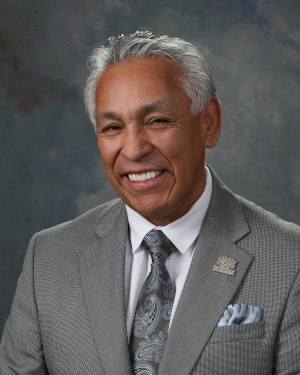
Rep. Art De La Cruz
Sponsored bills
Maddy summarySB 77 requires construction companies working on most state-funded public works projects (like buildings or infrastructure) to pay into apprentice and training programs or a state fund. This applies to all public construction projects except those involving trades not recognized as apprenticeable by federal standards. Employers must contribute the same amount required by existing wage rate rules, verified through payroll reports. The bill takes effect July 1, 2026, and affects contractors bidding on New Mexico government construction projects.
Maddy summaryHB 252 transfers the New Mexico Athletic Commission's authority from its current structure to the Regulation and Licensing Department. The bill expands the commission from five to seven members, changes its composition rules, eliminates the Medical Advisory Board, adds new licensing categories for athletic events, and modifies fee structures for the commission fund. This directly affects athletic promoters, fighters (including boxers, mixed martial artists, and sports entertainment wrestlers), and the Regulation and Licensing Department, which will now oversee athletic licensing and enforcement. Key provisions include moving administrative oversight to the department, removing penalties for violations, and updating definitions to align with the new structure. The bill amends specific sections of New Mexico's statutes (60-2A-2 and 60-2A-3 NMSA 1978) to implement these changes.
Maddy summaryHB 162 creates a new crime of "negligent homicide by vehicle" (a fourth-degree felony) for causing death while violating reckless driving laws. It increases penalties for homicide by vehicle under the influence or with prior DWI convictions (adding four years per prior DWI within 10 years). The bill also allocates $250,000 for a statewide public education campaign on reckless driving, funded from the general fund for fiscal year 2027. This legislation directly affects drivers who cause death or injury through reckless or impaired driving. It modifies existing criminal penalties without changing the underlying reckless driving statute.
Maddy summaryHB 270 requires employers working on most New Mexico public works construction projects to contribute to apprenticeship or training programs, or to the Public Works Apprentice and Training Fund administered by the Workforce Solutions Department. The bill sets a zero contribution rate for trades without approved apprenticeship programs (such as certain street, highway, or utility projects), ensuring employers aren't required to pay if no local program exists. It amends existing law to clarify administration, compliance verification, and penalty enforcement for these contributions. The law takes effect July 1, 2026, directly affecting public works contractors and the state's workforce development system.
Maddy summaryHB 285 clarifies rules for New Mexico's existing disabled veteran property tax exemption, directly affecting veterans with service-connected disabilities and their surviving spouses who own property. It specifies that veterans must occupy the property as their principal residence to qualify, clarifies how exemptions apply to properties with multiple owners, and streamlines the claiming process by requiring proof of eligibility (including a veterans' services certificate) within 30 days of receiving the county assessor's notice. The bill also adds procedures for claiming the exemption after moving and for protesting denied claims, while ensuring the exemption applies only to the highest disability percentage among qualifying owners. It does not change the exemption amount or eligibility criteria but makes the current system clearer and easier to navigate for veterans and local assessors.
Maddy summarySB 2 increases funding for New Mexico's highway projects by raising fees on vehicle registrations and commercial truck taxes. It raises weight-distance tax rates for commercial trucks (affecting freight companies), increases standard passenger vehicle registration fees, and adds new annual fees for electric vehicles ($70-$90) and plug-in hybrids ($35-$45) starting in 2027. All new revenue from these changes goes directly to the State Road Fund to support highway improvements. The bill specifically targets commercial truck operators, all vehicle owners, and electric vehicle owners, with fee amounts varying by vehicle type and registration year.
Maddy summaryThis bill (HB 3) is a funding authorization for New Mexico's Department of Transportation (DOT) for fiscal year 2027. It allocates specific budget amounts for highway construction and maintenance ($556 million for design/construction, $321 million for operations), including funding for road projects, bridge inspections, and equipment. The bill includes performance targets, such as maintaining 95% of bridges in fair or better condition and completing 88% of projects on schedule. It directly affects DOT operations and state highway infrastructure management, with no new policy changes - only funding allocation.
Maddy summaryHB 160 requires drivers approaching railroad crossings to "stop, look, and listen" for all rail equipment - including maintenance vehicles and switching cars - not just trains. It amends New Mexico traffic laws to mandate stopping 15-50 feet from the tracks when approaching a crossing if any rail equipment is visible, audible, or blocking the path. This applies to all drivers (Section 66-7-341) and specifically reinforces safety steps for commercial vehicles carrying passengers, hazardous materials, or school buses (Section 66-7-343). The bill expands existing rules to address non-train rail equipment, with exceptions for crossings with active traffic control or official exemptions. The law aims to reduce crossing collisions by requiring proactive observation of all rail traffic.
Maddy summarySB 157 modifies New Mexico's Forfeiture Act to govern property seizures by law enforcement agencies participating in federal equitable sharing programs. It requires that forfeiture proceeds from such seizures be directed to drug treatment rehabilitation programs (not general funds), and sets new conditions for transferring property to federal authorities (e.g., property value over $50,000 or federal criminal charges). The bill also prohibits law enforcement from accepting federal equitable sharing funds unless the property owner is convicted in federal court. This directly affects law enforcement agencies, drug treatment programs, and individuals whose property is seized under these provisions.