

Maddy summaryHB 436 requires that during emergencies, government orders closing businesses must also exempt federally tax-exempt religious facilities (like churches) on the same terms as the most permissive exemption given to other businesses. It applies to closures issued under New Mexico’s emergency management laws, including the All Hazards Emergency Management Act. The bill mandates that all such orders must explicitly include these religious exemptions, preventing their exclusion during public health or disaster closures. This ensures religious organizations operating as places of worship receive equal treatment in emergency restrictions.
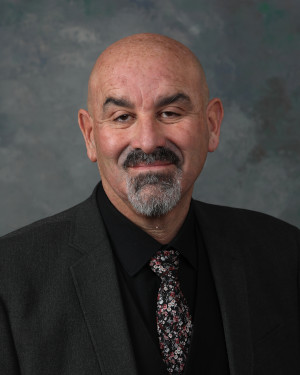
Rep. Rod Montoya
Sponsored bills
Maddy summaryHB 572 makes it a felony to knowingly solicit a non-U.S. citizen to register to vote or vote in New Mexico. It broadly defines "solicitation" as any verbal, written, or electronic request to register or vote, including digital messages. Soliciting non-citizens violates the law even if the solicitor adds a disclaimer stating the person shouldn’t vote due to citizenship status. Violators face a fourth-degree felony charge, up to one year in prison, and a $5,000 fine per violation. The bill directly affects individuals or groups who actively encourage non-citizens to participate in elections.
Maddy summaryHB 378 would cap non-medical compensation (excluding medical expenses and punitive damages) at $600,000 for most medical malpractice claims in New Mexico, and $750,000 for claims against "independent providers" (like solo practitioners or non-hospital-affiliated clinics), with annual inflation adjustments starting in 2023. It redefines "occurrence" to cover all claims from a single patient's harm, regardless of how many health care providers were involved. The bill also requires payments from the Patient's Compensation Fund to be made as expenses are incurred, rather than in lump sums. These changes would directly affect patients filing malpractice claims and the health care providers, facilities, and insurers they sue.
Maddy summaryHB 484 would exempt tips received by New Mexico residents as compensation for services (like from restaurant servers or bartenders) from state income tax calculations. This directly affects workers in tipped occupations who currently have tips counted toward their taxable income. The bill creates a new tax exemption allowing these workers to exclude tip earnings from their taxable income starting in 2025. The policy change would reduce the state income tax burden for eligible service industry workers. The bill was referred to relevant committees but was postponed indefinitely in June 2025.
Maddy summaryHB 563 prohibits state building codes or rules from requiring electric vehicle (EV) charging infrastructure in new residential or commercial construction. It directly affects developers and builders by removing mandates for minimum EV charging spaces, electrical infrastructure in parking areas, or EV-capable parking in new projects. The bill establishes that no standards under New Mexico's Construction Industries Licensing Act can compel the installation of EV charging equipment or related electrical capacity. This policy change eliminates specific requirements for EV infrastructure in building codes, focusing on removing prescriptive mandates rather than promoting or restricting EV adoption.
Maddy summaryHJR 2 proposes a constitutional amendment to eliminate New Mexico's "pocket veto" power, meaning bills passed by the legislature automatically become law if the governor fails to act within three days (excluding Sundays). It also requires the governor to provide written explanations for any veto, whether partial or complete. This directly affects the governor and legislature by increasing legislative accountability and transparency in the veto process. The amendment would take effect only after voter approval at the next general election.
Maddy summaryHB 137 creates the Strategic Water Supply Program to reduce New Mexico's reliance on fresh water by funding projects that reuse treated brackish groundwater (highly salty groundwater) or treated oil/gas "produced water" (a byproduct of drilling). It establishes a dedicated fund financed by a 5-cent fee per barrel on oil/gas produced water, which will support grants and contracts for eligible water reuse projects. To qualify, projects must meet environmental standards, provide financial guarantees, advance economic development goals, and include a community benefits plan detailing public engagement. The program directly affects oil/gas operators (via the fee), state water agencies (DE, EMNRD, State Engineer), and communities where water reuse projects are implemented.
Maddy summaryHouse Memorial 4, "NM OIL & GAS DAY," is a ceremonial resolution recognizing the oil and natural gas industry's economic contributions to New Mexico. It declares January 28, 2025, as "New Mexico Oil and Gas Day" in the House, citing the industry's 2024 revenue of $13 billion - funding 49% of the general fund, $2.3 billion for education, $600 million for higher education, and over 100,000 jobs. The resolution has no policy or funding changes; it is purely symbolic recognition. It was passed by the House on January 28, 2025, but not advanced further.