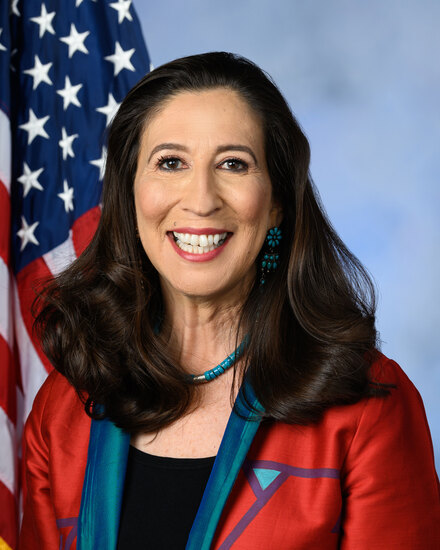
The Expanding Capacity for Health Outcomes Act of 2026 authorizes the Secretary of Health and Human Services to award grants to networks of organizations that use technology to improve health outcomes. These networks must consist of at least three entities with experience in collaborative learning and capacity building models. Recipients are required to use a shared dataset at the end of the grant period to demonstrate the impact of their work on significant public health issues such as infectious or chronic diseases. Additionally, the act extends the funding period for these grants from 2022 through 2026 to 2027 through 2031.
The FIRST Act establishes a new program within the Department of State to promote the international deployment of American small modular reactor technology. Managed by the Under Secretary for Arms Control and International Security, the program will advocate for U.S. nuclear exports, ensure high safety and security standards, and provide support for project development and workforce training abroad. The legislation requires the program to submit detailed reports and briefings to Congress every 120 days regarding its activities and funding, and it is set to expire in 2034.
The FAIR Data Act prevents investor-owned electric utilities from passing the costs of large data centers onto residential and small business customers through higher rates. This rule applies specifically to data centers with a peak power demand exceeding 75 megawatts, excluding upgrades to the power grid made to support these facilities. State regulators are required to review and implement this cost-recovery restriction within a year, while the Department of Energy must verify that states comply before receiving federal administrative funds. Additionally, the Federal Energy Regulatory Commission will submit an annual report to Congress detailing how these data centers impact electricity rates and grid reliability.
The Home Internet Accessibility Act requires the Comptroller General to produce a detailed report within a year on which federally assisted housing units currently have or lack the infrastructure to support high-speed internet. This report will analyze specific challenges, costs, and timelines for upgrading these properties, broken down by location and demographic data, while also reviewing past retrofitting efforts and pilot programs. Following this analysis, the Department of Housing and Urban Development must create a formal plan to upgrade necessary housing to support broadband service and submit it to Congress within 18 months. The legislation directly affects residents of government-subsidized housing by aiming to ensure their living spaces can accommodate modern internet connectivity.
The Digital Opportunity Foundation Act of 2026 establishes a new nonprofit organization called the Foundation for Digital Opportunity to help communities with low broadband adoption rates gain access to technology and digital skills. This foundation will be funded by raising money from private donors, philanthropic groups, and government entities rather than using direct federal appropriations. It will operate with a diverse board of directors and an executive team to distribute grants, run training programs, and support startups focused on digital inclusion. The bill also allows the foundation to create for-profit subsidiaries to attract investment and requires regular public reporting on its activities and financial status.
This bill establishes a new Office of Urban Agriculture and Innovative Production within the Department of Agriculture to support farming methods like hydroponics and controlled-environment agriculture. It creates a competitive grant program that provides funding to nonprofits, local governments, Tribal organizations, and schools to help urban farmers navigate regulations, access land, and improve food availability in underserved areas. Additionally, the legislation updates federal data collection requirements to include modern farming technologies and allocates specific funding amounts to support these initiatives from 2026 through 2030.
The Postal Data Privacy Act of 2026 restricts the use of mail covers by requiring governmental entities to obtain a court order before accessing postal records for criminal investigations. To qualify for such an order, authorities must provide specific facts demonstrating that the requested data is relevant and material to an ongoing case, while state laws prohibiting mail covers would override federal requirements. Additionally, the bill mandates that postal officials preserve relevant records for up to 180 days while a court order is being sought or renewed. These provisions directly affect federal and state law enforcement agencies as well as the United States Postal Inspection Service by establishing new procedural safeguards for accessing mail data.
The Connected Vehicle Security Act of 2026 restricts the importation, sale, and use of connected vehicles and related technology from China, Russia, Iran, and North Korea to protect national security. Starting in 2027, the bill generally bans these vehicles if they originate from or are controlled by these countries, with separate restrictions on software and hardware taking effect in 2030. The Secretary of Commerce is authorized to issue specific exemptions for items that do not pose a security risk and must publish a list of approved products. The law also requires companies to submit declarations confirming their vehicles comply with the rules and imposes heavy fines for violations.
The Communications, Video, and Technology Accessibility Act of 2026 expands accessibility requirements for video content, devices, and communication services to better serve people with disabilities. It mandates that online video programming and television shows include closed captions and audio description, while also requiring video players and customer service tools to support features like sign language interpretation and screen readers. The bill establishes an advisory committee to guide these rules and requires the Federal Communications Commission to report on accessibility progress and emerging technologies every few years.
Tags
People with Disabilities
The Outage Refund Protection Act requires large cable, satellite, internet, and telephone providers to automatically credit customers' bills when service outages last four hours or longer. These credits are calculated as one-thirtieth of the monthly rate for each day of unavailability, and any excess amount must be refunded within 30 days if the customer cancels their service. The bill also mandates that providers improve customer service by extending accessibility requirements, recording support calls, and eliminating fees for reaching a representative, while prohibiting refunds for pre-planned maintenance that customers were notified about in advance.