

Maddy summaryS 2492, the Fiscal Contingency Preparedness Act, requires the Treasury Secretary and OMB Director to annually assess how the federal government would respond to major fiscal shocks like recessions, pandemics, natural disasters, cyberattacks, or financial crises. The bill mandates they evaluate both short-term and long-term fiscal impacts of these events, including historical responses. This assessment must be included in an existing annual Treasury report and will be reviewed annually by the Government Accountability Office (GAO). The law directly affects federal agencies responsible for fiscal planning (Treasury and OMB) and aims to improve preparedness for national economic disruptions.
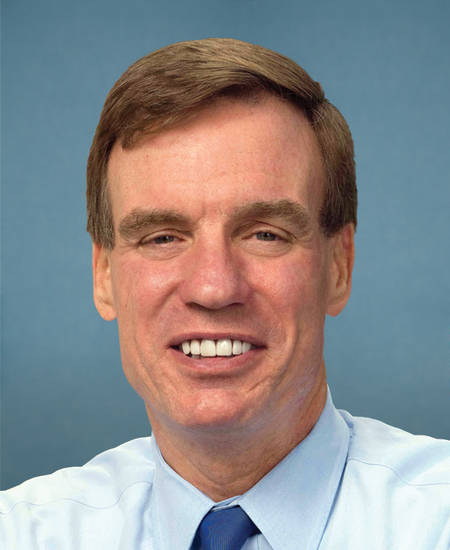
Sen. Mark R. Warner
Sponsored bills
Maddy summaryThis bill authorizes $50 million annually from 2026 through 2031 for the Centers for Disease Control and Prevention (CDC) to fund research on firearms safety and gun violence prevention. It directly affects the CDC and researchers by providing dedicated funding to study these topics under the Public Health Service Act. The key mechanism is a specific annual funding allocation, added to existing resources, to support new or ongoing research initiatives. The bill does not create new regulations or restrict gun ownership but focuses solely on enabling evidence-based research. This is a funding measure, not a policy change affecting the public directly.
Maddy summaryThis bill expands health coverage access for military families by modifying the TRICARE Young Adult Program. It directly affects military service members' children aged 21-26 who previously faced eligibility restrictions or separate fees. Key changes include removing a prior age limit that excluded some young adults and eliminating a separate premium for this coverage. The result is simplified access to health care under TRICARE without additional costs for qualifying dependents. These updates apply to existing TRICARE benefits, not new programs.
Maddy summaryThis bill expands Medicare Part B coverage to include specific pharmacist services, directly affecting Medicare beneficiaries and pharmacists who provide these services. It defines "pharmacist services" as evaluations and treatments for illnesses like COVID-19, flu, RSV, or strep throat, or services addressing public health emergencies, requiring collaboration with physicians as state law permits. Medicare would pay 80% of the lower of the actual charge or 85% of the physician payment rate (100% for public health emergencies), and prohibits balance billing for these services. The changes take effect January 1, 2026.
Maddy summaryThis bill (S 2449, "Recovery of Stolen Checks Act") allows taxpayers who have had paper tax refunds lost or stolen to elect receiving replacement refunds via direct deposit instead of a paper check. It amends the Internal Revenue Code to require the IRS to establish regulations within six months enabling this election process for eligible taxpayers. The key provision creates a new option for individuals needing replacement refunds for lost or stolen paper checks, shifting the method from physical mail to direct deposit. This directly affects taxpayers who previously received paper refunds but now face loss or theft. The bill focuses on streamlining the replacement process without changing tax rates or eligibility.
Maddy summaryThe RESIDE Act creates a federal grant program to convert vacant commercial or industrial buildings (like empty malls or factories) into affordable housing. It allocates up to $100 million annually from excess HOME Program funds (2027-2031) to award competitive grants to local governments and community groups. These grants fund property acquisition, renovation, and health hazard remediation to create "attainable housing" for households earning up to 100% of local median income. Priority is given to projects in economically distressed areas, qualified opportunity zones, or communities with local housing plans addressing affordability needs. The program requires converted housing to comply with HOME Program standards for affordability and accessibility, targeting residents like seniors, veterans, and low-income households.
Maddy summaryThe Stop the Scammers Act establishes a whistleblower reward program for individuals reporting violations of federal consumer financial law (e.g., scams, fraud). Whistleblowers who provide original information leading to successful enforcement actions by the Consumer Financial Protection Bureau (CFPB) may receive 10-30% of recovered civil penalties (minimum $50,000 if penalties are under $1 million). The bill mandates strong confidentiality protections for whistleblowers, prohibits employers from waiving these rights via contracts, and requires the CFPB to report annually on the program. It directly affects whistleblowers in consumer finance cases and the CFPB’s enforcement process, not the general public.
Maddy summaryS 2414, the Housing Supply Expansion Act of 2025, updates federal rules for manufactured homes by requiring states to treat homes without permanent chassis equally to those with chassis under state laws. States must certify this parity within 1-2 years of the bill’s enactment, covering areas like financing, insurance, and installation. States that miss deadlines face prohibitions on selling or installing "covered" manufactured homes (built after enactment without a permanent chassis). The bill directly affects states (through their regulations), manufactured home manufacturers, sellers, and buyers by standardizing how these homes are regulated nationwide.
Maddy summaryS 2423, the Streamlining Rural Housing Act of 2025, aims to simplify the approval process for rural housing projects funded by the Department of Housing and Urban Development (HUD) or the Department of Agriculture (USDA). It requires HUD and USDA to create a shared process within 180 days to streamline environmental reviews, designate a lead agency for projects, and establish an advisory group with housing stakeholders (including nonprofits, developers, residents, and public housing agencies). The bill mandates a report within one year with recommendations to speed up project approvals while maintaining safety, resident costs, and environmental standards. This directly affects rural housing developers, public housing agencies, and residents of HUD/USDA-funded housing projects by reducing bureaucratic delays in construction.
Maddy summaryThis bill creates a public database of residential appraisal data to increase transparency in mortgage lending. It requires major mortgage agencies (Fannie Mae, Freddie Mac, FHA, USDA, VA) to share appraisal data with the Federal Housing Finance Agency, including property details, appraisal methods, and borrower demographics like race and ethnicity. The data will be made publicly available in searchable formats to help identify potential issues in how appraisals are conducted across different communities. It also establishes a process for borrowers to request a review of an appraisal they believe is inaccurate or reflects discrimination.