

Maddy summaryThis bill amends existing U.S. laws to require only foreign-owned companies registered in the United States to report beneficial ownership information, while exempting domestic U.S. entities from these filing requirements. Under the new rules, foreign corporations must disclose details about their owners, but any beneficial owners who are U.S. persons will not be required to provide this data. Additionally, the Financial Crimes Enforcement Network is directed to delete all previously collected ownership information related to U.S. persons while retaining records for non-U.S. individuals. The legislation effectively narrows the scope of the current reporting system to focus exclusively on foreign entities operating within the United States.
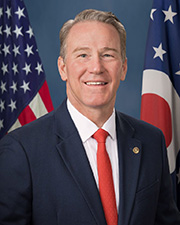
Sen. Jon Husted
Sponsored bills
Maddy summaryThe Protecting American Taxpayers Act aims to reduce government waste and fraud by requiring stricter oversight of federal programs and extending legal deadlines for prosecuting pandemic-related violations. It mandates that child care payments be based on recorded attendance rather than enrollment alone and requires agencies to report when health care spending or provider numbers spike by more than 100 percent in specific areas. The bill also prohibits small businesses from receiving federal loans or grants if an owner or key employee has been convicted of financial misconduct, while simultaneously banning foreign entities controlled by agents from certain listed countries from receiving U.S. financial assistance. Additionally, the legislation seeks to increase transparency by requiring agencies to publicly report on improper payments and other transaction agreements, and it expands whistleblower protections for employees of defense and non-defense contractors who report waste or misconduct.
Great Lakes Restoration Initiative Act of 2025 or the GLRI Act of 2025 This bill reauthorizes through FY2031 the Great Lakes Restoration Initiative, which carries out programs and projects to protect and restore the Great Lakes.
Maddy summaryThis bill requires the Federal Trade Commission (FTC) to produce a report within one year of enactment, analyzing how minors access fentanyl (including fake pills) through social media platforms. The report must cover the prevalence of this access, health and safety risks to minors, how sellers use platform features to market drugs, and current measures by platforms and law enforcement. It also mandates consultation with stakeholders like parents, platforms, and medical experts before publishing. The bill does not create new laws or penalties but focuses on gathering data to inform future policy decisions.
Maddy summaryS 1885, the Stop the Scroll Act, requires major social media platforms and anonymous content-sharing apps (defined as "covered platforms") to display clear mental health warning labels each time a U.S. user accesses the service. The labels must warn users about potential mental health risks linked to social media use and provide access to resources like the 988 Suicide Lifeline. Platforms must display the label prominently upon entry, redisplay it hourly after user acknowledgment, and cannot hide it in terms of service or allow disabling. This law directly affects all covered platform providers operating in the U.S., mandating specific disclosure practices to inform users about health risks before engagement.
Maddy summaryThis resolution designates April 2026 as National Native Plant Month to raise awareness about the importance of indigenous plant species in the United States. The bill directly affects environmental advocates, land managers, and the general public by encouraging recognition of native plants' ecological benefits, such as supporting wildlife habitats and improving soil and water quality. It formally acknowledges that native plants are better adapted to local conditions and play a critical role in ecosystem resilience compared to non-native species. The resolution does not create new laws or funding but serves as a symbolic gesture to highlight the value of preserving native plant diversity.
Maddy summaryThis resolution honors the six Ohio Air National Guard airmen who died in a Boeing KC-135 Stratotanker crash in Iraq during Operation Epic Fury on March 12, 2026. It specifically recognizes the sacrifice of Captain Seth R. Koval, Captain Curtis J. Angst, and Master Sergeant Tyler H. Simmons from the 121st Air Refueling Wing, along with their fellow crew members. The Senate expresses condolences to the families and friends of the fallen and acknowledges the critical role of mid-air refueling missions in supporting U.S. military operations. The resolution also recognizes the high readiness and professionalism of the 121st Air Refueling Wing, which was recently awarded the National Guard Association of the United States Distinguished Flying Unit plaque.
Maddy summaryThe Ensuring Better Interest Treatment and Deductibility Act modifies how businesses calculate interest expense limits for tax purposes. It removes a specific exception related to adjusted taxable income calculations that was added in previous legislation. This change applies to tax years starting after December 31, 2025, affecting businesses that deduct interest expenses on their federal income tax returns. The bill aims to alter the rules governing Section 163(j) of the Internal Revenue Code without changing the overall cap on deductible interest.
Maddy summaryThis resolution honors the memory and sacrifice of six Air Force personnel who died in a KC-135 Stratotanker accident over Iraq on March 12, 2026. The bill formally recognizes the service members from Alabama and Ohio who were killed while supporting Operation Epic Fury. It expresses condolences to their families and directs a copy of the resolution to the two Air National Guard units where the fallen served. The measure serves as a commemorative gesture rather than establishing new policy or funding.
Maddy summaryThis bill, titled Sammy's Law, requires large social media platforms with over 100 million monthly users or $1 billion in annual revenue to provide real-time access to third-party safety software providers. These platforms must create application programming interfaces that allow children under 17 or their parents to delegate control over the child's online interactions, content, and account settings to approved safety software providers. The third-party providers must register with the Federal Trade Commission, agree not to sell user data, and delete data within five days after a delegation ends. The bill also prohibits states from creating their own conflicting regulations on this matter and gives the FTC authority to enforce compliance.