This bill posthumously provides for the award of a Congressional Gold Medal in commemoration of the 13 service members who died on August 26, 2021, while stationed at Hamid Karzai International Airport in Afghanistan.
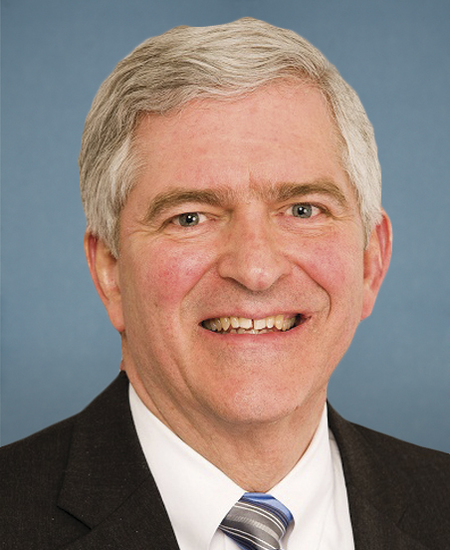
Rep. Daniel Webster
Sponsored bills
Saving Americans From Executive Reach in Travel Act or the SAFER Travel Act This bill prohibits executive branch agencies and private entities from imposing a vaccine mandate against COVID-19 on individuals traveling within the United States on commercial public or private transportation, including air, rail, commercial motor vehicles, vessels, or other public or private forms of transportation. Additionally, the bill prohibits executive branch agencies from requiring a citizen or lawful permanent resident of the United States to enter into a period of quarantine related to COVID-19 after having traveled on any commercial public or private transportation.
Critical Infrastructure Manufacturing Feasibility Act This bill requires the Department of Commerce to study and report on products that are in high demand across the critical infrastructure sectors. Critical infrastructure sectors are those whose assets, systems, and networks are vital to national security, the economy, public health or safety, or any combination of those matters. The study must (1) identify the products in high demand across those sectors that are being imported due to manufacturing, material, or supply chain constraints; and (2) analyze the costs, benefits, and feasibility of manufacturing those products in the United States.
This bill requires the Food and Drug Administration (FDA) to make publicly available all records of information submitted to the FDA in conjunction with the emergency use authorization or licensing of a COVID-19 vaccine.
Conscience Protection Act of 2021 This bill provides statutory authority for certain protections for health care providers that refuse to participate in abortions based on religious beliefs or other convictions. Health care providers include individual professionals, medical facilities, health insurance organizations, and social services providers that refer clients to health care services. The federal government and entities that receive federal funding for health-related activities, including state and local governments, may not discriminate against a health care provider that refuses to be involved in, or provide coverage for, abortions. Currently, similar requirements apply to various related activities, including certain employment or personnel decisions (the Church Amendments), abortion services training (the Coats-Snowe Amendment), qualified health plans offered through health insurance exchanges, and annual appropriations bills for the Department of Health and Human Services (HHS) and other federal agencies (the Weldon Amendment). The HHS Office for Civil Rights must investigate complaints of this kind of discrimination. Furthermore, HHS may terminate or reduce HHS funding for health-related activities if a person or entity fails to comply with nondiscrimination requirements. Additionally, the Department of Justice or any entity adversely affected by such discrimination may bring a civil action to obtain appropriate relief. A plaintiff does not need to seek or exhaust administrative remedies before bringing the action. A plaintiff may also bring an action, including one for money damages, against a governmental entity. In many cases, principles of sovereign immunity shield states and some localities from these kinds of actions.

Parental Rights Protection Act This bill restricts government entities from requiring that individuals age 18 or younger receive certain COVID-19 vaccines that were authorized through emergency use and related procedures. Specifically, a federal, state, tribal, territorial, or local government entity (including a local educational agency) that receives funding from either the Department of Education or the Department of Health and Human Services may not require such COVID-19 vaccinations for individuals age 18 or younger. In particular, a local educational agency that mandates COVID-19 vaccinations for students loses its eligibility for federal education funding. The bill also requires the prior, informed, written consent of a parent or guardian before administration of such COVID-19 vaccines to an individual age 18 or younger.
Fairness for Federal Contractors Act of 2021 This bill prohibits executive agencies from requiring contractors to receive a COVID-19 vaccination. The bill also requires the Government Accountability Office to study the degree to which Executive Order 14042 (Ensuring Adequate COVID Safety Protocols for Federal Contractors) caused disruptions to federal contracts, supply chains, and transportation systems.
This joint resolution nullifies a Department of Labor emergency temporary standard for preventing the transmission of COVID-19 in employment settings. Under the standard issued on November 5, 2021, employers with 100 or more employees must require their onsite employees to either be fully vaccinated against COVID-19 or undergo weekly COVID-19 testing.
Eliminating Barriers to Rural Internet Development Grant Eligibility Act or the E-BRIDGE Act This bill authorizes the Department of Commerce to award economic development grants for public-private partnerships and certain consortiums to carry out specified broadband projects. Such projects shall be to provide, extend, expand, or improve high-speed broadband service through (1) planning, technical assistance, or training; (2) land acquisition or development; or (3) acquisition, construction, or improvement of facilities. When reviewing grant applications, Commerce must take into account the geographic diversity of grant allocation, including consideration of underserved markets. Title to real or personal property acquired or improved with grant funds, or another acceptable possessory interest, must be vested in a public partner or eligible nonprofit organization or association for the useful life of the project. In addition, Commerce may provide credit toward the nonfederal share of a broadband project's cost.
This concurrent resolution declares that Congress should not impose any new performance fee, tax, royalty, or other charge relating to the public performance of sound recordings on a local radio station for broadcasting sound recordings over the air, or on any business for such public performance of sound recordings.