

Maddy summaryAssembly Resolution 106 urges Congress to pass the Military Surviving Spouses Equity Act, which would address an unfair offset between two military survivor benefits. Currently, surviving spouses of service members who died on active duty or from a service-connected condition must forfeit part or all of their Survivor Benefit Plan (SBP) annuity - purchased insurance they paid for - when receiving Dependency and Indemnity Compensation (DIC) from the VA, with the offset being $1 for $1. The pending federal bill would end this offset for survivors under 60, prevent repayment of previously lost benefits, and require payments to dependent children if no eligible surviving spouse exists. This resolution is a non-binding request for Congress to enact these changes to ensure military families receive full benefits without penalty.
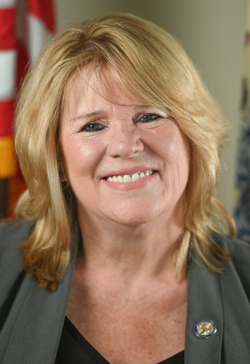
Asm. Carol Murphy
Sponsored bills
Maddy summaryThis bill (A3641) prohibits smoking in any automobile when a child 17 years or younger is present. It defines "smoking" broadly to include cigarettes, cigars, pipes, and e-cigarettes. Violators face a $100 fine for a first offense and $200 for repeat offenses, with fines funding state anti-smoking programs - no driving points or insurance penalties apply. The bill also requires the Motor Vehicle Commission to launch a public awareness campaign about the rule. It directly affects drivers transporting children in vehicles within New Jersey.
Maddy summaryAJR 141 designates October of each year as "Walk to School Month" in New Jersey. The resolution requests the Governor to issue an annual proclamation urging public officials, organizations, and citizens to observe the month with events promoting walking or biking to school. This procedural resolution does not create new laws but highlights the health, environmental, and community benefits of active transportation to school, such as reduced air pollution and traffic congestion.
Maddy summaryThis bill (A3643) prohibits food delivery drivers employed by restaurants, grocery stores, or delivery services from using electronic smoking devices (like e-cigarettes) or tobacco products while delivering, handling, or transporting food to customers. Violations carry civil penalties starting at $250 for the first offense, increasing to $1,000 for third or subsequent violations, collected through municipal courts. The bill defines "electronic smoking device" broadly to include e-cigarettes, hookahs, and similar products, and "tobacco product" to cover cigarettes, cigars, and other nicotine-containing items. It takes effect 60 days after enactment.
Maddy summaryAJR 140 is a symbolic resolution designating the second full week in November each year as "School Psychology Awareness Week" in New Jersey. It does not create new policies or funding but asks the Governor to issue an annual proclamation encouraging public officials and organizations to observe the week with events. The resolution highlights the role of school psychologists in supporting students' mental health, academic success, and safe learning environments. It affects no specific individuals or entities but aims to raise public recognition of school psychology services statewide. This is purely a ceremonial designation with no binding requirements or legislative changes.
Maddy summaryThis bill (A3615) requires New Jersey adult day health care facilities to offer a "hybrid model" providing services remotely via telehealth when beneficiaries cannot attend in person. This applies during hospitalizations, illnesses, caregiver issues, or to prevent disease outbreaks. Facilities must deliver covered services (like clinical assessments, meals, and therapy) through telehealth, document them in care plans, and maintain reimbursement rates identical to in-person services. The policy directly affects facilities licensed by the state and their adult beneficiaries who face temporary barriers to in-person care.
Maddy summaryAJR 132 designates April 22 of each year as "Girl Scout Leader Appreciation Day" in New Jersey. The resolution requests the Governor to issue an annual proclamation encouraging public recognition of Girl Scout Leaders, who volunteer to mentor girls through the Girl Scouts program. It highlights these leaders' role in teaching leadership, confidence, and life skills to participants. The resolution takes effect immediately and is procedural, not creating new laws or funding.
Maddy summaryBill A3614 establishes a Chief Executive Nurse position within New Jersey's Department of Health (DOH). The Commissioner of Health must appoint a nurse with a master's degree in nursing or higher and significant clinical experience to this full-time role. The Chief Executive Nurse will assist the Commissioner on nursing matters, collect data on nursing practices, consult with nurses and healthcare facilities about regulations affecting care, and evaluate nursing trends. This position aims to improve the DOH's understanding of nursing challenges and support better healthcare delivery. The bill takes effect immediately.
Maddy summaryThis bill requires all health insurers in New Jersey (including health plans, HMOs, and state-sponsored programs) to cover buprenorphine and buprenorphine/naloxone for pain treatment without requiring patients to first try other medications. It prohibits "step therapy" or "fail-first" protocols - common insurer practices that force patients to attempt riskier, more addictive pain treatments before accessing these less addictive options. The law applies to all covered health plans issued or renewed in New Jersey on or after its effective date. This directly affects patients seeking pain management and insurers who must adjust their coverage policies.
Maddy summaryThis bill establishes the S.E.E.D. Program within New Jersey's Office of the Secretary of Higher Education to provide grants for student-led projects at public colleges and universities. It creates a S.E.E.D. Fund funded by state appropriations - calculating $2,500 per 500 full-time students and $2,500 per 1,000 part-time students at each institution - to support innovative student concepts, products, or companies. The program is governed by a seven-member board that sets competitive grant criteria focusing on project merit, feasibility, and sustainability plans. The board must report on grant outcomes to the governor and legislature within four years of implementation.