

Maddy summaryNew Jersey's A2237 requires restaurants to meet specific nutritional standards for children's meals sold as a single-price combination primarily for children. These meals must contain no more than 600 calories, 770mg sodium, 35% calories from fat/sugars, and 10% from saturated fat, while including at least 0.5 cups of fresh fruits/vegetables or a lean protein option (like whole grains or low-fat dairy). Restaurants must prominently display the meal's nutritional content on menus and offer only approved beverages like water, unsweetened juice, or low-fat milk. Violations carry civil penalties up to $3,000 per offense, with a $15,000 monthly cap for repeat violations. The bill directly affects restaurants serving children's meals and aims to promote healthier eating for New Jersey's youth.
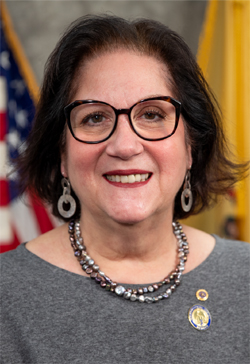
Asm. Melinda Kane
Sponsored bills
Maddy summaryThis bill prohibits most geographic restrictions in employment contracts for physicians in New Jersey, making clauses that limit where physicians can practice after leaving a job void and unenforceable. Exceptions include restrictions for leaving large hospital systems (30+ physicians) or small systems (30 or fewer) to join similar-sized systems in the same area, restrictions after leaving federally qualified health centers within 5 miles for up to 4 years, and restrictions tied to "unique incentives" like signing bonuses over $50,000. The bill does not affect non-restrictive contract terms and applies immediately to new physician contracts. It directly impacts physicians and their employers in New Jersey, particularly in hospital systems and group practices.
Maddy summaryThis bill (A1624) prohibits child care providers in New Jersey from charging parents fees for care on days they cannot operate due to staff illness or exposure to COVID-19. It directly affects licensed child care facilities and registered family day care providers, requiring them to waive fees on such days. The bill also mandates retroactive reimbursement to parents for fees charged since December 1, 2021, for any days staff were unavailable due to COVID-19. The policy applies immediately and covers all staff members, including substitutes and assistants.
Maddy summaryThis bill clarifies that New Jersey's telemedicine and telehealth law does not apply to veterinary care. It specifically amends the law to state that rules and regulations adopted by the State Board of Veterinary Medical Examiners may require an initial in-person visit before veterinarians can provide telehealth services, unlike human medical providers. The change directly affects veterinarians and veterinary licensing standards, allowing the veterinary board to set its own requirements for telehealth without being restricted by the general law that prohibits mandatory in-person visits for human medical telehealth.
Maddy summaryNew Jersey's A1820 requires general acute care hospitals and clinical laboratories to implement cultural competency training for staff collecting patient demographic data. The bill mandates that labs electronically record patients' race, ethnicity, sexual orientation, and gender identity for in-person testing, using specific predefined categories (e.g., "non-binary" for gender identity). Electronic medical records systems must be configured to require this data before saving other demographic information, with vendors facing $1,000 daily penalties for noncompliance. The law explicitly states patients cannot be compelled to disclose this information and directs data to be compatible with state disease surveillance systems.
Maddy summaryThis bill sets a 7-year deadline for New Jersey's Commissioner of Education to review and approve annual audits submitted by approved private schools serving students with disabilities. It directly affects these private schools (APSSDs) and the public school districts that pay their tuition, which currently face years-long delays in audit reviews. The key provision requires the Commissioner to issue any adverse findings or adjustments within 7 years of an audit's submission date, or the audit is automatically approved. For audits submitted before the bill's effective date, the deadline extends to the later of seven years after submission or two years after the bill takes effect. This addresses current delays of 20+ years that disrupt school budgeting and fairness for APSSDs.
Maddy summaryThis bill requires all public and private school buildings in New Jersey to install carbon monoxide detectors unless a hazard assessment determines no risk exists. Schools must comply with detectors meeting Underwriters Laboratories standard 2034, with placement and exemptions governed by rules from the Commissioner of Community Affairs. Local fire safety inspectors or the Department of Community Affairs will enforce the requirement during construction permit reviews and routine inspections, and may charge fees to cover inspection costs. The law applies to all school structures used for instruction, including new construction and existing facilities.
Maddy summaryThis bill requires New Jersey police departments to submit quarterly reports to the Attorney General about every traffic stop, including the driver's race, age, gender, reason for the stop, whether a search occurred, and outcomes like warnings or arrests. The data will be entered into a public, searchable online database hosted by the Department of Law and Public Safety. The database covers all traffic stops - even those resulting only in oral warnings - and includes details like officer actions, use of force, and geographic location. It applies to all state and local law enforcement agencies in New Jersey, aiming to provide transparency for public oversight of traffic enforcement practices.
Maddy summaryThis bill (A1609) protects registered medical cannabis patients in New Jersey from employment discrimination. It prohibits employers from taking adverse actions - such as refusing to hire, firing, or reducing pay - based solely on an employee’s status as a registry cardholder or a positive cannabis test, unless the employer proves the use impaired job performance. Employers must allow employees to explain positive tests with medical documentation (like a healthcare provider’s recommendation or registry card) and offer a retest at the employee’s expense within three days. The bill repeals an existing provision (P.L.2019, c.153, §9) and explicitly allows employers to enforce policies against intoxicating substances during work hours or if federal compliance is at risk.
Maddy summaryThis bill creates a Grow NJ Kids Student Loan Voucher Program that provides monthly vouchers to New Jersey resident borrowers with student loans. The vouchers cover the full monthly principal repayment amount for loans, directly benefiting parents whose children attend a Grow NJ Kids-rated child care program (rated 3 stars or higher). To qualify, applicants must have household income under $150,000, provide proof of their child's enrollment in an approved program, and apply through the Higher Education Student Assistance Authority. The program requires participating child care providers to publicize the voucher opportunity and mandates the Authority to issue the vouchers using state funds.