

Maddy summaryThis bill (A 3254) requires New Jersey election workers to be paid an hourly rate equal to the state minimum wage for mandatory training programs they must attend. Currently, counties decide whether to compensate workers for training time, but this bill makes payment mandatory. The law amends existing election compensation rules to specify that workers must receive minimum wage pay for training hours, with counties eligible to seek state reimbursement for these costs. It directly affects all election workers required to complete annual training under state law.
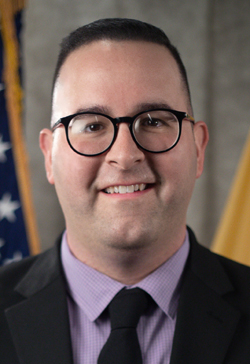
Asm. Cody Miller
Sponsored bills
Maddy summaryThis bill requires New Jersey colleges and universities (including proprietary institutions) to notify the state's Higher Education Student Assistance Authority when the federal government approves a student loan discharge under "borrower defense" rules. Specifically, institutions must inform the Authority within a reasonable timeframe if a student - especially a New Jersey resident during enrollment - is approved for federal student loan forgiveness due to institutional misconduct. The law does not change federal loan rules but adds a state reporting requirement to help track discharges affecting residents. It takes effect immediately upon enactment.
Maddy summaryThis bill creates new teacher certification endorsements in New Jersey to streamline pathways for educators, particularly in high-need areas like special education, STEM, and bilingual education. It replaces outdated endorsements (such as "Deaf or Hard of Hearing" titles) with clearer, more inclusive designations like "Students with Disabilities Preschool through Grade 12" and "Bilingual and Bicultural Preschool through Grade 12." The bill also removes individual subtest score requirements for elementary certification, requiring only a minimum average composite score instead, and eliminates barriers for native speakers in world language endorsements. These changes directly affect prospective and current teachers navigating certification, aiming to reduce financial and logistical hurdles that disproportionately impact underrepresented candidates.
Maddy summaryThis bill requires all subscription service providers in New Jersey (like streaming services, gym memberships, or software subscriptions) to give consumers a clear, easy way to cancel their subscriptions using the same method they signed up with - such as online, by phone, or in person. It specifically bans "negative option features" where silence or inaction is treated as agreement, mandating providers to get explicit consent before charging and to clearly disclose terms upfront. Providers must also place a prominent cancellation link on websites or in emails, making it simple for consumers to stop automatic renewals. The law expands existing rules (previously limited to health clubs) to cover all subscription services and prohibits misleading marketing or hidden cancellation processes.
Maddy summaryThis bill requires urgent care clinics (which treat acute but non-life-threatening conditions) and retail health clinics (located in stores, pharmacies, or supermarkets offering limited walk-in care) to have an automated external defibrillator (AED) on-site and ensure staff are trained to use it. Clinics must store the AED centrally, maintain it, notify emergency services of its location, and train all employees in CPR and AED use. At least one trained employee must be present during business hours. The law takes effect immediately but allows a one-year implementation period for compliance.
Maddy summaryThis bill amends New Jersey's law banning PFAS in firefighting foam to extend use for specific facilities. Fixed foam system owners (for class B fires) may continue using PFAS foam until four years after the original law's effective date, and oil refineries may use it for large tank fire suppression until eight years after that date. Both extensions require annual reporting on foam use, containment measures to prevent environmental release, and detailed transition plans to PFAS-free alternatives. Refineries can apply for up to two-year waivers beyond the eight-year period if they prove no commercially available PFAS-free alternatives exist for their specific fire suppression needs.
Maddy summaryThis bill establishes two new entities in New Jersey: the Office of Healthcare Affordability and Transparency (within the Department of Health) and the Health Care Cost Containment and Price Transparency Commission. It requires hospitals, health insurers, and other healthcare providers to publicly report detailed pricing data for services like inpatient care, emergency visits, and physician services. The Commission will set annual benchmarks for healthcare cost growth and hospital pricing, monitor entities exceeding these benchmarks, and may impose public transparency requirements or civil penalties for noncompliance. These provisions directly affect all New Jersey hospitals, health insurers, and healthcare providers by mandating transparency in pricing and cost reporting to promote affordability.
Maddy summaryThis bill (A 2178) amends New Jersey's Commission on Human Trafficking to specifically require the commission to study human trafficking affecting women and children of color. The commission must identify risk factors making these groups vulnerable, develop prevention strategies, and recommend ways to improve support services for victims. The commission will continue its existing duties - like evaluating laws, reviewing victim programs, and promoting public awareness - but now with a focused mandate on racial disparities in trafficking. It will report annually to the Governor and Legislature on its findings and legislative recommendations related to this specific population.
Maddy summaryThis bill eliminates a $15 fee for special license plates designated for firefighters and first aid/rescue squad members in New Jersey. Currently, these emergency service members pay an additional $15 fee on top of standard vehicle registration costs to obtain the plates. The bill would allow eligible volunteer, part-time, and paid members of fire departments or first aid/rescue squads to receive these plates at no extra cost (only standard registration fees would apply). It requires annual renewal with proof of continued membership and was withdrawn after being approved as P.L.2025, c.354.
Maddy summaryThis bill allows bingo halls, raffle organizers, and penny auction operators in New Jersey to accept credit cards, debit cards, or other electronic payments for tickets or shares. It requires the Legalized Games of Chance Control Commission to create regulations enabling these electronic payment methods, which are currently prohibited under existing law. The change directly affects licensed operators of these games and their customers, who will now have more payment options. The bill takes effect immediately upon enactment.