

Maddy summaryThis bill requires health insurance companies to provide a written copy of any oral agreement about coverage, changes, or claims to policyholders within 30 days of the agreement. Insurance contracts must include a provision allowing policyholders to request recordings or transcripts of the oral agreement. Policyholders have 30 days after receiving the written copy to report any differences between the written document and the oral agreement. The law applies to all health insurance carriers in New Jersey, including health maintenance organizations and health service corporations.
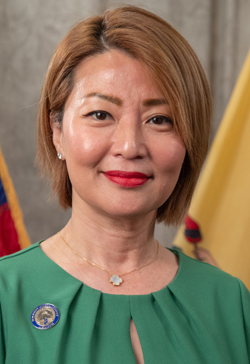
Asm. Ellen Park
Sponsored bills
Maddy summaryThis bill prohibits motor vehicle liability insurance policies from restricting recovery amounts below the policy's maximum limits for specific covered individuals. It directly affects named insureds, listed drivers, and household residents by requiring insurers to pay the full policy limits for bodily injury or death claims, rather than capping payments at lower amounts. The law specifies that coverage limits for these individuals must align with the vehicle used at the time of the loss and mandates clear disclosure if any restrictions exist on the policy declaration page. This change ensures policyholders and their covered family members receive the full policy coverage amount they are entitled to under the terms of their insurance.
Maddy summaryThis bill makes it a misdemeanor to send unsolicited naked photos or videos via electronic means without the recipient's consent. It specifically targets individuals who knowingly transmit such material to people who did not request it or give explicit permission. If the sender knows the recipient is a child under 13 or someone with a mental condition unable to understand the sexual nature of the image, it becomes a more serious offense punishable by up to 18 months in jail or a $10,000 fine. The law directly affects anyone who sends unsolicited sexually explicit images electronically, with stricter penalties when vulnerable recipients are involved.
Maddy summaryThis bill (A3730) updates civil remedies for New Jersey residents who suffer privacy violations from unauthorized recording or disclosure of sexual or intimate images. It allows victims to sue in Superior Court anonymously using a pseudonym or initials, request sealed court records to protect their identity, and seek damages. Key changes include raising the minimum liquidated damages per violation from $1,000 to $10,000 (considering factors like the actor’s age and frequency of violations) and permitting recovery of any financial gain the actor earned from the disclosure. Exceptions to liability include disclosures made to law enforcement, for medical treatment, or in reporting unlawful conduct. The bill specifically protects parents, guardians, or "consistent caretakers" from liability when disclosing a child’s image for non-harmful reasons.
Maddy summaryThis bill prohibits the non-consensual creation and distribution of deepfake pornography (realistic fake videos or images that appear to show someone engaging in sexual activity they didn't actually participate in). It makes it a crime to create or share such content without consent, with penalties ranging from 3-5 years in prison and $15,000 fines for general deepfakes to 10-20 years in prison and $200,000 fines for deepfakes involving children. Victims can pursue civil claims for $1,000 per violation plus additional damages. The law updates existing privacy and child pornography statutes to address technology that wasn't covered when those laws were written, applying to anyone who creates, shares, or distributes deepfake content without consent.
Maddy summaryThis bill allows police officers to be present at senior residential centers or public schools serving as polling places when requested by the facility, provided officers wear plain clothes and do not interfere with voters. It requires schools to develop security plans that include a locked, separate voting area to prevent voter-student interaction during elections if the school is in session. Schools must notify the district board at least seven days before an election, triggering a chain of notifications to county election officials and the Secretary of State. The Department of Education and Secretary of State must immediately inform schools of the security plan requirement after enactment.
Maddy summaryThis New Jersey bill (A1926) creates an apprenticeship pathway for individuals seeking licensure as manicurists, supplementing existing educational requirements. The bill allows applicants to satisfy licensure requirements through completion of an apprenticeship program registered with or approved by the U.S. Department of Labor, rather than solely through formal schooling. To qualify, applicants must be at least 17 years old, of good moral character, free from communicable diseases, and have a high school diploma or equivalent. This change provides an alternative route to licensure for those preferring hands-on training while maintaining the same examination requirements as the current pathway.
Maddy summaryACR 119 proposes a constitutional amendment to establish a fundamental right for all New Jersey residents to a clean and healthy environment, including pure water, clean air, and protected natural habitats. It would require the state to act as a trustee for public natural resources - such as water, air, forests, and public lands - ensuring these are preserved for both current and future generations. The amendment specifies these environmental rights are "self-executing," meaning they would take effect immediately without needing additional laws, and would exist alongside existing legal protections. If approved by voters, this would become part of New Jersey's Constitution, directly affecting all residents and imposing a duty on the state to protect these resources.
Maddy summaryThis bill establishes minimum nurse-to-patient staffing ratios for hospitals, ambulatory surgery centers, and state developmental/psychiatric facilities in New Jersey. It requires specific ratios (such as 1 nurse for every 4 medical/surgical patients, 1 nurse for every 2 critical care patients, and 1 unlicensed personnel for every 7 daytime patients) while mandating hospitals to implement an acuity-based staffing system to ensure adequate staffing levels. Hospitals found in violation may face civil penalties that increase with repeat offenses, with penalty revenue funding a dedicated "Patient Protection and Staffing Fund" to support nursing recruitment, retention, education, and inspector staffing. The bill also requires the Commissioner of Human Services to review staffing standards in developmental centers and psychiatric hospitals to align with these new requirements.
Maddy summaryBill A3450 establishes minimum nurse-to-patient staffing ratios for hospitals, ambulatory surgery centers, and certain state facilities (like psychiatric hospitals and developmental centers) in New Jersey. It requires specific ratios based on unit type, such as one nurse for every five patients in medical/surgical units or one nurse for every patient under anesthesia. Facilities must implement an acuity-based staffing system (approved by nursing staff or their union) to adjust staffing based on patient needs, and maintain float pools of nurses. The Department of Health will enforce these standards through inspections and investigations of complaints filed by staff or the public.