

Maddy summaryThis bill requires New Jersey's Economic Development Authority (EDA) to create a free website connecting eligible businesses and organizations with suppliers for their specific needs. It directly affects entities in tech and science sectors like biotechnology, renewable energy, and advanced computing - such as businesses, research facilities, and nonprofits - that can post needs (e.g., equipment, labor, space) and find matching suppliers. The website must also list public and private funding sources, including state/federal grants, to help these entities access resources. The EDA must develop and maintain this tool, prioritizing the needs of these eligible groups. The bill takes effect immediately upon passage.
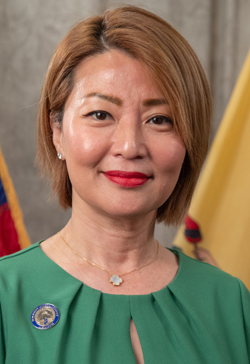
Asm. Ellen Park
Sponsored bills
Maddy summaryThis bill codifies current regulations allowing more healthcare providers (including nurse practitioners and physician assistants) to perform abortions in New Jersey, which has been permitted since 2021. It removes medically unnecessary facility requirements that increase costs and create barriers to care, such as excessive licensing rules. The bill amends licensing statutes to clarify that abortion facilities must meet basic safety standards but eliminates non-essential mandates that don't improve patient health. This change directly affects abortion providers and patients seeking timely, affordable reproductive care across the state.
Maddy summaryNew Jersey's proposed A1678 would create a new Department of Diversity, Equity, and Inclusion as a principal agency within the state executive branch. The department would be led by a commissioner appointed by the governor, who would advise state agencies on diversity in investments, procurement, and housing programs. It would transfer existing diversity functions from the Treasury Department's Office of Diversity and Inclusion to this new department. The bill is currently pending in the Assembly State and Local Government Committee.
Maddy summaryThis bill (A 3739) designates May of each year as "Water Safety Month" in New Jersey to raise public awareness about preventing water-related accidents and drowning. It directly affects public schools and students in grades kindergarten through five, encouraging the Department of Education (with the Department of Health) to provide resources for water safety education during this month. Key provisions include supporting school presentations, partnerships with nonprofits, and educational activities focused on age-appropriate safety practices. The bill aims to address drowning as a leading cause of death for young children, per CDC data, through proactive school-based learning.
Maddy summaryThis bill requires New Jersey's State Chief Diversity Officer to study whether disparities exist in how state agencies use minority-owned and women-owned businesses for purchasing goods and services. The study must determine if these businesses are underutilized compared to their availability in the state. After completing the study, the officer must submit findings and recommendations to the Governor and Legislature, with follow-up reports every four years assessing implementation of prior recommendations and whether new studies are needed. The report could inform potential policy changes to improve opportunities for these businesses in state contracting. This affects all state agencies, including departments, commissions, and independent authorities that award public contracts.
Maddy summaryThis bill codifies the U.S. Supreme Court's 1964 standard from *New York Times Co. v. Sullivan* for defamation lawsuits brought by public officials. It requires public officials to prove a statement was both false and made with "actual malice" (knowing it was false or showing reckless disregard for truth) to win a lawsuit. Truthful statements automatically block any lawsuit. This applies specifically to statements about a public official's official duties, affecting elected and appointed government workers like mayors, council members, and agency heads.
Maddy summaryThis bill (A3446) requires New Jersey's Governor, Senate President, Speaker of the General Assembly, or other authorized officials to prioritize racial and gender diversity when appointing members to state boards, commissions, or similar bodies established by law. It mandates that appointing authorities consider achieving a membership reflecting the state's racial and gender makeup as a "primary consideration" for all appointments made after the bill takes effect. The requirement applies unless it conflicts with specific circumstances of the appointment or the original law creating the body. The bill defines "gender" to include gender identity and "race" as major groupings based on physical characteristics or ancestry. The bill is currently pending in the Assembly Community Development and Women's Affairs Committee and has not yet become law.
Maddy summaryThis bill (A 1940) required manufacturers of menstrual products sold in New Jersey to list all non-confidential ingredients on product packaging and their websites, with ingredients ordered by quantity. It applied to all menstrual products - like tampons, pads, cups, and underwear - packaged for individual retail sale, giving manufacturers 18 months to comply after the law took effect. Manufacturers could exclude confidential business information but had to list it by common name. Non-compliant products faced civil penalties of up to $1,000 per package, based on 1% of annual in-state sales. The bill was withdrawn after being approved as P.L.2025, c.232 and enacted into law.
Maddy summaryThis New Jersey bill (A 3585) makes it a crime to knowingly share manipulated videos or audio that falsely depict a candidate or election issue within 90 days of an election, with penalties including up to a fourth-degree offense (or third-degree for repeat violations). It directly affects voters (by aiming to prevent deception), candidates (who can seek legal relief for false depictions), and content creators (who face criminal or civil liability). Key provisions require clear disclaimers for minor edits or news/satire content, and exempt social media platforms, traditional media, and news outlets under federal law. The law does not apply to accidental edits, news reporting, or content with prominent disclaimers identifying manipulation.
Maddy summaryThis bill requires all New Jersey state, county, and private correctional facilities - including juvenile facilities - to provide free voice calls, video calls, and email services to incarcerated adults and juveniles. It prohibits facilities from charging inmates or their families any fees (including per-minute charges, surcharges, or account fees), ensuring both parties to communications bear no cost. The law also mandates that facilities maintain current service access levels and transfer any remaining prepaid funds to inmates' commissary accounts. The bill appropriates state funds for implementation and takes effect six months after enactment.