

Maddy summaryThis bill requires New Jersey's Economic Development Authority (EDA) to add social media development services to its existing Small Business E-commerce Support Program. The program currently offers digital marketing and e-commerce consulting to eligible small businesses (like restaurants, retail stores, and personal care businesses in commercial locations). The bill mandates that EDA include social media platform development assistance alongside current services such as website creation and digital marketing planning. This change applies only to the current pilot program under the Main Street Recovery Finance Program, not future initiatives. The policy directly affects small businesses seeking digital support through this state-funded program.
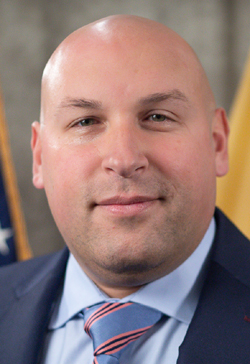
Asm. Mike Venezia
Sponsored bills
Maddy summaryThis bill requires New Jersey's Motor Vehicle Commission (MVC) to display a person's full legal name - including Roman numerals - on specific driver's licenses, identification cards, and permits. It directly affects residents whose legal names (as recorded on birth certificates) include Roman numerals (e.g., "John Smith III"), ensuring their name appears exactly as documented without omitting the numeral. The MVC must display the full legal name if applicants provide standard verification documents proving identity, age, and residence. This change applies to all standard licenses, permits, and REAL ID documents without altering existing name-change procedures.
Maddy summaryThis bill establishes the New Jersey Out-of-School Time Advisory Commission to review before-school, after-school, and summer programs statewide. The 20-member commission includes state agency leaders, legislative appointees, and representatives from child care organizations, educators, and researchers. Its key duties are to assess current programs, develop statewide standards, examine funding sources, and evaluate program quality across urban, suburban, and rural areas. The commission must submit an interim report within one year and a final report within two years, after which it will expire. The bill directly affects all organizations providing out-of-school time programs in New Jersey by setting a framework for their review and improvement.
Maddy summaryThis bill appropriates $3 million annually from cannabis-related Social Equity Excise Fee revenues to fund Freedom Schools in New Jersey. The funds, collected through New Jersey's regulated cannabis sales program, will be allocated to the Department of State to support these programs. Freedom Schools provide year-round academic support, including summer programs and tutoring, for K-12 students and their families. The funding directly affects students in New Jersey public schools participating in these community-based educational initiatives.
Maddy summaryThis bill requires New Jersey's Department of Environmental Protection (DEP) to create an "Interim Alternative ZEV Compliance Program" within one year of enactment. It applies to vehicle manufacturers selling passenger vehicles and light-duty trucks in New Jersey, specifically for model years 2027 through 2031. The key provision allows manufacturers to opt into this program instead of meeting strict zero-emission vehicle (ZEV) sales quotas, enabling them to offer dealers a portfolio of ZEVs based on actual consumer demand rather than mandatory sales targets. This change provides manufacturers a compliance pathway while maintaining the state's emissions goals under the California Low Emission Vehicle program.
Maddy summary# Summary of New Jersey Cannabis Regulatory Bill This bill makes comprehensive changes to New Jersey's cannabis regulatory framework, amending the "Cannabis Regulatory, Enforcement Assistance, and Marketplace Modernization Act" (CREAMMA) and the "Jake Honig Compassionate Use Medical Cannabis Act." ## Key Changes: 1. **Municipal Medical Cannabis Restrictions:** - Municipalities cannot prohibit medical cannabis dispensaries from operating as cannabis retailers if they've been operating without violation for at least 180 days - Medical cannabis dispensaries co-located with adult-use retail locations don't need additional municipal approval - Prior municipal approval for medical cannabis operations is deemed to authorize adult-use retail operations at the same location 2. **Application Processing Timeline:** - Establishes a hard cap on application review time - if the commission needs more time to review an application, it must make a final decision within 30 days of that determination 3. **Simplified Application Process:** - Removes the point scale system for ranking applicants - Eliminates requirements to submit business plans and liability insurance plans - Removes provisions requiring the commission to give greater weight to certain applicants - Removes special consideration for applicants with higher education curriculum agreements 4. **Municipal Ordinance Portal:** - Requires the commission to create a public online portal for all municipal cannabis regulations - Municipalities must submit all cannabis-related ordinances to the commission 5. **Family Members as License Holders:** - Prohibits the commission from prohibiting family members (other than spouses) of license applicants or holders from also becoming license holders (invalidating N.J.A.C.17:30-6.8) 6. **Alternative Treatment Centers (ATCs):** - Permits ATCs to redesignate products between medical and adult-use cannabis at any point in the supply chain, provided they hold the appropriate license at the point of redesignation 7. **Other Significant Changes:** - Establishes new requirements for labeling, packaging, and advertising of cannabis products - Creates a tracking system for cannabis items - Sets new limits on the number of cannabis cultivators (with a 24-month phase-in period) - Establishes new requirements for cannabis testing facilities The bill aims to streamline the licensing process, expand opportunities for diverse applicants, and create a more efficient regulatory framework for New Jersey's cannabis industry.
Maddy summaryThis bill (A5769, "Ease of Doing Government Business Act") requires all New Jersey state and local government entities that provide direct public services - such as issuing licenses, permits, or certifications - to simplify and expedite their processes. Within 180 days of enactment, these entities must review operations to eliminate redundancies and reduce processing times, with annual reviews mandated thereafter. The law also mandates implementing user-friendly online tools with plain language, clear instructions, and multilingual options, while requiring 30-day responses to public feedback on service experiences. It directly affects government agencies and their interactions with residents and businesses seeking public services.
Maddy summaryThis bill requires the Passaic Valley Sewerage Commissioners to maintain written records of all meetings and public hearings. It mandates that they submit certified copies of these minutes to the Governor, who then has 15 days to approve or veto the minutes (or specific actions taken at the meeting). If the Governor vetoes the minutes, the actions taken at that meeting become invalid; if no veto occurs within 15 days, the actions take effect. The bill directly affects the Commissioners and the Governor, adding a review step for all decisions made by the sewerage agency.
Maddy summaryThis bill establishes a Red Tape Review Task Force within New Jersey's Department of the Treasury to review state regulations and identify unnecessarily burdensome requirements affecting businesses, non-profits, and other private entities. The task force, composed of nine state officials and legislators (including agency heads and legislative leaders), will work to streamline government interactions with these groups and promote economic growth. It must submit a written report with recommendations to the Governor and Legislature within three years of the bill's effective date, after which the task force will expire. The report will be advisory only and cannot be used for legal challenges against state agencies.
Maddy summaryThis bill requires all health insurers in New Jersey - including hospital service corporations, medical service corporations, health maintenance organizations, and individual/group health plans - to cover comprehensive testing for suspected dyslexia. It mandates that insurers provide coverage for screening, diagnosis, and related neuropsychological examinations as part of standard medical benefits, without exclusion. The policy applies to all covered contracts issued, renewed, or executed in New Jersey on or after the effective date, ensuring coverage is provided "to the same extent as for any other condition." It directly affects individuals seeking dyslexia evaluations, including children and adults, by removing financial barriers to diagnostic testing.