

Maddy summaryThis 2006 New Jersey bill requires school bus drivers with current endorsements to retake both knowledge and skills tests every five years to maintain their qualification. Drivers aged 70 or older must retake these tests annually instead of every five years. The law applies only to drivers already holding school bus endorsements, not to new applicants. It updates renewal requirements for school bus driving qualifications under existing state law.
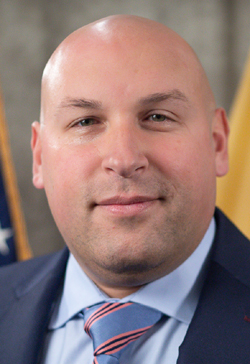
Asm. Mike Venezia
Sponsored bills
Maddy summaryThis New Jersey bill (A446) prohibits adults from leaving loaded firearms accessible to minors under age 18 at their home or property. It requires firearm owners to store guns securely - using locked containers, secure locations, or trigger locks - to prevent minor access, or face a misdemeanor charge. Law enforcement officers observing unsecured firearms must return later to verify proper storage. The law amends existing law (P.L.1991, c.397) to raise the minor age from 16 to 18 and adds this enforcement mechanism. Violations carry penalties of up to six months in jail or a $1,000 fine.
Maddy summaryThis bill requires New Jersey's Department of Environmental Protection (DEP) to create an "Interim Alternative ZEV Compliance Program" within one year of enactment. It directly affects vehicle manufacturers selling new cars in New Jersey by offering a flexible alternative to strict zero-emission vehicle sales quotas for model years 2027-2031. Under this program, manufacturers can comply by offering dealers a portfolio of required zero-emission vehicles based on consumer demand, without mandating specific vehicle purchases. The rules also provide manufacturers with legal protection against penalties for noncompliance with traditional sales targets during this transition period.
Maddy summaryThis bill (A 483) requires landlords of multiple dwellings with 30+ units in urban municipalities (population 50,000+) to install and maintain accessible automated external defibrillators (AEDs) in unlocked locations with clear signage. It directly affects landlords in qualifying urban apartment buildings, with the Affordable Housing Defibrillator Fund providing grants to owners of affordable housing developments to cover AED costs. Key provisions include mandatory AED testing/maintenance, tenant notification of locations, and legal protection for users from civil liability. The bill would take effect 7 months after enactment, increasing emergency medical access in high-density residential areas.
Maddy summaryThis bill requires New Jersey's Department of Health (DOH) to create guidelines for placing bleeding control kits in state buildings and mandates all public and nonpublic K-12 schools to acquire these kits. The DOH must issue placement guidelines within 180 days, specifying that kits must include items like tourniquets, chest seals, and instructional materials, and be placed near defibrillators. Schools must ensure kits are accessible during school hours and athletic events, replacing them after each use. The kits must be stored in unlocked, clearly marked locations within reasonable proximity to defibrillators and school athletic areas.
Maddy summaryThis bill prohibits operating drones below 250 feet over school property without permission. Specifically, it makes it a disorderly persons offense to use a drone for surveillance, hover over school grounds, or use school buildings as takeoff/landing areas without the superintendent's written authorization. The law applies to all public and nonpublic K-12 schools in New Jersey. Violations carry penalties of up to six months in jail, a $1,000 fine, or both. The bill aims to protect student safety and privacy by restricting unauthorized drone activity near schools.
Maddy summaryThis bill establishes a three-year oral health pilot program called the MOM Project in New Jersey's Department of Health, appropriating $4.15 million. It directly affects low-income pregnant women and new mothers (under 300% of the federal poverty level) who are not enrolled in Medicaid and reside in medically underserved areas. The program requires maternal health consortia to provide eligible mothers with three hours of culturally tailored oral health education (covering hygiene, nutrition, and disease links), followed by a year of dental treatment including cleanings, risk assessments, and restorative care at participating community health centers. The initiative aims to improve access to oral care for this at-risk group, addressing barriers like cost, lack of insurance, and language needs.
Maddy summaryThis bill allows high school students in grades 10-12 who participate in school sports to substitute study hall for physical education during their sport's athletic season, provided they meet specific academic criteria. Eligible students must either be enrolled in advanced courses (like AP or dual enrollment) or need academic support due to low performance, as determined by the school. The substitution requires written approval from parents, coach certification of sport participation, and counselor approval confirming eligibility. Students retain full physical education graduation credit for their athletic participation, but the change only applies during the sport's season and does not affect PE requirements for non-athletes or younger grades.
Maddy summaryThis New Jersey bill (A 1736) prohibits law enforcement officers from wearing masks or disguises during public interactions while performing official duties. It directly affects all state, county, and municipal officers authorized to enforce laws, including federal officers working in New Jersey. Key exceptions include undercover operations, face shields not hiding the face, medical masks with a doctor's note, and smoke protection during emergencies. Violations are classified as disorderly persons offenses, punishable by fines up to $1,000 or up to six months in jail. The bill takes immediate effect upon passage.
Maddy summaryThis bill requires all New Jersey state, county, and private correctional facilities - including juvenile facilities - to provide free voice calls, video calls, and email services to incarcerated adults and juveniles. It prohibits facilities from charging inmates or their families any fees (including per-minute charges, surcharges, or account fees), ensuring both parties to communications bear no cost. The law also mandates that facilities maintain current service access levels and transfer any remaining prepaid funds to inmates' commissary accounts. The bill appropriates state funds for implementation and takes effect six months after enactment.