

Maddy summaryThis bill requires New Jersey's Governor to appoint a Chief Accountability Officer (CAO) who will directly oversee multiple state oversight roles, including ombudsmen, compliance officers, and comptrollers across agencies like Transportation, Education, and Human Services. The CAO must coordinate these officers' work through regular meetings (at least twice yearly) to prevent duplication, share information, and ensure audits and investigations follow state laws and professional standards. The CAO will also establish the office's internal structure, require cooperation from all state agencies, and submit annual public reports to the Governor and Legislature. This position aims to improve coordination and efficiency among existing oversight bodies without altering their core responsibilities.
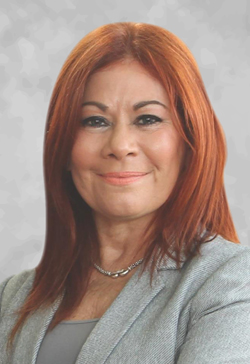
Asm. Yvonne Lopez
Sponsored bills
Maddy summaryThis bill requires New Jersey's Department of Community Affairs (DCA) to maintain a continuous open enrollment period for applicants seeking pre-applications to the federal Housing Choice Voucher Program. It directly affects renters applying for housing assistance by allowing them to submit pre-applications anytime, rather than during limited enrollment windows. The key provision mandates the DCA to keep enrollment open year-round for the waiting list, as long as federal law permits. This change aims to streamline access to the program without altering the federal voucher rules themselves.
Maddy summaryThis bill requires that when appointing members to state boards, commissions, or similar bodies established by law, the appointing official (such as the Governor, Senate President, or Assembly Speaker) must prioritize achieving racial and gender diversity that reflects New Jersey’s population. The goal of diversity becomes a primary consideration for all appointments made after the bill’s effective date, unless it conflicts with specific circumstances or the law creating the body. The bill defines "gender" to include gender identity and "race" as based on physical characteristics or shared ancestry. This policy change directly affects how officials select members for these state entities, aiming to improve representation without mandating specific quotas.
Maddy summaryThe "Family and Private Burial Grounds Preservation Act" protects privately maintained burial sites that are not owned by government, religious groups, or commercial cemeteries. Property owners must report these sites to the Department of Environmental Protection within 120 days, and the law prohibits disturbing remains, markers, or boundaries without authorization. Construction near these sites is restricted to a 15-foot buffer zone, with exceptions for public health needs or essential services. Violations can result in criminal penalties (up to 5 years in prison and fines up to $10 million for economic gain violations) or civil penalties (up to $200,000 for repeat offenses). The bill establishes a preservation fund, with penalties collected from violations deposited into this fund to support maintenance of these sites.
Maddy summaryThis bill requires new public buildings or substantial renovations (costing $40,000 or more) to install induction loop listening systems, which transmit sound directly to hearing aids with a telecoil feature. It applies to spaces regularly open to the public, such as libraries, theaters, banks, medical waiting areas, and grocery checkouts. Building owners must post visible signage indicating the system’s availability and confirm its functionality every two years. Installation may be exempt if a local agency deems it impractical for the specific space.
Maddy summaryThis bill creates the "Community Wealth Preservation Program" to help residents purchase homes at sheriff's sales after foreclosure. It allows qualifying buyers who will live in the home as their primary residence for 84 months to pay a 3.5% deposit (instead of 20%) and have 90 business days to complete the purchase with no interest for the first 60 days. Buyers must complete HUD-approved homebuyer education and provide mortgage pre-approval documentation, with penalties up to $500,000 for not occupying as primary residence. The program requires sheriff's offices to provide clear program information in plain language, excludes investment properties, and gives nonprofit community development corporations special rights to purchase properties while preserving affordability for future buyers.
Maddy summaryThis bill creates a four-year "New Jersey STEM Scholars Grant Pilot Program" within the Department of Education to provide funding for schools. It directly affects public school districts, charter schools, and "renaissance schools" (a New Jersey term for publicly funded alternative schools) seeking to expand STEM (science, technology, engineering, math) education. The program awards competitive grants for three specific areas: project-based learning (student-led STEM projects), afterschool STEM (after-class programs like clubs), and out-of-school STEM (non-classroom activities like workshops). Grants must supplement, not replace, existing STEM funding, and schools must submit detailed plans for program design, student recruitment, teacher support, and long-term sustainability. Funding comes from annual state appropriations and private donations, administered through a new "STEM Scholars Grant Fund."
Maddy summaryThis bill requires all degree-seeking students at New Jersey's public colleges and universities to complete a course on American government and civic participation before graduating. Starting in the 2022-2023 academic year, public institution governing boards must mandate this course as a graduation requirement. The law aims to equip students with foundational knowledge about democracy, citizenship, and how to engage in community decision-making. It directly affects every undergraduate student pursuing a degree at a New Jersey public higher education institution.
Maddy summaryThis bill requires New Jersey's Department of Human Services (DHS) to create a quality-based reimbursement system for registered family child care providers participating in the state's subsidized child care program and the Grow NJ Kids quality rating initiative. It directly affects family child care providers who serve low-to-moderate income families and have earned a quality rating through Grow NJ Kids. The key mechanism is providing enhanced reimbursements to higher-rated providers, replacing the current flat-rate system with payments tied to quality standards. DHS must also seek federal approval to maintain funding for these subsidized child care programs under the new system.
Maddy summaryThis bill requires landlords who rent space to child care facilities (like daycares or preschools) to install and maintain lead-removing water filters at all water outlets used for drinking, food prep, or baby formula if they previously refused to allow water system replacement of lead pipes. Landlords must install filters certified to meet safety standards (like NSF/ANSI 42/53), maintain them, and annually certify compliance to the environmental agency. Failure to comply can result in daily fines of up to $500, and tenants can force rent into court-ordered escrow until filters are installed. If the landlord's refusal causes children or staff to have elevated lead levels, they face unlimited financial liability for damages.