

Maddy summaryThis bill requires telecommunications and cable service providers to remove abandoned lines (defined as lines not terminated at both ends, not maintained safely, not intended for future use, or not in operation for 24+ months) and to mark lines with their identifying information. It specifically targets retired copper telephone lines, requiring owners to submit removal plans within 12 months and complete removal within 10 years (with at least 10% removed annually). Entities must report on abandoned line requests to the Board of Public Utilities every 90 days and provide customers with information about their rights to request line removal. Failure to comply may result in fines up to $1,000 per day. The bill primarily affects telecommunications companies and utility providers across New Jersey.
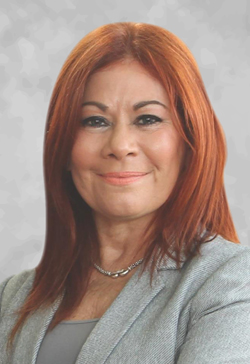
Asm. Yvonne Lopez
Sponsored bills
Maddy summaryThis bill establishes minimum Medicaid reimbursement rates for private duty nursing (PDN) services in New Jersey. It sets a $60 hourly rate for registered nurses and $48 for licensed practical nurses - significantly higher than the current maximum rates of $40 and $28, respectively. The bill directly affects Medicaid beneficiaries requiring home-based PDN care and the nursing providers who deliver these services. To implement the change, the Commissioner of Human Services must apply for federal waivers within 180 days of enactment to secure matching federal funding.
Maddy summaryThis bill requires nonpublic schools participating in the National School Lunch Program to provide free lunches to all students, including those from middle-income families. It expands eligibility for free school lunches to students from households with annual incomes up to 249% of the federal poverty level during the 2024-2025 school year. The State would provide funding to reimburse participating schools for the costs of serving these free meals. This applies to both public and nonpublic schools that participate in the National School Lunch Program or School Breakfast Program.
Maddy summaryThis bill requires New Jersey's Attorney General to provide outreach and services to human trafficking victims using state resources, collaborating with victim support organizations like the Victims of Crime Compensation Office. It authorizes a pilot program to fund service providers in urban areas with the highest crime rates and communities near major ports that have significant minority populations. The pilot program must be evaluated after implementation to determine if it should be continued, expanded, or made permanent. The bill applies statewide but targets specific communities for initial service delivery through the pilot.
Maddy summaryThis bill would amend New Jersey's Hotel and Multiple Dwelling Law to define mobile home parks as "multiple dwellings" for inspection purposes. By doing so, it would require mobile home parks to undergo the same periodic inspections as apartment buildings, focusing on plumbing, electrical hook-ups, water systems, sanitation (including septic systems), and safety hazards on the grounds. The bill specifies that inspections would be limited to these areas and clarifies that municipalities may choose to enforce these inspections in mobile home parks. This change would extend to mobile home park residents the same inspection and code enforcement protections currently provided to apartment building residents.
Maddy summaryNew Jersey's A2233 bill would require public utilities (like power, gas, and water companies) and cable television companies to pay for relocating their facilities when infrastructure projects (such as highway construction) need to occur, shifting the cost burden from taxpayers to these companies. The bill establishes a process where government entities must notify utilities about upcoming projects, hold coordination meetings, and set specific timelines for relocation. Utilities would need to conduct their own site assessments and pay for any work needed to accommodate infrastructure projects, rather than taxpayers covering these costs. This change would prevent delays caused by utility facilities and ensure taxpayers aren't burdened with these relocation expenses.
Maddy summaryThis bill (A3029) directs New Jersey's Department of Environmental Protection (DEP) to create a leasing program for state-owned land to be used as pollinator habitat. It affects the DEP, local governments, nonprofits, and other qualified groups that can lease land to manage areas supporting bees, butterflies, and hummingbirds. Key provisions require the DEP, with input from the Department of Agriculture, to develop rules identifying suitable land and selecting qualified lessees. The program would formalize how state land can be leased for habitat management, with rules adopted via standard administrative procedures.
Maddy summaryThis bill (A2126) requires the New Jersey Motor Vehicle Commission (MVC) to clearly post a toll-free customer service phone number at all official vehicle inspection facilities. Drivers using these facilities can call the number to report problems with the inspection process itself, such as technical issues or service concerns. The law takes immediate effect upon passage and directly affects drivers seeking vehicle inspections across New Jersey.
Maddy summaryThis bill (A2278) requires all New Jersey employers to adopt written domestic violence policies developed by the Department of Labor and Workforce Development (DOLWD). The policies must include employee training, procedures for supporting workers affected by domestic violence, bystander intervention strategies, and victim resources. Employers must implement these policies within one year of the law taking effect and share them with all employees at least once annually. The DOLWD will create and post these culturally competent policies online for employers to adopt.
Maddy summaryThis bill requires each New Jersey state cabinet department to create a dedicated office focused on language and disability access. It directly affects state departments, employees, and people with disabilities who receive state services or work for the state. The office must develop an access plan aligned with federal disability law, implement communication support (like interpreters and translations), ensure physical accessibility, and submit annual public reports on progress. The office head must be fully dedicated to this role and qualified by experience. The law takes effect six months after enactment, giving departments time to prepare.