

Maddy summaryThis bill creates an independent Veterans' Memorial Homes Oversight Board to monitor three specific veterans' homes in New Jersey (Menlo Park, Vineland, and Paramus) and any future homes established. The board reviews complaints, violations, and investigations related to resident rights, abuse, poor care, or inappropriate restraint, identifying systemic issues. It must submit monthly reports to the legislature detailing its findings and recommended actions. The board operates separately from the Department of Military and Veterans Affairs, with members appointed from state departments, veterans' organizations, and family members of residents.
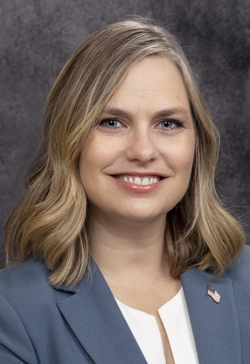
Asm. Vicky Flynn
Sponsored bills
Maddy summaryThis New Jersey bill (A4185), sponsored by Assemblywoman Victoria Flynn, establishes a state-funded counseling program to provide mental health support for eligible family members of active-duty military personnel and disabled veterans. The program reimburses licensed mental health professionals for up to 10 counseling sessions per year (in-person or via telehealth) for qualifying family members, including spouses, domestic partners, and children. The Department of Military and Veterans' Affairs, working with the Department of Human Services, will create a statewide list of participating providers, set reimbursement rates, and run outreach campaigns to connect families with services. It directly affects New Jersey residents who are family members of active-duty service members or disabled veterans (defined as those honorably discharged with a service-connected disability).
Maddy summaryThis bill (A4179) strengthens oversight of New Jersey's three State veterans' memorial homes - Menlo Park, Vineland, and Paramus - by requiring specific regulatory measures. It mandates that facility administrators have clinical long-term care experience, requires all staff to receive annual training on infection control and personal protective equipment (like masks and gloves), and obligates the Department of Health to conduct annual financial audits and unannounced inspections. The bill also requires each home to develop an infection control and outbreak response plan. These changes directly affect the operations and staffing standards of the state-run veterans' homes.
Maddy summaryNew Jersey Assembly Bill A4181 requires the Division of Veterans' Healthcare Services to establish minimum direct care staff-to-resident ratios for state veterans' memorial homes, based on resident acuity and facility size. Each veterans' home must maintain these ratios, which the division must review and adjust at least quarterly. The bill defines "direct care staff" as registered nurses, licensed practical nurses, and certified nurse aides. It does not override existing staffing requirements from the Department of Health or federal agencies for non-direct care staff, nor does it prevent homes from hiring more staff than the minimum. This law applies specifically to state-operated veterans' homes and takes effect four months after enactment.
Maddy summaryThis bill requires New Jersey Transit (NJT) to respond by email to written comments about proposed fare increases or major service cuts (such as discontinuing routes or significantly reducing service) submitted to NJT's electronic mailing address. It clarifies that for comments received electronically, NJT must send a written response via email, rather than by other written means. This change streamlines public feedback processing and ensures timely communication for online submissions. The bill does not alter NJT's existing requirement to hold public hearings before implementing fare hikes or service changes.
Maddy summaryThis bill (A4187) requires New Jersey's Department of Military and Veterans Affairs (DMVA) to create and maintain an emergency hotline for veterans memorial homes. The hotline must be prominently displayed in the homes and on the DMVA website, and will allow reporting of emergencies including suspected abuse, self-harm, suicide, neglect, criminal acts, deaths/injuries, financial issues, or facility evacuations. It directly affects veterans residing in the state's four veterans memorial homes (Menlo Park, Vineland, Paramus, and Arneytown Cemetery). The requirement is added to N.J.S.38A:3-6, subsection (ff), and the hotline must use 555 if available.
Maddy summaryNew Jersey's A4184 establishes a program within veterans' memorial homes to provide direct support to families of residents. The program, administered by resident advocates at each home, offers families information on health updates, benefits, financial assistance, counseling services, and community resources upon request. It requires the program to be promoted to families and the public, with eligibility limited to spouses, domestic partners, civil union partners, or children (by blood, half-blood, or adoption) who are New Jersey residents. The program must be implemented within 90 days of the bill's enactment.
Maddy summaryThis New Jersey bill requires casinos licensed to operate internet gaming platforms to add an interactive educational module about human trafficking. The module must teach users how traffickers operate, how to recognize signs of trafficking, and how to report suspicious activity. It must be developed in consultation with organizations specializing in human trafficking prevention. The requirement applies directly to all New Jersey casino licensees offering online gambling services.
Maddy summaryThis bill prohibits drivers from intentionally disabling and flooding their vehicles during storm-related flooding by operating on roadways where official flood warning signs are displayed. It directly affects drivers who ignore these warnings, imposing a minimum $2,000 fine for violations, in addition to other potential penalties. Exceptions include first responders performing official duties and cases where warning signs were not properly positioned or visible. The law applies immediately upon enactment and aims to prevent dangerous, avoidable vehicle flooding during storms.
Maddy summaryThis bill requires New Jersey's Veterans' Memorial Homes to create and maintain tailored emergency plans. The Division of Veterans' Healthcare Services must develop plans that identify potential emergencies, outline response steps, establish standardized procedures for all homes, and ensure timely communication with residents, families, and staff during crises. It directly affects Veterans' Memorial Homes and their residents, staff, and families by mandating specific preparedness measures. The plans must address unique challenges faced by these facilities during emergencies while complying with existing federal and state laws.