Issue · Healthcare

Healthcare

Every healthcare bill, vote, and legislator stance in New Jersey, automatically classified by Maddy, our AI policy reader.

Total bills
1,646
2026-2027 Regular Session
Top supporter
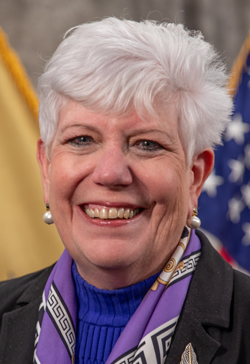
Maureen Rowan
100% support rate
Top opponent
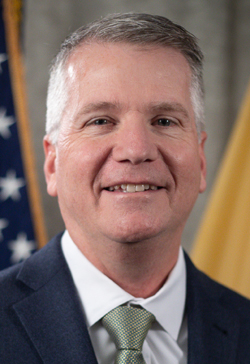
Bob Auth
6% support rate
Ranked legislators
10
5 support · 5 oppose
Key legislators

Who's moving healthcare in New Jersey

Legislators moving healthcare in New Jersey
Legislator Party Stance Support rate Decisive votes
Maureen Rowan
Maureen Rowan House · District 2
D
Strong +
100% 15
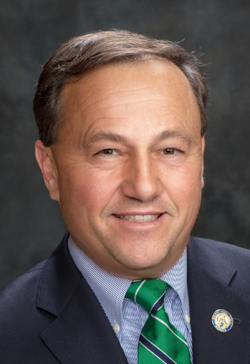
Jim Beach
Jim Beach Senate · District 6
D
Strong +
100% 14
Marisa Sweeney
Marisa Sweeney House · District 25
D
Strong +
100% 14
Anthony Angelozzi
Anthony Angelozzi House · District 8
D
Strong +
100% 13
Dave Bailey
Dave Bailey House · District 3
D
Strong +
100% 13
Bob Auth
Bob Auth House · District 39
R
Strong −
6% 18
John DiMaio
John DiMaio House · District 23
R
Strong −
10% 10
Paul Kanitra
Paul Kanitra House · District 10
R
Strong −
10% 10
Erik Peterson
Erik Peterson House · District 23
R
Strong −
12% 17
Joe Pennacchio
Joe Pennacchio Senate · District 26
R
Strong −
13% 15
Showing 541–550 of 1,646 bills

All healthcare bills

in committee · New Jersey · General Assembly Feb 19, 2026

A 4186: Enters New Jersey into Emergency Medical Services Personnel Licensure Interstate Compact.

New Jersey would join the Emergency Medical Services Personnel Licensure Interstate Compact (REPLICA), allowing EMTs, paramedics, and other licensed emergency medical personnel to work across state lines more easily. The bill directly affects EMS professionals seeking to practice in multiple states by enabling mutual recognition of licenses between participating states. Key provisions require member states to immediately recognize licenses from other compact states and share information about disciplinary actions against license holders. This streamlines cross-state emergency response while maintaining oversight through shared accountability measures.
Sub-Topics Medical Licensing Tags Public Safety
in committee · New Jersey · General Assembly Jan 13, 2026

A 1909: Requires DHS to disregard certain federal pension benefits for veterans in making Medicaid eligibility determinations.

This New Jersey bill requires the Department of Human Services (DHS) to disregard certain federal pension benefits when determining Medicaid eligibility for veterans. It directly affects veterans who receive federal pensions but apply for Medicaid, as these pension payments would no longer count toward their income limit. The key provision amends existing Medicaid rules to exclude these specific benefits from income calculations during eligibility reviews. This change ensures veterans' pension income does not disqualify them from Medicaid coverage they otherwise qualify for under federal and state standards.
in committee · New Jersey · General Assembly Jan 13, 2026

A 3103: Requires DHS to establish a pilot program covering menstrual hygiene products under Medicaid and NJ FamilyCare.

This bill requires New Jersey's Department of Human Services to create a pilot program providing free menstrual hygiene products (tampons, menstrual cups, and sanitary napkins) to eligible Medicaid and NJ FamilyCare enrollees. Eligible individuals would receive products at no cost by presenting their Medicaid card at participating pharmacies, with quantities and frequency determined by health experts. The program depends on federal approval of a waiver under Section 1115 of the Social Security Act to secure federal funding. The bill does not take effect until this federal waiver is approved.
Sub-Topics Medicaid
in committee · New Jersey · General Assembly Jan 13, 2026

A 2989: Allows PFRS death benefits to be paid to supplemental needs trust for unmarried disabled child.

This bill amends New Jersey's Police and Firemen's Retirement System (PFRS) to allow death benefits to be paid directly to a **supplemental needs trust** (also called a special needs trust) for an **unmarried disabled child** of a deceased member. It specifically applies to children of any age who are disabled (intellectually or physically) and unable to work due to a condition lasting at least 12 months, as confirmed by the medical board. The change expands the current beneficiary options, which previously only allowed payments directly to the child or to a trust established for the child's benefit. This policy update ensures benefits can be managed through a trust designed to support the child's long-term needs without jeopardizing eligibility for other public assistance programs.
Sub-Topics Medical Licensing
in committee · New Jersey · General Assembly Jan 13, 2026

A 3757: Establishes basic life support services as essential; requires municipalities to arrange for basic life support services; makes an appropriation.

This bill requires all New Jersey municipalities to provide basic life support (BLS) ambulance services as an essential service for their residents. Municipalities must arrange these services through one of four options: licensing private companies, contracting with public/private/nonprofit entities, entering mutual aid agreements with other towns, or partnering with hospitals. The bill also creates a state appropriation to reimburse municipalities for the costs of establishing these services. It defines BLS as pre-hospital care including CPR, wound care, and fracture stabilization, and amends prior laws to clarify hospital partnerships for these services.
in committee · New Jersey · General Assembly Jan 13, 2026

A 2836: Increases resource threshold for certain Medicaid eligibility groups.

This bill (A2836) increases the asset limits for certain New Jersey Medicaid applicants who qualify as "medically needy." It directly affects low-income residents in specific groups, including pregnant women, children under 21, seniors 65+, and blind or disabled adults, who have higher asset thresholds than standard Medicaid applicants. The key change raises the resource standard for households: for households of three or more people, the limit increases by $20,000 per additional person (from $100 previously), setting new caps at $40,000 for one-person households and $60,000 for two-person households. This adjustment aims to align New Jersey's Medicaid eligibility with federal guidelines and expand access for qualifying residents with modest assets. The bill is currently pending in the Assembly Aging and Human Services Committee.
Sub-Topics Medicaid
in committee · New Jersey · General Assembly Jan 13, 2026

A 2645: Requires physician to offer to test patient for dihydropyrimidine dehydrogenase deficiency prior to patient undergoing chemotherapy.

This bill requires New Jersey physicians to offer patients a test for dihydropyrimidine dehydrogenase deficiency (a condition that can cause dangerous reactions to chemotherapy drugs) before starting chemotherapy. It directly affects patients scheduled for chemotherapy in New Jersey, ensuring they can be screened for this specific risk. The bill mandates that all health insurance policies sold in New Jersey must cover one annual test for this deficiency and any related treatment, at the same level as other medical conditions. This applies to individual, group, and other health insurance plans in the state, with coverage required for both the test and prescribed treatments. The goal is to prevent severe adverse reactions by identifying patients at risk before chemotherapy begins.
Sub-Topics Insurance
in committee · New Jersey · General Assembly Jan 13, 2026

A 2714: "The Legionnaires' Disease Prevention Act"; establishes grant program for restoration or removal of buildings with compromised water supply systems; appropriates $5 million.

The Legionnaires' Disease Prevention Act establishes a $5 million grant program to help owners of historic buildings (pre-1910 or architecturally significant structures) with compromised water systems cover renovation or removal costs. Grants cover up to 50% of eligible project costs, capped at $5,000 per project. The bill also requires public water systems with over 100 connections to maintain specific disinfectant levels (0.3 mg/L chlorine or 1.0 mg/L chloramine) and develop maintenance plans to prevent Legionella bacteria growth. These measures aim to reduce Legionnaires' disease risks in aging infrastructure while targeting historic properties.
Sub-Topics Public Health
in committee · New Jersey · Senate Feb 12, 2026

S 3497: Requires counties to make available voluntary medical identification cards containing relevant patient health information.

This bill requires New Jersey counties to offer residents a voluntary medical ID card program. Residents can choose to include specific health information like blood type, medications, allergies, medical devices, emergency contacts, and treatment restrictions on a photo ID card. Counties may charge only the actual cost of issuing the card, and the information remains confidential with strict penalties for unauthorized disclosure. The program affects all county residents who may benefit from having critical health details accessible during emergencies, without mandating participation or requiring disclosure of any health information.
in committee · New Jersey · Senate Feb 19, 2026

S 3535: "New Jersey Pharmacy Audit Bill of Rights;" establishes procedures by which entities are required to conduct audits of pharmacies.

This bill establishes clear rules for audits of pharmacies conducted by entities like insurance companies or pharmacy benefit managers. It requires 14 days' notice before an audit, limits audits to 100 prescriptions per audit (and 200 annually), and prohibits recouping costs for simple clerical errors like typos or data entry mistakes. Pharmacies must be given 60 days to address discrepancies found in audits, and audits cannot occur during the first week of any month without consent. The law ensures audits are conducted fairly, with pharmacist oversight for clinical issues, and bans duplicate audits by the same entity within six months.
Sub-Topics Prescription Drugs
Showing 541 to 550 of 1,646 bills
Previous 1 … 54 55 56 … 165 Next