Issue · Healthcare

Healthcare

Every healthcare bill, vote, and legislator stance in New Jersey, automatically classified by Maddy, our AI policy reader.

Total bills
1,685
2026-2027 Regular Session
Top supporter
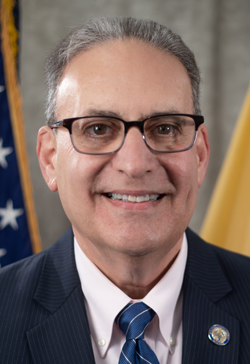
Jim Beach
100% support rate
Top opponent
Bob Auth
8% support rate
Ranked legislators
10
5 support · 5 oppose
Key legislators

Who's moving healthcare in New Jersey

Legislators moving healthcare in New Jersey
Legislator Party Stance Support rate Decisive votes
Jim Beach
Jim Beach Senate · District 6
D
Strong +
100% 14
Roy Freiman
Roy Freiman House · District 16
D
Strong +
100% 11
Dave Bailey
Dave Bailey House · District 3
D
Strong +
100% 10
Andrea Katz
Andrea Katz House · District 8
D
Strong +
100% 9
Britnee Timberlake
Britnee Timberlake Senate · District 34
D
Strong +
100% 9
Bob Auth
Bob Auth House · District 39
R
Strong −
8% 12
Erik Peterson
Erik Peterson House · District 23
R
Strong −
8% 12
John Azzariti
John Azzariti House · District 39
R
Strong −
10% 10
John DiMaio
John DiMaio House · District 23
R
Strong −
10% 10
Paul Kanitra
Paul Kanitra House · District 10
R
Strong −
11% 9
Showing 461–470 of 1,685 bills

All healthcare bills

in committee · New Jersey · General Assembly Jan 13, 2026

A 882: Expands oversight and regulation of long-term care facilities; makes appropriation.

New Jersey's Senate Bill A 882 expands oversight of long-term care facilities by requiring the Commissioner of Health to establish "Mission Critical Long-Term Care Teams" to identify facilities needing intervention for health/safety issues. It mandates all facilities to create detailed outbreak response plans within 180 days, including isolation protocols, staff training, resident notification procedures, and staffing strategies during health crises. Facilities must also form infection prevention committees with specific staffing requirements, including a physician with infectious disease training and a certified infection preventionist. These changes directly affect nursing homes and long-term care facilities statewide, aiming to improve safety and response readiness through new regulations and increased inspections.
in committee · New Jersey · General Assembly Jan 13, 2026

A 2063: Prohibits sale and distribution of nail products containing dibutyl phthalates, toluene, or formaldehyde.

This proposed New Jersey bill prohibits the sale or distribution of nail polish and nail hardeners containing dibutyl phthalates, toluene, or formaldehyde. It directly affects nail product manufacturers, sellers, and retailers by requiring immediate recalls of affected products and mandating retailers to remove them from shelves within 48 hours. Sellers must return recalled items to distributors within 14 days, and distributors must dispose of them properly within 60 days. Violations would be treated as unlawful practices under the Consumer Fraud Act, potentially resulting in fines up to $20,000 per offense.
in committee · New Jersey · Senate Feb 2, 2026

S 3288: Requires DOE to establish program for coaches of school district and nonpublic school athletic activities to obtain certification in cardiopulmonary resuscitation.

This bill requires all coaches of school district and nonpublic school athletic activities in New Jersey to hold current CPR certification. The Department of Education must create a free, state-funded program to help coaches obtain this certification, using evidence-based national guidelines and hands-on training modeled after programs by the American Red Cross or American Heart Association. The program will include a practical learning component for each coach and cover all implementation costs, which the state will bear. This policy directly affects school coaches by mandating accessible CPR training without personal expense.
in committee · New Jersey · General Assembly Jan 13, 2026

A 3232: Restricts genetic testing of newborn and crime victim DNA; permits DNA information to be obtained pursuant to warrant or court order.

This bill requires explicit permission (informed consent) before obtaining genetic information from DNA samples, directly affecting individuals, newborns, crime victims, and witnesses. Exceptions include law enforcement using DNA for criminal investigations (with strict limits on victim/witness DNA), existing newborn screening programs, paternity cases, and DNA database submissions. It also restricts sharing genetic data without consent, except in specific legal circumstances like court orders, criminal proceedings, or federal identification purposes. Additionally, it mandates that individuals must be notified when genetic testing occurs and outlines new regulations for consent procedures.
in committee · New Jersey · General Assembly Feb 19, 2026

A 4340: Imposes minimum staffing requirements and certain reporting requirements on certain long-term care facilities.

This bill requires New Jersey long-term care facilities providing specialized care for Alzheimer's patients to maintain at least one staff member trained in memory care at all times. It mandates that facilities keep daily staffing records (including registered nurses, licensed practical nurses, and certified nurse aides) and provide this information to the public upon request. Additionally, facilities must share a written list of Alzheimer's-specific activities and safety policies with potential residents and submit annual reports on antipsychotic medication use to the state health department. These requirements directly affect facilities serving Alzheimer's patients across New Jersey.
in committee · New Jersey · General Assembly Feb 19, 2026

A 4327: Revises procedures for processing incomplete Medicaid applications; exempts asset transfers of up to $500 per month during look back period for determining eligibility for long-term care services.

This bill revises New Jersey's Medicaid application process to better handle incomplete applications and exempts asset transfers of up to $500 per month during the look-back period from affecting eligibility for long-term care services. The look-back period is the standard 5-year review period used to assess asset transfers when determining Medicaid eligibility for nursing home or long-term care benefits. These changes directly impact New Jersey residents applying for Medicaid, particularly those seeking long-term care, by preventing denial due to small, regular financial transactions like monthly support payments. The bill does not alter overall asset limits but creates a specific exception for modest monthly transfers during the eligibility review.
in committee · New Jersey · Senate Feb 24, 2026

S 3638: Establishes "Justice for Vulnerable Residents Act"; creates Justice Center for the Protection of Individuals with Intellectual or Developmental Disabilities.

This bill, S 3638 ("Justice for Vulnerable Residents Act"), creates a new independent Justice Center to investigate reports of abuse, neglect, and exploitation against individuals with intellectual or developmental disabilities (IDD) in New Jersey’s state-licensed or state-operated residential and day habilitation facilities. It directly affects people with IDD living in these settings and their caregivers, centralizing investigations currently handled by the Department of Human Services and Department of Children and Families. The Justice Center will operate under a model inspired by New York’s system, streamlining complaints and investigations to improve safety and accountability. The bill defines key terms like "abuse" and "caregiver" and mandates a Medical Review Board to address disability-related mortality and abuse prevention.
in committee · New Jersey · General Assembly Jan 13, 2026

A 1748: Requires school districts to provide instruction on dangers of electronic cigarette usage as part of New Jersey Student Learning Standards in Comprehensive Health and Physical Education.

This bill requires New Jersey school districts to add instruction about e-cigarette dangers to health education for students in grades 6-12, starting in the 2020-2021 school year. The curriculum must cover: nicotine content in e-cigarettes, how e-cigarette use can lead to addiction to tobacco or other drugs, health effects of chemicals like formaldehyde found in e-cigarettes, and the state's ban on e-cigarette use on school grounds. The state’s Education Commissioner will provide schools with sample lesson materials to support this teaching. The law directly affects all public school districts and students in grades 6-12 across New Jersey.
in committee · New Jersey · General Assembly Jan 13, 2026

A 160: Requires medical testing for certain persons in circumstances when first responders may be exposed to bloodborne pathogens.

This bill requires court-ordered medical testing for individuals who may have exposed first responders to bloodborne pathogens (like HIV, hepatitis B/C) during emergencies. It applies when first responders (police, firefighters, EMTs) have direct contact with bodily fluids or needle pricks. If a person refuses voluntary testing after a first responder reports exposure within 24 hours, a public health officer can seek a court order for testing - granted if the court finds reasonable evidence of transmission risk. Test results are confidential, shared only with the tested person and the first responder, and cannot be used in court or for law enforcement.
Sub-Topics Public Health
in committee · New Jersey · General Assembly Jan 13, 2026

A 1074: Requires SHBP and SEHBP commissions to use funds from 2025 False Claims Act settlement with Horizon to lower public employee health care contribution costs.

This bill directs the State Health Benefits Program (SHBP) and School Employees' Health Benefits Program (SEHBP) commissions to use $78 million from a 2025 False Claims Act settlement with Horizon Blue Cross Blue Shield to reduce health care contribution costs for public employees. Specifically, it requires these funds to lower the amounts paid by state and school employees (and their dependents) for health coverage under their respective programs. The settlement requires Horizon to pay $100 million to the state, with $78 million allocated directly to the SHBP and SEHBP commissions for this purpose. The policy change takes effect immediately upon enactment.
Sub-Topics Public Employees
Showing 461 to 470 of 1,685 bills
Previous 1 … 46 47 48 … 169 Next