Issue · Healthcare

Healthcare

Every healthcare bill, vote, and legislator stance in New Jersey, automatically classified by Maddy, our AI policy reader.

Total bills
1,646
2026-2027 Regular Session
Top supporter
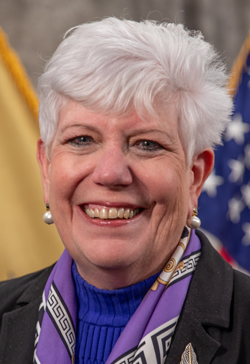
Maureen Rowan
100% support rate
Top opponent
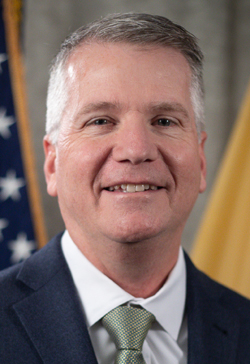
Bob Auth
6% support rate
Ranked legislators
10
5 support · 5 oppose
Key legislators

Who's moving healthcare in New Jersey

Legislators moving healthcare in New Jersey
Legislator Party Stance Support rate Decisive votes
Maureen Rowan
Maureen Rowan House · District 2
D
Strong +
100% 15
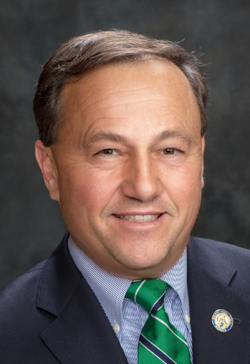
Jim Beach
Jim Beach Senate · District 6
D
Strong +
100% 14
Marisa Sweeney
Marisa Sweeney House · District 25
D
Strong +
100% 14
Anthony Angelozzi
Anthony Angelozzi House · District 8
D
Strong +
100% 13
Dave Bailey
Dave Bailey House · District 3
D
Strong +
100% 13
Bob Auth
Bob Auth House · District 39
R
Strong −
6% 18
John DiMaio
John DiMaio House · District 23
R
Strong −
10% 10
Paul Kanitra
Paul Kanitra House · District 10
R
Strong −
10% 10
Erik Peterson
Erik Peterson House · District 23
R
Strong −
12% 17
Joe Pennacchio
Joe Pennacchio Senate · District 26
R
Strong −
13% 15
Showing 371–380 of 1,646 bills

All healthcare bills

in committee · New Jersey · General Assembly Feb 24, 2026

A 4450: Amends law related to EMT eligibility for receiving funds from "Emergency Medical Technician Training Fund."

This bill amends New Jersey's Emergency Medical Technician Training Fund eligibility rules. It clarifies that volunteer EMTs receiving "length of service awards" from their ambulance squads remain eligible for training fund reimbursements. The bill updates the definition of "volunteer emergency medical technician" to exclude full-time hospital employees and revises service requirements to require at least 12 service calls or 150 duty hours annually during the initial certification period. It also expands the definition of "public or private institution of higher education" to include out-of-state schools and exempts EMTs leaving for college from repaying training funds.
Sub-Topics Hospitals
in committee · New Jersey · General Assembly Feb 24, 2026

A 4453: Provides spouses of military servicemembers with gross income tax credit, up to $500, for professional relicensing fees incurred upon relocating to State.

This bill provides a New Jersey tax credit of up to $500 for spouses of active-duty military members who must pay professional licensing fees after relocating to the state due to a permanent military move. It applies to fees required for licenses the spouse held before moving, such as for nursing, law, or engineering, and covers costs incurred within 13 months of the relocation order. The credit directly reduces the spouse's state tax bill for that year, with excess credit treated as a refund. It targets military families facing financial burdens when rebuilding careers after frequent relocations.
Sub-Topics Income Tax Tax Credits
in committee · New Jersey · General Assembly Jan 13, 2026

A 2190: Requires certain libraries to provide free menstrual hygiene products and requires State to pay costs.

This bill requires libraries in New Jersey municipalities or counties where 40%+ of residents live below 1.85x the federal poverty line to provide free menstrual hygiene products (tampons and sanitary napkins) in all women’s and all-gender restrooms. It also mandates that these libraries display educational pamphlets about menstrual health topics like toxic shock syndrome and proper disposal. The state, not the libraries, will cover all costs for purchasing and maintaining these products. The law applies to libraries funded partly by municipal or county taxes and aims to address period poverty by ensuring access to essential products and information.
Sub-Topics Procurement
in committee · New Jersey · General Assembly Feb 19, 2026

A 4396: Permits juveniles to be admitted to drug court program under certain circumstances.

This bill amends New Jersey law to allow juveniles (minors under 18) who have been found to have broken the law for drug-related offenses to enter drug court programs instead of facing incarceration, under specific conditions. To qualify, a juvenile must have a documented substance use disorder at the time of the offense, have committed the offense while under the influence or to support their addiction, and meet other criteria like no prior violent offenses or firearm possession. The court must verify these conditions through a professional assessment and ensure appropriate treatment facilities are available before placing the juvenile on special probation. This change expands access to treatment-focused sentencing for eligible juveniles who would otherwise face mandatory incarceration for certain drug offenses.
in committee · New Jersey · General Assembly Jan 13, 2026

A 3122: Requires health benefits coverage for family planning and reproductive health care services, including early infancy care, without cost sharing.

This New Jersey bill requires health insurance plans sold in the state and the Medicaid program to cover specific family planning and reproductive health services without any out-of-pocket costs for enrollees. It mandates no deductibles, copayments, or coinsurance for services including abortion (both aspiration and medication types), emergency care for mothers/newborns, contraception counseling, genetic testing, inpatient care for mothers and infants, well-baby visits, and ultrasounds. The coverage applies to all in-network providers under insurance contracts and Medicaid, but excludes childbirth services. Religious employers may still qualify for exemptions under existing law.
in committee · New Jersey · General Assembly Jan 13, 2026

A 492: Restricts certain billing practices for early intervention program services.

This bill (A 492) prevents health care providers from billing parents or guardians for early intervention services more than one year after those services were provided, and stops them from trying to collect payments on overdue bills. It allows providers to always seek payment from insurance companies, but prohibits billing parents for the remaining balance if insurance denies or partially pays a claim submitted over one year after the service was delivered, or if the claim was submitted within one year but over 18 months had passed since the service. The bill directly affects families of infants and toddlers (birth to age 2) receiving early intervention services for developmental delays or disabilities. It aims to prevent unexpected financial burdens on parents who might otherwise face late billing after their child has exited the program.
in committee · New Jersey · Senate Feb 2, 2026

S 3286: "College Mental Health Services Act"; establishes grant program for public institutions of higher education and requires public institutions of higher education to report certain information concerning mental health treatment and suicides.

This bill establishes a grant program to help New Jersey public colleges improve student access to mental health services. It requires public colleges to use grant funds for hiring staff, reducing wait times, expanding services, and raising awareness about mental health resources. Colleges must also publicly report semester-by-semester data on student-to-professional ratios, appointment volumes, wait times, and referrals, plus annually report student suicide attempts and completions to the state. The program is funded through state appropriations, private donations, and federal grants, with reporting starting after the bill's effective date.
in committee · New Jersey · General Assembly Jan 13, 2026

A 475: Provides for filing extension and alternate medical documentation in PFRS, SPRS, or PERS for accidental disability retirement in certain circumstances; extends accidental death benefit for survivors of certain SPRS retirees.

This bill (A475) expands eligibility for accidental disability retirement benefits and survivor benefits under New Jersey's Police and Firemen’s Retirement System (PFRS), State Police Retirement System (SPRS), and Public Employees’ Retirement System (PERS). It extends the filing deadline for accidental disability claims from 5 years to allow for delayed disability manifestations (e.g., from 9/11 exposure), and adds new qualifying health conditions like PTSD, respiratory illnesses, and cancer linked to work exposure. Public safety workers who participated in World Trade Center rescue/cleanup operations (or sustained injuries during those efforts) can now have disabilities presumed work-related without proving negligence, using alternate medical documentation if standard proof isn’t available. This directly affects first responders and public employees with qualifying conditions tied to their duties.
in committee · New Jersey · General Assembly Feb 12, 2026

A 4058: Establishes Emergency Medical Services Provider Safety Grant Program in DOH; appropriates $10 million.

This bill establishes a one-time grant program to help New Jersey emergency medical services (EMS) providers afford safety equipment. It appropriates $10 million from federal coronavirus relief funds to cover costs for personal protective equipment (like masks and gloves), protective clothing, cleaning supplies, and other virus-related safety gear. EMS providers must apply competitively through an online process, with funding prioritized based on need (e.g., service calls, personnel numbers, and pandemic impact). The program expires once the $10 million is spent, and the state health commissioner must report annually on grants awarded and equipment purchased.
Tags Public Safety
in committee · New Jersey · General Assembly Feb 19, 2026

A 4181: Permits pharmacists to dispense certain drugs in emergency without prescription.

This bill (A4181) allows New Jersey pharmacists to provide emergency supplies of **chronic maintenance drugs** without a current prescription under specific conditions. It directly affects **patients needing urgent access to ongoing medications** (like for diabetes or hypertension) when a refill is unavailable, and **pharmacists** who must follow strict criteria: the pharmacy must have a prior prescription record without a valid refill, the pharmacist must have tried but failed to contact the prescribing provider, and the drug must not be a controlled substance. The emergency supply is limited to a **30-day amount** (or standard unit size), and pharmacists receive **civil immunity** from liability unless gross negligence occurs. The bill does not change existing rules for 72-hour emergency supplies under current regulations.
Sub-Topics Prescription Drugs
Showing 371 to 380 of 1,646 bills
Previous 1 … 37 38 39 … 165 Next