Issue · Healthcare

Healthcare (Mental Health)

Every healthcare bill, vote, and legislator stance in New Jersey, automatically classified by Maddy, our AI policy reader.

Total bills
311
2026-2027 Regular Session
Top supporter
Andrew Zwicker
100% support rate
Top opponent
Declan O'Scanlon
0% support rate
Ranked legislators
10
5 support · 5 oppose
Key legislators

Who's moving mental health in New Jersey

Legislators moving mental health in New Jersey
Legislator Party Stance Support rate Decisive votes
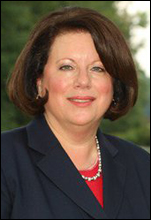
Andrew Zwicker
Andrew Zwicker Senate · District 16
D
Strong +
100% 7
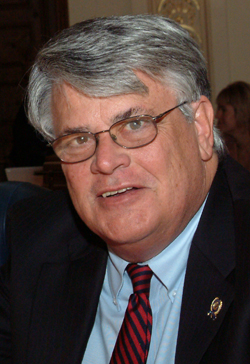
Gordon Johnson
Gordon Johnson Senate · District 37
D
Strong +
100% 7
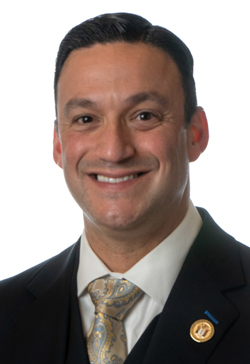
John Burzichelli
John Burzichelli Senate · District 3
D
Strong +
100% 7
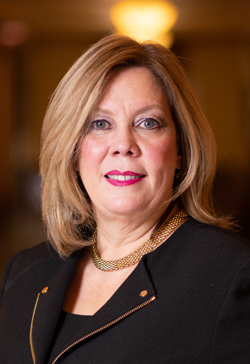
Linda Greenstein
Linda Greenstein Senate · District 14
D
Strong +
100% 7
Nilsa Cruz-Perez
Nilsa Cruz-Perez Senate · District 5
D
Strong +
100% 7
Declan O'Scanlon
Declan O'Scanlon Senate · District 13
R
Strong −
0% 7
Mike Testa
Mike Testa Senate · District 1
R
Strong −
0% 7
Jim Holzapfel
Jim Holzapfel Senate · District 10
R
Strong −
0% 4
Joe Pennacchio
Joe Pennacchio Senate · District 26
R
Strong −
0% 4
Kristin Corrado
Kristin Corrado Senate · District 40
R
Strong −
0% 4
Showing 191–200 of 311 bills

All healthcare bills

in committee · New Jersey · General Assembly Jan 13, 2026

AJR 61: Designates November of every year as Arts and Health Month in New Jersey.

AJR 61 designates every November as "Arts and Health Month" in New Jersey to promote arts and health programming, particularly for underserved communities. The resolution cites research showing arts engagement reduces anxiety and depression symptoms by 73% and addresses disparities in arts access, such as Black and Hispanic students earning 25-30% fewer arts credits than white peers. It requires the Governor to issue an annual proclamation encouraging public officials and citizens to host free or low-cost arts and health activities during November. The bill directly affects communities with limited arts access, aiming to improve mental health outcomes through creative expression. This is a symbolic designation with no new funding or regulations, focusing on raising awareness and community programming.
Sub-Topics Mental Health
in committee · New Jersey · Senate Feb 24, 2026

S 3676: Permits pharmacists to administer certain long-acting injectable drugs.

S 3676 permits pharmacists in New Jersey to administer specific long-acting injectable drugs for psychiatric conditions, which are FDA-approved medications designed to treat symptoms with a single dose lasting up to 24 weeks. Pharmacists must meet certification requirements set by the New Jersey State Board of Pharmacy and the State Board of Medical Examiners, and administration requires a prescription from an authorized prescriber. The bill defines "long-acting injectable drugs" as those treating psychiatric disorders, excluding vaccines or non-psychiatric medications. This change expands pharmacists' scope of practice to include these specific drugs under regulated conditions, without altering existing prescription requirements.
in committee · New Jersey · General Assembly Jan 13, 2026

A 1971: Establishes minimum registered professional nurse staffing standards for hospitals and ambulatory surgery facilities and certain DHS facilities.

This bill establishes minimum nurse-to-patient staffing ratios for hospitals, ambulatory surgery centers, and specific state facilities (like psychiatric hospitals and developmental centers) in New Jersey. It requires facilities to maintain specific ratios, such as 1 nurse for every 5 patients on medical/surgical units and 1 nurse for every 2 patients in critical care units. The law aims to improve patient safety and reduce errors by ensuring adequate nursing coverage based on patient acuity, while requiring facilities to use acuity-based staffing systems to adjust for changing patient needs. These requirements apply to all direct-care registered nurses providing patient services, not administrative staff.
in committee · New Jersey · General Assembly Jan 13, 2026

A 3385: Clarifies public school student attendance recording and reporting requirements.

This New Jersey bill clarifies how public schools must record student attendance, creating four specific categories: present, excused absence, State-excused absence, and unexcused absence. It defines excused absences for health issues (including menstrual disorders like endometriosis), mental health, court appearances, or family deaths, requiring schools to provide makeup work for missed lessons. Schools cannot count excused absences toward perfect attendance records or chronic absenteeism reporting for federal "Every Student Succeeds Act" requirements, though excused absences still count for chronic absenteeism metrics. Students must provide documentation (e.g., medical notes) for excused absences, while State-excused absences (like religious observances or Veterans Day events) won’t affect attendance rates reported to the state.
in committee · New Jersey · Senate Feb 24, 2026

S 3699: Requires Medicaid reimbursement of mental health rehabilitation services provided via clubhouse program.

This bill (S 3699) requires New Jersey Medicaid to reimburse mental health rehabilitation services provided through "clubhouse programs." Clubhouse programs are peer-run community centers where people with mental health conditions receive support and services to help them recover and reintegrate into society. The bill amends existing Medicaid law to explicitly include these clubhouse services under covered "rehabilitative services" (previously listed under subsection 12). This change directly affects mental health clinics operating clubhouse programs and Medicaid recipients who use these specific services, ensuring they receive coverage without additional barriers.
Sub-Topics Medicaid Mental Health
in committee · New Jersey · General Assembly Jan 13, 2026

A 2381: Expands involuntary commitment clinical testimony requirement to include wider range of mental health service providers.

This bill expands the requirement for clinical testimony in New Jersey court hearings about involuntary mental health treatment. It allows nurse practitioners and physician assistants (who are licensed to perform mental health exams) to testify about the clinical need for commitment, not just psychiatrists. The testimony must come from a provider who examined the patient within five days of the hearing. This change directly affects patients facing involuntary commitment proceedings and their treatment teams, ensuring more providers can support the clinical basis for court decisions.
in committee · New Jersey · General Assembly Feb 19, 2026

A 4314: Addresses long-term effects of COVID-19.

New Jersey's Assembly Bill A4314 establishes free post-COVID-19 health clinics for individuals previously diagnosed with the virus, providing physical and mental health evaluations, therapy, and related services at no cost. It mandates the state health department to create public awareness campaigns about long-term health effects, distribute educational materials in healthcare facilities, and train medical professionals on recognizing and addressing these effects. A new task force will specifically study how long-term health impacts disproportionately affect racial and ethnic minorities in the state. The bill expires one year after the end of New Jersey's official public health emergency for COVID-19.
in committee · New Jersey · General Assembly Jan 13, 2026

A 3099: Requires health insurance carriers to categorize mental health treatment and therapy received by victim of domestic violence as medically necessary treatment and provide full benefits coverage therefor.

This bill requires New Jersey health insurance companies to cover mental health treatment and therapy for victims of domestic violence as "medically necessary," eliminating insurance denials for these services. It directly affects insurance carriers (who must provide full coverage) and domestic violence victims (who gain guaranteed access to mental health care). The key provision mandates that such treatment be covered "to the same extent as any other medically necessary treatment" under a policy, removing barriers insurers previously used to limit coverage. The bill amends multiple insurance law sections to enforce this requirement, applying to all health insurance contracts.
in committee · New Jersey · General Assembly Jan 13, 2026

A 196: Requires children's psychiatric facilities to have designated staff members visually supervise patients 24 hours a day, seven days a week.

This bill (A 196) requires children’s psychiatric facilities in New Jersey to provide continuous visual supervision of all patients 24 hours a day, seven days a week, through designated trained staff. Facilities must use live video monitoring (with wireless streaming capability) when staff actively watch children via monitors, except during bathroom or shower use. It directly affects acute child psychiatric care facilities - defined as hospitals contracted for crisis services or private health care facilities - and expands staff accountability by including facility directors in supervision responsibilities. The bill amends existing law to clarify who is responsible for patient supervision and prohibits unsupervised time for children, except in limited bathroom/shower scenarios.
Sub-Topics Mental Health
in committee · New Jersey · General Assembly Jan 13, 2026

A 464: "HOPE Initiative Act"; requires establishment of public awareness campaign to educate citizens about dangers and causes of, and appropriate responses to, heroin and opioid addiction.

The "HOPE Initiative Act" (A464) requires New Jersey to establish a statewide public awareness campaign to combat the heroin and opioid epidemic. It mandates the Division of Mental Health and Addiction Services to develop a multicultural campaign ("HOPE Initiative") using all media channels to educate diverse audiences - including at-risk individuals, families, medical professionals, first responders, and employers - on addiction pathways, warning signs, treatment options, naloxone use, and prevention strategies. Key provisions include debunking myths about addiction, highlighting treatment benefits, promoting naloxone access, and addressing prescription opioid misuse. The campaign must use culturally appropriate messaging in multiple languages and leverage public-private partnerships for wider reach. This is a procedural bill focused on education, not regulatory changes.
Showing 191 to 200 of 311 bills
Previous 1 … 19 20 21 … 32 Next