Issue · Healthcare

Healthcare (Mental Health)

Every healthcare bill, vote, and legislator stance in New Jersey, automatically classified by Maddy, our AI policy reader.

Total bills
311
2026-2027 Regular Session
Top supporter
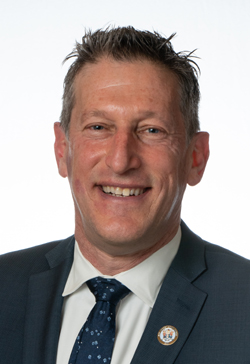
Andrew Zwicker
100% support rate
Top opponent
Declan O'Scanlon
0% support rate
Ranked legislators
10
5 support · 5 oppose
Key legislators

Who's moving mental health in New Jersey

Legislators moving mental health in New Jersey
Legislator Party Stance Support rate Decisive votes
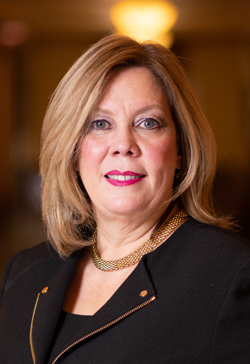
Andrew Zwicker
Andrew Zwicker Senate · District 16
D
Strong +
100% 7
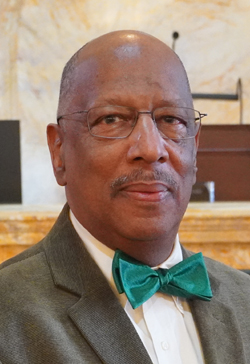
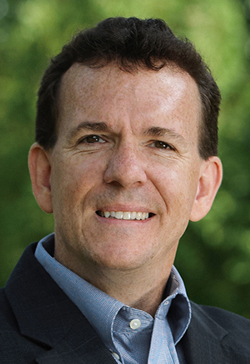
Gordon Johnson
Gordon Johnson Senate · District 37
D
Strong +
100% 7
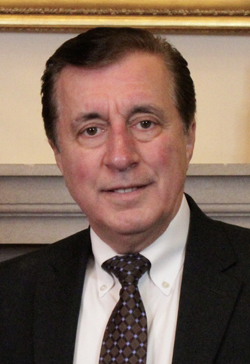
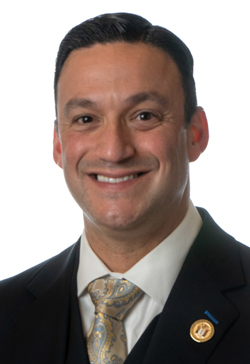
John Burzichelli
John Burzichelli Senate · District 3
D
Strong +
100% 7
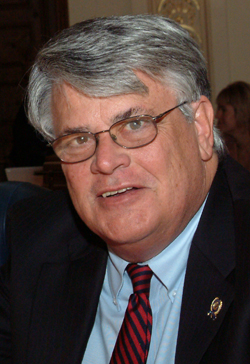
Linda Greenstein
Linda Greenstein Senate · District 14
D
Strong +
100% 7
Nilsa Cruz-Perez
Nilsa Cruz-Perez Senate · District 5
D
Strong +
100% 7
Declan O'Scanlon
Declan O'Scanlon Senate · District 13
R
Strong −
0% 7
Mike Testa
Mike Testa Senate · District 1
R
Strong −
0% 7
Jim Holzapfel
Jim Holzapfel Senate · District 10
R
Strong −
0% 4
Joe Pennacchio
Joe Pennacchio Senate · District 26
R
Strong −
0% 4
Kristin Corrado
Kristin Corrado Senate · District 40
R
Strong −
0% 4
Showing 171–180 of 311 bills

All healthcare bills

in committee · New Jersey · General Assembly Jan 13, 2026

A 998: Directs DHS to establish Children's Partial Hospitalization Pilot Program.

This bill establishes a 36-month pilot program allowing New Jersey's NJ FamilyCare health insurance program to reimburse non-hospital-based partial hospitalization services for children aged 5-14 with mental health needs. It directly affects low-income children requiring intensive outpatient mental health care and providers who can apply to participate. The key provision changes current reimbursement rules - previously requiring services to occur in a hospital - to permit care at non-hospital locations, while maintaining all other federal and state eligibility requirements. The program requires the Department of Human Services to select one provider, monitor outcomes, and report findings to the Governor and Legislature within 36 months of selection.
in committee · New Jersey · General Assembly Jan 13, 2026

A 2946: "Iryna's Law"; establishes process for evaluating certain defendants in need of involuntary commitment in lieu of pretrial detention; establishes aggravating factor for offense committed in certain public places.

Iryna's Law (A 2946) creates a process for prosecutors to request mental health screenings for eligible defendants with mental illness who pose a danger to self or others, potentially avoiding pretrial jail detention. It allows prosecutors to file motions after arrest to immediately transport such defendants to a screening service, which determines if they need involuntary mental health treatment instead of pretrial detention. The law applies to defendants not previously involuntarily committed within the past three years and establishes an aggravating factor for offenses committed in certain public places. This directly affects defendants facing charges who may qualify for mental health evaluation rather than standard pretrial detention. The bill amends New Jersey's pretrial release and sentencing statutes to prioritize mental health assessment for specific cases.
in committee · New Jersey · General Assembly Jan 13, 2026

AR 97: Urges Attorney General to require training for law enforcement regarding the developmentally disabled and persons with behavioral health crises.

This non-binding resolution urges New Jersey's Attorney General to establish mandatory in-service training for all state law enforcement officers. It specifically recommends requiring a minimum of two hours of training every three years focused on interacting with developmentally disabled individuals and those experiencing behavioral health crises. The resolution notes that while basic officer training includes some awareness of these topics, statewide mandatory in-service requirements are currently lacking. It suggests using free NJLearn programs as a potential training resource and recommends guidelines for implementation. As a resolution, it does not create new law but seeks to influence training standards for law enforcement.
Sub-Topics Law Enforcement Mental Health Tags People with Disabilities
in committee · New Jersey · General Assembly Jan 13, 2026

A 2859: Establishes Military-Connected Student Mental Health Grant Program; appropriates $1 million.

This bill establishes a $1 million grant program to expand mental health services for military-connected students in New Jersey school districts. It targets districts with high concentrations of students who have parents or guardians serving in the military (active duty, National Guard, or reserves), requiring applicants to demonstrate this concentration and outline their specific mental health needs. Grant funds can be used for counseling, outreach, and improving existing mental health services for these students, particularly during parental deployments. School districts receiving grants must report annually on service usage and outcomes, and the Department of Education must submit a program evaluation to the Governor and Legislature within two years.
died · New Jersey · General Assembly Jan 13, 2026

A 1526: Establishes Psilocybin Behavioral Health Access and Therapy Pilot Program; appropriates $6 million.

This bill establishes a $6 million pilot program to study psilocybin therapy for behavioral health conditions like depression and anxiety through New Jersey hospitals. It directs the Department of Health to select participating hospitals across three regions (Central, Northern, Southern) to conduct FDA- and DEA-compliant research, with oversight from a new advisory board. The program aims to evaluate whether a future statewide system for safe, legal psilocybin therapy could be developed, focusing on treatment-resistant depression and other conditions. The bill was withdrawn after being approved as part of P.L.2025, c.296, meaning it is now law but no longer pending.
Sub-Topics Mental Health
in committee · New Jersey · General Assembly Jan 13, 2026

A 1153: Increases personal needs allowance to $100 for low-income persons residing in certain facilities.

This bill increases the monthly personal needs allowance (PNA) from $50 to $100 for low-income residents of nursing homes, state psychiatric hospitals, and state developmental centers who receive Medicaid or Supplemental Security Income (SSI) benefits. The allowance allows residents to spend money on personal items like phone calls, meals, clothing, or hobbies, separate from facility-provided care. The change directly affects approximately 30,000 New Jersey residents in these facilities who currently receive the $50 allowance. This doubles the existing amount, aligning New Jersey with states like Florida and Massachusetts that offer higher PNAs.
Sub-Topics Medicaid Mental Health
in committee · New Jersey · General Assembly Jan 13, 2026

A 2427: Establishes Medication Management, Outreach, and Support Program in DHS; appropriates $8 million.

This bill establishes a Medication Management, Outreach, and Support Program within New Jersey's Department of Human Services to serve people with severe mental illness living in the community. It appropriates $8 million from the General Fund to fund licensed provider organizations (like community health centers) to offer medication management services, including early intervention, crisis support, and collaborative care planning with clinicians and families. The program requires providers to hire clinical staff (such as psychiatrists and social workers) to minimize medication side effects and improve health outcomes through continuous quality improvement. It directly affects community-based mental health service recipients and the providers delivering those services.
in committee · New Jersey · General Assembly Jan 13, 2026

A 2648: Requires involuntary commitment of certain individuals who have been administered opioid antidotes.

This bill (A 2648) requires involuntary commitment to mental health treatment for adults who have been administered an opioid antidote (like naloxone) for an apparent opioid overdose and are unwilling to accept voluntary treatment. It directly affects individuals experiencing opioid overdoses who receive emergency antidote treatment but refuse further care. The key provision amends the definition of "dangerous to self" to automatically include anyone who received an opioid antidote for overdose, eliminating the need for separate evaluation of risk in these cases. This changes the criteria for initiating involuntary commitment under New Jersey's mental health laws. The bill is currently pending in the Assembly Aging and Human Services Committee.
in committee · New Jersey · General Assembly Jan 13, 2026

A 1118: Authorizes proportional property tax exemption for honorably discharged veterans having service-connected permanent disability; extends eligibility to veterans suffering from mental illness; establishes eligibility of property owned by disabled veteran with surviving partner for exemption.

This bill expands New Jersey's property tax exemption for veterans with service-connected disabilities. It directly affects honorably discharged veterans who have a permanent service-connected disability, including mental illness (previously excluded), and their surviving partners. The key change adds mental illness as a qualifying condition for a proportional property tax exemption based on the veteran's disability percentage (up to 100%). It also extends eligibility to surviving partners if the veteran developed a service-connected disability after death, allowing them to claim the exemption as if the veteran were still living. The exemption applies to the veteran's or surviving partner's primary residence, in addition to other existing property tax exemptions.
in committee · New Jersey · General Assembly Jan 13, 2026

A 2126: Expands approved sites under Behavioral Healthcare Provider Loan Redemption Program.

This bill expands the Behavioral Healthcare Provider Loan Redemption Program by allowing for-profit community mental health providers to be designated as "approved sites" under the program. Previously, only nonprofit, educational, or government-run facilities qualified, but this amendment explicitly includes for-profit entities. Eligible providers (such as psychiatrists, psychologists, and clinical social workers) who work at these approved sites can apply to have their qualifying student loans partially repaid, up to a $150,000 limit. The change directly affects behavioral healthcare professionals seeking loan repayment assistance and for-profit clinics aiming to recruit staff through this program.
Sub-Topics Mental Health
Showing 171 to 180 of 311 bills
Previous 1 … 17 18 19 … 32 Next