Issue · Healthcare

Healthcare

Every healthcare bill, vote, and legislator stance in New Jersey, automatically classified by Maddy, our AI policy reader.

Total bills
1,646
2026-2027 Regular Session
Top supporter
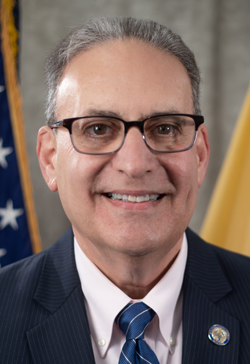
Jim Beach
100% support rate
Top opponent
Bob Auth
8% support rate
Ranked legislators
10
5 support · 5 oppose
Key legislators

Who's moving healthcare in New Jersey

Legislators moving healthcare in New Jersey
Legislator Party Stance Support rate Decisive votes
Jim Beach
Jim Beach Senate · District 6
D
Strong +
100% 14
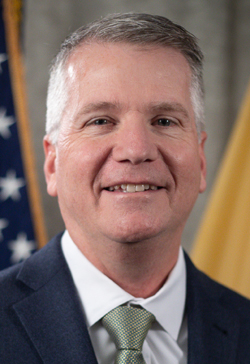
Roy Freiman
Roy Freiman House · District 16
D
Strong +
100% 11
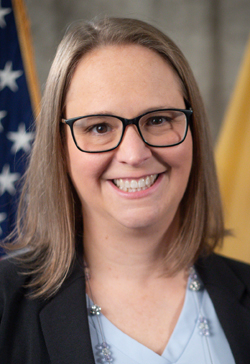
Dave Bailey
Dave Bailey House · District 3
D
Strong +
100% 10
Andrea Katz
Andrea Katz House · District 8
D
Strong +
100% 9
Britnee Timberlake
Britnee Timberlake Senate · District 34
D
Strong +
100% 9
Bob Auth
Bob Auth House · District 39
R
Strong −
8% 12
Erik Peterson
Erik Peterson House · District 23
R
Strong −
8% 12
John Azzariti
John Azzariti House · District 39
R
Strong −
10% 10
John DiMaio
John DiMaio House · District 23
R
Strong −
10% 10
Paul Kanitra
Paul Kanitra House · District 10
R
Strong −
11% 9
Showing 1,461–1,470 of 1,646 bills

All healthcare bills

in committee · New Jersey · Senate Jun 8, 2026

S 2994: Establishes "Midwifery Licensing Act." *

This bill creates New Jersey's first dedicated State Board of Midwifery to regulate midwifery practice, replacing oversight by the State Board of Medical Examiners. It establishes licensing for three midwifery roles (certified midwife, certified nurse midwife, certified professional midwife) and requires the new board to issue biennial licenses, set qualifications, and enforce standards. The board will consist of 13 members, including midwives, physicians, and a public member, with rules to be finalized within six months. This directly affects midwives practicing in New Jersey and aims to modernize regulations outdated since the 1800s.
in committee · New Jersey · Senate Jan 13, 2026

S 3057: Requires employer to allow employee suffering from menstrual disorder to work remotely in certain circumstances.

This bill requires New Jersey employers to allow employees with qualifying chronic menstrual disorders to work remotely at least two full days per month, covering conditions like endometriosis, uterine fibroids, and severe premenstrual symptoms. Employees must provide a medical note to request accommodations, and employers cannot penalize workers for using this option. Employers may deny requests only if they prove remote work would cause an undue hardship or the employee cannot perform essential job duties remotely, but they bear the burden of proof. Violations carry civil penalties up to $10,000 per offense, enforced by the Labor Commissioner.
in committee · New Jersey · Senate Jan 13, 2026

S 2592: Requires certain issuance standards and open enrollment for Medicare supplement policies.

This bill (S 2592) prohibits insurers from denying or charging more for Medicare supplement policies (Medigap) based on health status, medical history, or claims experience. It requires insurers to accept all applicants year-round for these policies, regardless of whether they enrolled in Medicare due to age or disability. The law applies to all Medicare supplement policies sold in New Jersey, ensuring continuous enrollment without health-based restrictions. It does not override federal rules allowing pre-existing condition limitations under specific circumstances.
Sub-Topics Medicare
in committee · New Jersey · Senate Jan 13, 2026

S 2902: "Behavioral Health Crisis Mobile Response Act."

This bill establishes a statewide mobile crisis response system for adults with disabilities experiencing behavioral health emergencies. It requires mobile teams of mental health professionals to provide 72-hour in-home crisis response, including temporary stabilization at short-term centers if needed, followed by up to eight weeks of ongoing support through personalized stabilization plans. The law directly affects adults with intellectual/developmental disabilities or mental illness in crisis, ensuring 24/7 access to emergency stabilization services without requiring hospitalization. Key provisions include mandating certified mobile teams, defining crisis response timelines, and creating individualized crisis stabilization plans to address immediate dangers and prevent future crises.
Sub-Topics Mental Health
in committee · New Jersey · Senate Jan 13, 2026

S 2038: Creates behavioral health court pilot program.

New Jersey's S 2038 creates a pilot program for behavioral health courts, allowing eligible defendants to receive court-ordered treatment instead of prison sentences. The bill applies to individuals convicted of non-violent offenses who need behavioral health services (e.g., mental health or substance abuse treatment), have no prior violent convictions, and meet specific criteria like not possessing firearms during the offense. Courts must order participants into licensed treatment programs and monitor compliance, with probation revoked for violations (permanent revocation after a second violation). The program is limited to counties/municipalities that apply and operates as a pilot in at least two counties and five municipalities.
in committee · New Jersey · Senate Jan 13, 2026

S 2580: Requires certain providers to perform intimate partner violence screenings and all health care professionals to take certain actions to prevent perpetrator of intimate partner violence from obtaining copies of victim's medical record.

S 2580 requires licensed healthcare providers (including doctors, nurses, and midwives) to conduct regular screenings for intimate partner violence during patient visits, using private settings or telehealth options. If abuse is suspected, providers must document findings, immediately provide patients with local resources and referrals, and ensure patients reapprove who can access their medical records - preventing perpetrators from obtaining copies. This directly affects healthcare facilities and patients experiencing abuse by current or former partners. Key provisions include mandatory screening documentation, resource lists maintained by state departments, and same-visit interventions to protect victims' medical privacy.
in committee · New Jersey · Senate Mar 16, 2026

S 162: Requires DOH to operate mobile cancer screening program; appropriates $100,000.

This bill requires New Jersey's Department of Health (DOH) to launch a mobile cancer screening program within 180 days of its effective date. The program will use staffed mobile vehicles deployed across the state's northern, central, and southern regions, each operated by at least one qualified healthcare professional who determines screening methods based on their expertise and available equipment. The bill appropriates $100,000 from the state General Fund to fund this initiative and mandates a report to the Governor and Legislature within two years, summarizing results and suggesting future legislative action. The program directly affects New Jersey residents, particularly those in underserved areas who may gain easier access to cancer screenings.
Sub-Topics State Budget
in committee · New Jersey · Senate May 11, 2026

S 569: Establishes County-Based School Security Pilot Program in DOE; appropriates $15 million.

S 569 establishes a three-year County-Based School Security Pilot Program in Essex, Mercer, and Camden counties, directly affecting public school students and districts in those areas. The bill provides $15 million from the General Fund to fund two key components: county-based mental health services (including screenings, counseling, and crisis intervention) and enhanced school security infrastructure (such as active shooter training and bullet-resistant shields). The program requires collaboration between the Education Department and other state agencies, with annual reports to the Governor and Legislature evaluating the pilot's effectiveness. This initiative aims to address student mental health needs and physical security in participating school districts through concrete, funded provisions.
in committee · New Jersey · Senate Jan 13, 2026

S 1096: Permits local health boards to require minimum temperature of 70 degrees from October through April in certain buildings occupied by seniors and disabled persons.

This bill (S 1096) requires local health boards in New Jersey to mandate a minimum indoor temperature of 70 degrees Fahrenheit from October through April in specific buildings housing seniors (62+ years) and disabled individuals. It directly affects "housing for older persons" (per federal Fair Housing Act) and community residences for developmentally disabled, mentally ill, or head-injured persons - excluding nursing facilities already meeting federal temperature standards. The key provision amends existing law to raise the required temperature from 68°F to 70°F during cold months, applying when building owners agree to supply heat. This policy change focuses on setting a concrete thermal standard to protect vulnerable residents during winter.
in committee · New Jersey · Senate Jan 13, 2026

S 2571: Establishes task force to study and make recommendations concerning health care service needs of the lesbian, gay, bisexual, transgendered, and queer or questioning individuals, and persons with intersex conditions in the State.

S 2571 establishes a New Jersey task force within the Department of Health to study the health care needs of LGBTQI+ individuals (including those with intersex conditions) and develop recommendations. The task force will review current policies, resources, and barriers to care - such as discrimination and gaps in medical training - and examine medical education to improve health care access and quality. It must submit its recommendations to the Governor and Legislature within one year of formation. This initiative directly addresses documented health disparities, including higher rates of mental health issues and barriers to insurance coverage faced by LGBTQI+ residents.
Showing 1,461 to 1,470 of 1,646 bills