Issue · Healthcare

Healthcare

Every healthcare bill, vote, and legislator stance in New Jersey, automatically classified by Maddy, our AI policy reader.

Total bills
1,646
2026-2027 Regular Session
Top supporter
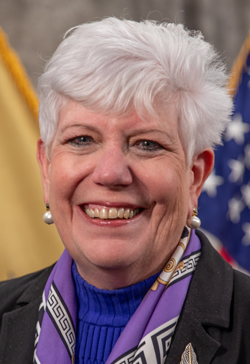
Maureen Rowan
100% support rate
Top opponent
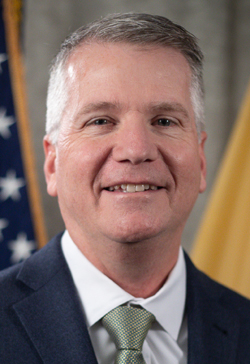
Bob Auth
6% support rate
Ranked legislators
10
5 support · 5 oppose
Key legislators

Who's moving healthcare in New Jersey

Legislators moving healthcare in New Jersey
Legislator Party Stance Support rate Decisive votes
Maureen Rowan
Maureen Rowan House · District 2
D
Strong +
100% 15
Jim Beach
Jim Beach Senate · District 6
D
Strong +
100% 14
Marisa Sweeney
Marisa Sweeney House · District 25
D
Strong +
100% 14
Anthony Angelozzi
Anthony Angelozzi House · District 8
D
Strong +
100% 13
Dave Bailey
Dave Bailey House · District 3
D
Strong +
100% 13
Bob Auth
Bob Auth House · District 39
R
Strong −
6% 18
John DiMaio
John DiMaio House · District 23
R
Strong −
10% 10
Paul Kanitra
Paul Kanitra House · District 10
R
Strong −
10% 10
Erik Peterson
Erik Peterson House · District 23
R
Strong −
12% 17
Joe Pennacchio
Joe Pennacchio Senate · District 26
R
Strong −
13% 15
Showing 1,341–1,350 of 1,646 bills

All healthcare bills

in committee · New Jersey · Senate Jan 13, 2026

S 1976: Prohibits hospital from billing patient for inter-hospital medical transport services under certain circumstances.

This New Jersey bill (S 1976) prohibits hospitals from charging patients for medical transport between hospitals when no alternative transport options (like private vehicles) are clinically appropriate for the patient's condition. It directly affects patients requiring such transport who have no other safe or medically suitable choices. Hospitals may still bill health insurance plans for these services, and the bill does not apply to nonvolunteer ambulance services responding to 911 calls for transport to the nearest appropriate hospital. The law would take effect immediately upon passage.
Sub-Topics Hospitals Insurance
in committee · New Jersey · Senate Jan 13, 2026

S 3125: Eliminates certain personal injury protection options available under standard automobile insurance policies; requires $250,000 of medical expense benefits under standard and basic automobile insurance policies.

This bill (S 3125) raises the mandatory medical expense benefit limit in New Jersey auto insurance policies from $15,000 to $250,000 per person per accident. It eliminates lower-cost insurance options that previously offered reduced coverage and requires all standard and basic auto insurance policies to include this higher medical benefit level. The change directly affects all auto insurance policyholders in New Jersey, ensuring broader coverage for medical treatment after accidents. Key provisions include specific exceptions for severe injuries (like brain/spinal cord trauma) and requirements for referrals for physical therapy and acupuncture to qualify for coverage.
in committee · New Jersey · Senate Jan 13, 2026

S 944: Expands epinephrine administration mechanisms permitted in schools, institutions of higher education, and youth camps.

This bill expands school staff's ability to administer epinephrine auto-injectors to students experiencing severe allergic reactions (anaphylaxis) in New Jersey schools, colleges, and youth camps. It allows trained school nurses or designated staff to give epinephrine without prior parental consent if they believe a student is having an anaphylactic reaction, even if the student hasn't been identified as needing it or parental forms are incomplete. Schools must store epinephrine securely but accessibly, train staff, maintain backup supplies, and follow specific protocols for emergency use and hospital transport. The law requires parental written authorization for routine use, but streamlines emergency administration to save critical time during allergic emergencies. It directly affects all New Jersey public and nonpublic schools, colleges, and youth camps with students at risk of anaphylaxis.
Sub-Topics Hospitals
in committee · New Jersey · Senate Jan 13, 2026

S 1905: Establishes counseling program for eligible family members of active duty military members and disabled veterans.

This bill establishes a state-funded counseling program for family members of New Jersey's active-duty military members and disabled veterans. It requires the Department of Military and Veterans' Affairs to reimburse licensed mental health professionals for up to 10 counseling sessions per year (in-person or via telehealth) for eligible family members. Eligible family members include spouses, domestic partners, civil union partners, or children of active-duty service members or disabled veterans who are New Jersey residents. The program will maintain a statewide list of participating providers, set reimbursement rates, and conduct outreach to inform eligible individuals about the service.
in committee · New Jersey · Senate Mar 16, 2026

S 2884: "Stop Sepsis Act"; Requires hospitals to establish sepsis recognition and treatment protocols, train staff, and establish quality measures.*

This bill requires all licensed general and special hospitals in New Jersey to create and implement evidence-based protocols for early sepsis recognition and treatment. The protocols must cover screening, treatment guidelines (with separate adult and pediatric components), infection source identification, antibiotic timing, and exclusion criteria for inappropriate cases. Hospitals must submit protocols to the Department of Health within 120 days of enactment, train staff regularly, and annually report data to track adherence and mortality rates for quality improvement. The law focuses on standardizing care for a life-threatening condition that can cause organ damage or death if untreated.
Sub-Topics Children's Health
in committee · New Jersey · Senate Jan 13, 2026

S 1306: "Children's Vaccination Bill of Rights"; provides children in State with certain protections concerning vaccines.

S 1306, the "Children's Vaccination Bill of Rights," establishes new protections for parents and children in New Jersey regarding vaccination decisions. It requires parents to receive detailed information about vaccine ingredients and risks before consent (provision e), gives parents final authority over vaccination choices based on independent scientific evidence (provision f), and holds the state liable for injuries caused by mandated vaccines (provision g). The bill also mandates equal application of vaccination policies regardless of race or religion (provision b), requires independent safety studies (provision d), and ensures religious liberty protections are considered. This bill directly affects all parents and children subject to New Jersey's vaccination requirements for schools or healthcare.
Sub-Topics Public Health
in committee · New Jersey · Senate Jan 13, 2026

S 1910: Provides gross income tax deduction for expenses incurred by disabled veterans for service animals.

This bill would allow New Jersey disabled veterans to deduct up to $5,000 annually from their gross income for service animal expenses, including purchasing, training, and maintenance costs like food, grooming, and veterinary care. To qualify, a veteran must be a New Jersey resident honorably discharged from military service with a service-connected disability as confirmed by the U.S. Veterans Administration. The deduction applies to expenses not already covered by existing medical expense deductions and requires submitting proof of eligibility to the Division of Taxation. It will take effect for tax returns filed for the 2024 tax year and beyond.
signed · New Jersey · Senate Aug 20, 2026

S 2260: Secures protections for patients and providers accessing and providing reproductive health care services; establishes right of residents to reproductive health care activity that is restricted in other states.*

New Jersey's S 2260 strengthens legal protections for patients and providers accessing or delivering reproductive and gender-affirming health care services within the state. The bill explicitly defines "legally protected health care activities" to include seeking, providing, or assisting with these services (such as abortion, contraception, or gender-affirming care), regardless of a patient's location. It prohibits obstruction, intimidation, or physical barriers at facilities offering these services and grants licensing boards authority to impose civil penalties for violations. This directly affects patients traveling to New Jersey for care (not available in their home states) and healthcare providers operating in these fields. The law codifies existing protections to prevent harassment or violence against these services, following increased threats and protests nationwide after the overturning of Roe v. Wade.
Sub-Topics Women's Health
died · New Jersey · Senate Jun 15, 2026

S 2800: Provides comprehensive Medicaid benefits to certain individuals formerly in foster care.

This bill expands New Jersey Medicaid eligibility to include individuals who were formerly in foster care and are under 21 years old. It removes a previous barrier that required these individuals to meet "dependent child" criteria to qualify for Medicaid benefits. The change directly affects young adults aging out of foster care systems, ensuring they can access comprehensive medical coverage without meeting the standard dependent child requirement. The policy modifies existing Medicaid definitions to explicitly include this group as "qualified applicants" under state law.
Sub-Topics Medicaid
in committee · New Jersey · Senate Jan 28, 2026

S 3206: Establishes Military Suicide Prevention Task Force.

New Jersey's S 3206 establishes a Military Suicide Prevention Task Force to reduce and develop a plan for eliminating suicides among active-duty military members and veterans. The task force, composed of 17 members including state agency leaders and public representatives with specific expertise (such as veterans, mental health professionals, and specialists in homelessness or disability services), will recommend comprehensive strategies and programs to prevent military suicides. It must meet at least every other month, provide a detailed plan for suicide elimination, and submit recommendations to the state. Task force members serve without pay but receive reimbursement for necessary expenses.
Showing 1,341 to 1,350 of 1,646 bills