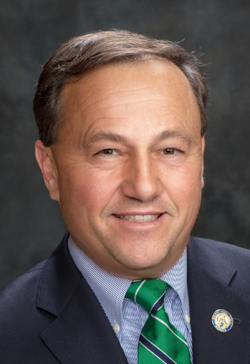
This bill adds $500,000 in supplemental funding to New Jersey's Huntington's Disease Grant Program within the Department of Health. The funds will support grants to institutions of higher education, non-profits, and New Jersey-based research organizations for services including pre-symptomatic testing, neurology care, counseling, and disease management. It directly benefits approximately 900-1,200 New Jersey residents living with Huntington's disease and an estimated 7,000 at-risk individuals. The supplemental appropriation increases the program's total FY2023 funding from $200,437 to $700,437. The bill does not change eligibility but expands existing support for medical care and counseling.
S 3161 requires New Jersey's Department of Treasury and Department of Human Services to annually report to the Governor and Legislature on funding for two key programs. For NJ FamilyCare (which covers Medicaid and CHIP health coverage for low-income residents), the report must identify available state funds and evaluate care quality, then prioritize the 12 most urgent policy changes needed to fix deficiencies. Similarly, for child care subsidy programs, the report must identify unspent state funds and evaluate service quality, compiling a prioritized list of 12 needed improvements with required funding. The bill mandates these annual reports starting January 1 after enactment, focusing on using existing funds more effectively to improve program quality.
This bill requires New Jersey professional licensing boards to issue licenses to veterans who hold equivalent credentials (including education, training, and experience) from another state, provided they were honorably discharged and their out-of-state license is in good standing. It mandates boards to evaluate equivalent qualifications without requiring identical experience hours, while still allowing for standard requirements like examinations. The law directly affects veterans seeking to work in licensed professions (such as nursing, engineering, or cosmetology) who face barriers due to non-portable licensing standards. It aims to facilitate veterans' transition into civilian careers by recognizing their military-earned credentials.
This New Jersey bill (S 2716) requires health insurers, State Health Benefits Program (SHBP), and State Employees Health Benefits Program (SEHBP) plans to cover mammograms for all women aged 35 and older annually, and for women under 35 with specific risk factors like family history of breast cancer or dense breast tissue. It mandates coverage for baseline mammograms at age 35, annual screenings for those 35+, and additional tests (like ultrasounds or MRIs) when medically necessary due to abnormal results or risk factors. The law applies to all group and individual health insurance policies in New Jersey, ensuring coverage for these services without additional cost-sharing for patients. Insurers may review the medical necessity of additional tests but must cover them if deemed appropriate by a healthcare provider.
S 3020 requires New Jersey health insurance plans to cover all childhood immunizations recommended by the state Department of Health (DOH) without patients paying copays or deductibles. The DOH bases these recommendations on the federal Advisory Committee on Immunization Practices (ACIP), and the bill updates state law to align insurance coverage with these guidelines. Insurers must provide this coverage as part of preventive care and notify policyholders in writing of any changes to immunization coverage. This applies to all health insurance plans offering medical benefits in New Jersey, directly affecting insurers and policyholders.
This bill creates a certification program for volunteer physicians and dentists who provide care at qualifying free clinics. To qualify, medical professionals must be licensed in New Jersey, meet federal free clinic employee status, and complete at least four hours of volunteer work weekly for four consecutive weeks at a clinic meeting specific criteria (no third-party billing, sliding fees). Certified volunteers gain civil immunity from lawsuits for reasonable care provided in good faith, excluding gross negligence or willful misconduct, with the State of New Jersey becoming the sole legal recourse for claims. The law directly affects licensed medical professionals volunteering at free clinics meeting the defined standards.
This bill prohibits anyone developing or deploying an AI system in New Jersey from advertising or claiming the system can act as a licensed mental health professional. It directly affects AI developers and companies that deploy mental health-related AI tools in the state. The law defines "licensed mental health professional" broadly to include all state-licensed practitioners (like therapists, counselors, and psychologists) and specifies that AI systems cannot be marketed as providing such services. Violations would be treated as consumer fraud under state law, potentially resulting in fines up to $20,000 per offense. The bill is currently pending in the Senate Commerce Committee.
This bill defines "born alive" as any infant expelled with vital signs (breathing, heartbeat, or movement), regardless of cause (including abortion or attempted abortion). It requires healthcare professionals present during such births to provide the same medical care and immediate hospital transport as for any newborn, with violations punishable as a third-degree crime (3-5 years in prison or $15,000 fine). Healthcare staff who fail to report noncompliance face fourth-degree criminal charges (up to 18 months in prison or $10,000 fine), while mothers of such infants are shielded from conspiracy charges and may sue violators for damages. The law applies directly to healthcare providers in abortion facilities and hospitals, mandating specific medical and reporting obligations for infants born alive during abortion procedures.
This bill (S 756) mandates that health insurance plans in New Jersey (including hospital, medical, and health service corporation contracts) cover specific preventive services without requiring copayments or deductibles. It covers services rated "A" or "B" by the U.S. Preventive Services Task Force, CDC-recommended immunizations, pediatric preventive care per federal guidelines, and women’s preventive services. Plans must provide these services at least once annually within the calendar year (January 1-December 31), with coverage for out-of-network care if no in-network provider is available. The bill was withdrawn on January 13, 2026, as it had already been enacted as P.L.2025, c.386.
S 2346 extends health insurance coverage for adult children with disabilities beyond the typical age limit of 26. It requires health plans to continue coverage for individuals 26 or older who have an intellectual disability or physical handicap and are chiefly dependent on their parent for support. The law prohibits health plans from denying coverage based on factors like marriage, having a child, or not living with the parent. This applies to hospital, medical, and health service corporation contracts in New Jersey, ensuring continuous coverage for a specific group of disabled adults who rely on parental support.