Issue · Healthcare

Healthcare

Every healthcare bill, vote, and legislator stance in New Jersey, automatically classified by Maddy, our AI policy reader.

Total bills
1,646
2026-2027 Regular Session
Top supporter
Maureen Rowan
100% support rate
Top opponent
Bob Auth
6% support rate
Ranked legislators
10
5 support · 5 oppose
Key legislators

Who's moving healthcare in New Jersey

Legislators moving healthcare in New Jersey
Legislator Party Stance Support rate Decisive votes
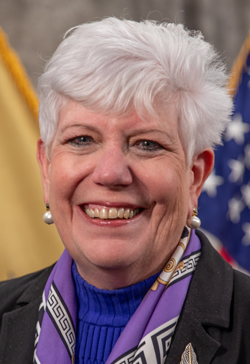
Maureen Rowan
Maureen Rowan House · District 2
D
Strong +
100% 15
Jim Beach
Jim Beach Senate · District 6
D
Strong +
100% 14
Marisa Sweeney
Marisa Sweeney House · District 25
D
Strong +
100% 14
Anthony Angelozzi
Anthony Angelozzi House · District 8
D
Strong +
100% 13
Dave Bailey
Dave Bailey House · District 3
D
Strong +
100% 13
Bob Auth
Bob Auth House · District 39
R
Strong −
6% 18
John DiMaio
John DiMaio House · District 23
R
Strong −
10% 10
Paul Kanitra
Paul Kanitra House · District 10
R
Strong −
10% 10
Erik Peterson
Erik Peterson House · District 23
R
Strong −
12% 17
Joe Pennacchio
Joe Pennacchio Senate · District 26
R
Strong −
13% 15
Showing 1,271–1,280 of 1,646 bills

All healthcare bills

in committee · New Jersey · Senate Jan 13, 2026

S 2987: Requires automatic registration with New Jersey Immunization Information System upon administration of vaccine for certain persons who consent to registration.

This bill requires automatic enrollment in New Jersey's Immunization Information System (NJIIS) for individuals receiving vaccines, unless they or their parent/guardian provides a written opt-out. It directly affects all New Jersey residents getting vaccinated, including newborns (automatically enrolled unless parents opt out) and others (enrolled at time of vaccination unless they or their parent/guardian opt out). Key provisions include: mandatory enrollment upon vaccine administration for non-registered individuals, written opt-out requirements, and allowing the health commissioner to override opt-outs during public health emergencies. The registry aims to track vaccination records for public health purposes like outbreak response and school enrollment verification, while ensuring access to health providers and allowing individuals to review/correct their records.
Sub-Topics Public Health
in committee · New Jersey · Senate Jan 13, 2026

S 788: Enters New Jersey into Audiology and Speech-Language Pathology Interstate Compact.

S 788 enters New Jersey into the Audiology and Speech-Language Pathology Interstate Compact, allowing licensed professionals in these fields to practice across participating states without obtaining separate licenses. The bill directly affects audiologists and speech-language pathologists licensed in New Jersey, enabling them to serve patients in other member states where the patient is located during care. Key provisions include mutual recognition of licenses, sharing of disciplinary information between states, support for military spouses relocating, and integration of telehealth services. This compact preserves each state's regulatory authority while expanding access to these healthcare services across state lines. The bill is procedural and does not change current licensing requirements within New Jersey.
Sub-Topics Telehealth
in committee · New Jersey · Senate Jan 13, 2026

S 2729: Creates Midwifery Licensing Act; modifies regulation of midwifery.

S 2729, the Midwifery Licensing Act, creates a new State Board of Midwives to regulate midwifery practice in New Jersey, replacing the current system where midwifery was overseen by the State Board of Medical Examiners. The bill establishes an 11-member board with specific representation requirements, including seven midwives (with defined categories), two physicians (OB/GYN and pediatrics), a public member, and an executive branch representative. This legislation directly affects licensed midwives - certified midwives (CM), certified nurse midwives (CNM), and certified professional midwives (CPM) - by shifting their regulatory oversight to a dedicated board. The key policy change is the creation of a specialized licensing framework to modernize midwifery regulation, as the current statutes governing midwifery are described as outdated.
in committee · New Jersey · Senate Jan 13, 2026

S 1700: Requires clinic connected with dental school at public institution of higher education to give priority to 100 percent disabled veterans.

S 1700 requires dental clinics affiliated with public university dental schools (like Rutgers School of Dental Medicine) to give priority scheduling to 100% disabled veterans seeking oral health services. It directly affects veterans certified as permanently 100% disabled by the U.S. Department of Veterans Affairs who live in New Jersey. The key provision mandates that clinics must schedule appointments for these veterans within 30 days of request, ensuring timely access to care. The law takes immediate effect and directs the Department of Military and Veterans Affairs to create implementing rules.
in committee · New Jersey · Senate Jan 13, 2026

S 2048: Establishes loan redemption program and gross income tax credit for mental health professionals who serve children and adolescents.

This bill creates a program to help mental health professionals working with children and adolescents in New Jersey reduce student loan debt. It provides two direct financial incentives: (1) up to $1,000 per year in loan redemption payments (capped at four years total) for licensed professionals employed full-time in this field, and (2) a $1,000 tax credit against state income tax for qualifying professionals. To qualify, participants must be New Jersey residents, hold relevant licenses, maintain full-time employment serving minors, and have outstanding eligible student loans. The program is administered by the Higher Education Student Assistance Authority and requires annual proof of residency and employment. The bill is pending before the Senate Higher Education Committee.
in committee · New Jersey · Senate Jan 13, 2026

S 517: Prohibits pharmacies from charging additional fee for processing prescriptions transmitted by telephone or electronic means.

This New Jersey bill (S 517) prohibits pharmacies from charging extra fees for processing prescriptions sent by phone or electronically, unless the same fee applies to written prescriptions. It directly affects pharmacies (by restricting their ability to add processing fees for electronic/phone prescriptions) and patients (who would no longer face these additional costs). The key provision requires pharmacies to treat electronic/phone prescriptions the same as paper ones regarding fees, promoting consistency. The bill focuses solely on this fee structure change, without altering prescription requirements or other policy elements.
in committee · New Jersey · Senate Jan 13, 2026

S 1432: Establishes New Jersey Center for Study and Prevention of Suicide at Rutgers School of Public Health.

This bill establishes the New Jersey Center for the Study and Prevention of Suicide at Rutgers School of Public Health. The center will research suicide causes, prevention methods, and treatment approaches - including individual, community, and societal factors - and work with state policymakers to develop evidence-based programs. It will recruit new researchers, run a competitive grant program for suicide research, and submit annual reports to the Governor and Legislature on its activities and funding. The bill requires annual state funding for the center and allows it to accept additional grants or donations for suicide-related research.
in committee · New Jersey · Senate Jan 13, 2026

S 2658: "Homeless Bill of Rights."

This New Jersey bill establishes the "Homeless Bill of Rights," prohibiting discrimination against homeless individuals in public spaces, services, and employment. It guarantees specific rights including free movement in public areas (sidewalks, parks, transit), equal treatment by government agencies, protection from employment discrimination due to lacking a permanent address, access to emergency medical care and voting without housing status bias, and privacy for shelter records. The bill also ensures homeless individuals can use service dogs in shelters and allows legal action for violations, with remedies including damages and attorney fees. It directly affects all homeless residents interacting with public services or spaces across New Jersey. The bill is pending in the Senate Health Committee.
in committee · New Jersey · Senate Jan 13, 2026

S 2492: Increases access to substance use disorder treatment; Requires Medicaid coverage for substance use disorder services provided by community-based organizations.

This bill requires New Jersey's Medicaid program to cover substance use disorder treatment services provided by community-based organizations (CBOs), directly expanding access for Medicaid recipients. It establishes new standards for opioid treatment programs, including allowing "medication units" (geographically separate clinics or mobile units) to administer medication-assisted treatment like methadone or buprenorphine. The bill also prohibits treatment programs from denying care based on a patient's refusal of counseling or missing doses, and sets limits on mandatory drug screenings. These changes aim to make treatment more accessible while maintaining clinical standards for opioid use disorder care.
in committee · New Jersey · Senate Jan 13, 2026

S 3123: Prohibits pre-approval or precertification of medical tests, procedures and prescription drugs covered under health benefits or prescription drug benefits plans.

This bill prohibits health insurers, third-party administrators, pharmacy benefits managers, and state health benefit programs (like the State Health Benefits Program and School Employees’ Health Benefits Program) from requiring pre-approval or precertification for covered medical tests, procedures, or prescription drugs. It directly affects patients and healthcare providers by removing insurance company barriers that previously delayed care. The key provision states that payment for covered services must be made without pre-approval if the service is prescribed by a licensed provider and included in the plan. The bill applies to all health and prescription drug plans issued or purchased on or after its effective date. It aims to streamline access to medically necessary treatments by ensuring insurers pay for doctor-recommended care without bureaucratic delays.
Sub-Topics Prescription Drugs
Showing 1,271 to 1,280 of 1,646 bills