Issue · Healthcare

Healthcare

Every healthcare bill, vote, and legislator stance in New Jersey, automatically classified by Maddy, our AI policy reader.

Total bills
1,685
2026-2027 Regular Session
Top supporter
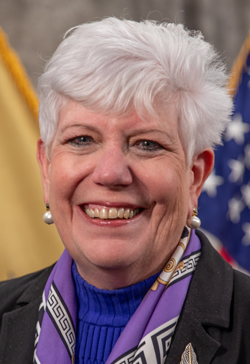
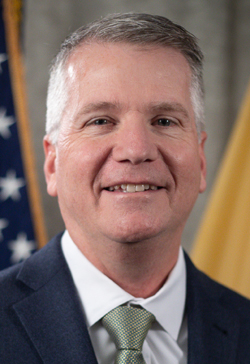
Maureen Rowan
100% support rate
Top opponent
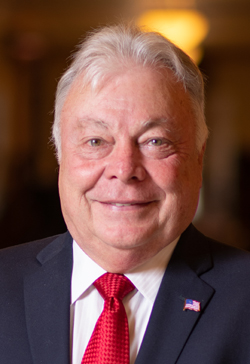
Bob Auth
6% support rate
Ranked legislators
10
5 support · 5 oppose
Key legislators

Who's moving healthcare in New Jersey

Legislators moving healthcare in New Jersey
Legislator Party Stance Support rate Decisive votes
Maureen Rowan
Maureen Rowan House · District 2
D
Strong +
100% 15
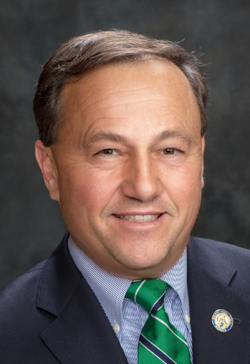
Jim Beach
Jim Beach Senate · District 6
D
Strong +
100% 14
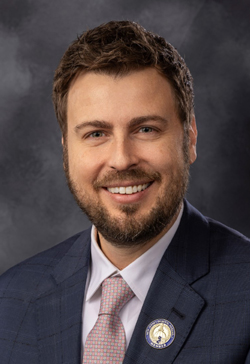
Marisa Sweeney
Marisa Sweeney House · District 25
D
Strong +
100% 14
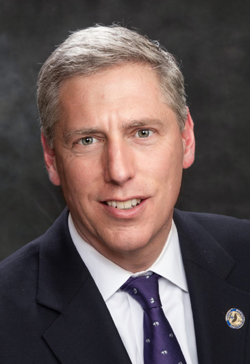
Anthony Angelozzi
Anthony Angelozzi House · District 8
D
Strong +
100% 13
Dave Bailey
Dave Bailey House · District 3
D
Strong +
100% 13
Bob Auth
Bob Auth House · District 39
R
Strong −
6% 18
John DiMaio
John DiMaio House · District 23
R
Strong −
10% 10
Paul Kanitra
Paul Kanitra House · District 10
R
Strong −
10% 10
Erik Peterson
Erik Peterson House · District 23
R
Strong −
12% 17
Joe Pennacchio
Joe Pennacchio Senate · District 26
R
Strong −
13% 15
Showing 1,071–1,080 of 1,685 bills

All healthcare bills

in committee · New Jersey · Senate Feb 9, 2026

S 3409: Prohibits hospital from billing patient for facility fee for services rendered to patient at outpatient facility affiliated with hospital.

S3409 prohibits New Jersey hospitals from billing patients for facility fees when services are provided at outpatient facilities affiliated with the hospital. The bill defines "facility fee" as charges covering hospital operational costs (distinct from professional fees charged by doctors). This directly affects patients receiving outpatient care at hospital-affiliated clinics, preventing additional billing for facility costs. The law applies to all licensed general acute care hospitals in New Jersey and takes effect immediately.
Sub-Topics Hospitals
in committee · New Jersey · General Assembly Jan 13, 2026

A 2025: Requires certain ambulances to carry epinephrine.

This bill requires all basic life support ambulances and volunteer ambulance squad vehicles in New Jersey to carry epinephrine auto-injectors and be staffed by at least one emergency medical technician (EMT) certified to administer them. It directly affects ambulance services, including both paid and volunteer emergency response units, by mandating specific equipment and personnel standards for treating severe allergic reactions. The law defines "basic life support" as standard pre-hospital care and clarifies that the requirements do not override existing federal or state staffing regulations. The bill takes effect 180 days after enactment.
Sub-Topics Hospitals
in committee · New Jersey · General Assembly Jan 13, 2026

A 1421: Establishes Alternative Responses to Reduce Instances of Violence and Escalation (ARRIVE) Together Program.

This bill establishes the ARRIVE Together Program to provide mental health crisis response alternatives to law enforcement. It requires law enforcement agencies (including state police, county police, and municipal departments) to partner with licensed mental health providers who can respond to calls involving mental health or substance use crises instead of police-only interventions. The program mandates confidentiality for all personal health information collected during responses and protects mental health providers from civil liability for good-faith actions taken during crisis interventions. The law applies directly to law enforcement agencies, mental health service providers, and individuals experiencing mental health or substance use crises during emergency calls.
in committee · New Jersey · General Assembly Jan 13, 2026

A 1090: Establishes certain requirements concerning resident supervision at residential health care facilities.

This bill requires residential health care facilities to maintain at least two staff members on duty at all times for resident supervision (which can be a primary or secondary duty) and to develop comprehensive plans for residents who leave the premises, including immediate reporting protocols if a resident is missing for 24 hours. It directly affects free-standing residential health care facilities (not located within licensed health care facilities), which fall under the Department of Community Affairs' oversight. The Department of Health will oversee facilities located within other licensed health care facilities. The bill also clarifies that such facilities cannot advertise or operate as nursing homes.
in committee · New Jersey · General Assembly Jan 13, 2026

A 238: Prohibits downcoding in health insurance claims.

This New Jersey bill (A 238) prohibits health insurance payers from downcoding claims to reduce payments to healthcare providers. It directly affects providers (like doctors and hospitals) and insurers by requiring payers to reimburse for the actual service performed, not a lower-cost code. The law bans adjusting claims to "less complex or lower cost service" codes to cut payments, defining downcoding as using remark codes to downgrade claims. It applies to all health insurance carriers, health maintenance organizations, and their agents operating in New Jersey. The Department of Banking and Insurance will create implementing regulations.
Sub-Topics Insurance
died · New Jersey · General Assembly Jan 13, 2026

A 1512: Allows follow up calls from operators of NJ Suicide Hopeline to minors at risk of committing suicide.

This bill (A 1512) allows trained operators of New Jersey’s Suicide Hopeline to make follow-up calls to minors aged 16 or older who contact the hotline and are identified as high-risk for suicide, without requiring parental consent. It directly affects minors in crisis by enabling immediate, confidential support from the Hopeline after an initial call. The key mechanism amends existing law to explicitly permit these brief, supportive follow-up calls - specifically for suicide prevention - while clarifying they do not constitute formal mental health treatment. The bill was withdrawn after being approved as part of P.L.2025, c.238, meaning the policy change is now in effect.
Sub-Topics Mental Health
in committee · New Jersey · General Assembly Jan 13, 2026

A 995: Requires continued employment for physicians diagnosed with post-traumatic stress disorder under certain conditions.

This bill protects physicians in New Jersey from employment retaliation related to work-connected post-traumatic stress disorder (PTSD). It prohibits employers from firing, discriminating against, or threatening physicians who take leave for a qualifying PTSD diagnosis, requiring reinstatement to their previous role after fitness is documented by an outside licensed professional. A diagnosis qualifies only if it stems from work-related trauma (directly experiencing/witnessing events or vicarious trauma from patient care) and is verified by a healthcare provider other than the physician. Violations allow employees to sue for remedies including reinstatement, back pay, and civil fines of $5,000 for first offenses or $10,000 for repeat violations.
died · New Jersey · General Assembly Jan 13, 2026

A 946: "Right to Mental Health for Individuals who are Deaf or Hard of Hearing Act"; establishes certain requirements concerning provision of mental health services to individuals who are deaf or hard of hearing.

This New Jersey bill (A 946), now law as P.L.2025, c.177, requires mental health services to be provided in the communication method preferred by each deaf or hard of hearing individual - such as sign language or oral communication - based on their assessment. It mandates that mental health professionals be fluent in that method, trained in cultural needs, and able to collaborate with interpreters. The law also requires a state resource guide listing specialized mental health services and ensures individuals can help shape their own care plans. It directly affects all deaf or hard of hearing residents seeking mental health support in New Jersey, addressing long-standing barriers in access and care quality.
Sub-Topics Mental Health
in committee · New Jersey · General Assembly Jan 13, 2026

A 758: Requires that warning notices regarding certain health risks of alcohol consumption be reviewed and updated.

This bill requires New Jersey's Department of Health to update warning notices about alcohol's health risks, including prenatal dangers and links to certain cancers, within six months of enactment and every five years thereafter. It directly affects businesses with Class C alcohol licenses (retail sellers) and club licenses, mandating they post these updated notices prominently in service areas and restrooms. The notices must reflect current medical evidence, developed through consultation with health experts and advocacy groups. Current warnings, unchanged for over a decade, will now align with newer scientific understanding of alcohol's health impacts. The policy ensures patrons receive the most up-to-date information on risks like birth defects, low birth weight, and cancer.
in committee · New Jersey · General Assembly Jan 13, 2026

A 1154: Requires physicians and other prescribers to obtain electronic or written consent for certain medications with "black box warnings."

This New Jersey bill (A-1154) requires doctors, physician assistants, and advanced practice nurses to obtain written or electronic consent before prescribing psychotropic medications (like those for ADHD) that carry the FDA’s strongest safety warning ("black box warning"). The consent must confirm the patient or their legal guardian was informed about serious potential side effects. If written consent isn’t possible, providers must document oral consent in the patient’s file. Violations could lead to disciplinary action by licensing boards. The bill affects patients receiving these specific medications and their healthcare providers.
Showing 1,071 to 1,080 of 1,685 bills