Issue · Criminal Justice

Criminal Justice

Every criminal justice bill, vote, and legislator stance in New Jersey, automatically classified by Maddy, our AI policy reader.

Total bills
1,156
2026-2027 Regular Session
Top supporter
Al Abdelaziz
100% support rate
Top opponent
Al Barlas
0% support rate
Ranked legislators
10
5 support · 5 oppose
Key legislators

Who's moving criminal justice in New Jersey

Legislators moving criminal justice in New Jersey
Legislator Party Stance Support rate Decisive votes
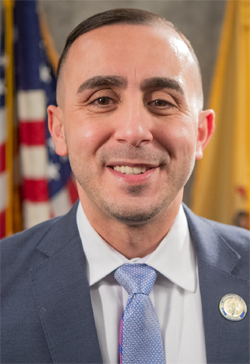
Al Abdelaziz
Al Abdelaziz House · District 35
D
Strong +
100% 8
Alixon Collazos-Gill
Alixon Collazos-Gill House · District 27
D
Strong +
100% 8
Angela McKnight
Angela McKnight Senate · District 31
D
Strong +
100% 8
Annette Quijano
Annette Quijano House · District 20
D
Strong +
100% 8
Avi Schnall
Avi Schnall House · District 30
D
Strong +
100% 8
Al Barlas
Al Barlas House · District 40
R
Strong −
0% 8
Bob Auth
Bob Auth House · District 39
R
Strong −
0% 8
Brian Bergen
Brian Bergen House · District 26
R
Strong −
0% 8
Carmen Amato
Carmen Amato Senate · District 9
R
Strong −
0% 8
Dawn Fantasia
Dawn Fantasia House · District 24
R
Strong −
0% 8
Showing 811–820 of 1,156 bills

All criminal justice bills

in committee · New Jersey · Senate Jan 13, 2026

S 808: Requires campus police officers to wear body worn cameras.

This bill (S 808) requires all campus police officers in New Jersey to wear body-worn cameras that record audio and video during most official duties. It directly affects campus police officers at public and private schools (K-12) and university campuses, mandating camera use except during undercover work, meetings with confidential informants, administrative tasks, or when directed otherwise by a supervisor. Cameras must activate during public encounters, emergencies, or investigations but may be temporarily deactivated under specific circumstances like medical emergencies or privacy concerns in schools, healthcare facilities, or places of worship. Funding can come from state appropriations, forfeiture funds, or federal grants, as outlined in the amended statutes.
Sub-Topics Policing
in committee · New Jersey · Senate Jan 13, 2026

S 2720: Requires commencement of State Police recruit training class at least once every six months; establishes recruitment program.

This bill requires New Jersey's State Police Superintendent to start recruit training at least once every six months and set annual recruitment goals based on funding and projected staff turnover. It mandates a diversity-focused recruitment program with specific targets for hiring women and minorities, using strategies like outreach in low-income communities, partnerships with local organizations, and social media advertising. The program must be evaluated annually to ensure progress toward diversity goals. The bill directly affects State Police recruitment efforts and aims to better reflect the communities they serve.
Sub-Topics Policing
in committee · New Jersey · Senate Jan 13, 2026

S 597: Revises penalty for underage gambling to be civil penalty; provides for all associated fines to be used for gambling addiction treatment.

This bill changes penalties for underage gambling in New Jersey from criminal charges to civil fines. It directly affects underage gamblers (under 21), casino licensees/employees who allow underage gambling, and caregivers who permit it. Key provisions set tiered civil penalties: up to $500 for a first offense, $1,000 for a second, and $2,000 for subsequent offenses. All collected fines must fund gambling addiction prevention, education, and treatment programs through the Department of Human Services. The bill removes criminal penalties while redirecting fines to support treatment services.
Sub-Topics Substance Abuse
in committee · New Jersey · Senate Jan 13, 2026

S 1862: Requires annual review of all released sex offenders to determine if they were registered and tiered.

This bill requires New Jersey's Attorney General to annually review all sex offenders released from prison or involuntary commitment the previous year. The review checks whether these individuals properly registered as required by law and were correctly assigned to a tier (which determines public notification levels). This annual verification process must be completed by March 30th each year, directly affecting released sex offenders and the state's enforcement system. The law aims to ensure compliance with registration and tiering requirements for all eligible individuals.
Sub-Topics Corrections
in committee · New Jersey · Senate Jan 13, 2026

S 1210: Provides rental and lease protections for victims of domestic violence, sexual assault, or stalking.

S 1210 protects tenants who are victims of domestic violence, sexual assault, or stalking from housing discrimination by prohibiting landlords from terminating tenancies, refusing lease renewals, or denying rentals based on their victim status. Landlords must accept documentation like restraining orders, medical records, or certifications from domestic violence specialists to verify a tenant’s status. Victims can sue landlords who violate this law for damages, attorney fees, and court costs. The law applies broadly to residential rentals but does not prevent evictions for other valid reasons, such as unpaid rent or property damage.
in committee · New Jersey · Senate Jan 13, 2026

S 575: Requires local government notification of sex offender registration and prohibits sex offenders from living near schools, child care centers or playgrounds.

This bill requires local police to notify municipal governing bodies when a sex offender (convicted of a crime against a minor under 18) registers with the state. It prohibits such offenders from living within 500 feet of schools, childcare centers, or playgrounds, unless specific exceptions apply (like existing residences, facilities, or court-approved exemptions). The law aims to enhance public safety by creating buffer zones around child-occupied locations, while requiring municipalities to be informed of new registrations. Exceptions include offenders residing at correctional facilities, those with pre-existing homes, or those granted exemptions by parole boards or courts. The bill takes effect six months after enactment.
in committee · New Jersey · Senate Jan 13, 2026

S 1319: Broadens riot; enhances penalties for certain crimes committed during riot; creates new crimes of mob intimidation and cyber-intimidation by publication; establishes duty in municipality to permit law enforcement to respond appropriately.

This New Jersey bill (S 1319) expands the definition of "riot" to include groups of three or more people acting together with violent conduct, rather than the previous four-person threshold. It creates two new offenses: "mob intimidation" (threatening others to join violent groups) and "cyber-intimidation by publication" (online threats during riots), while increasing penalties for severe riot-related crimes like property damage over $5,000 or causing serious injury. The bill also adds protections for law enforcement, firefighters, and school staff by elevating assaults against them to higher offense levels. These changes apply to individuals committing or inciting riots, with the goal of strengthening responses to violent public disturbances while explicitly preserving constitutional protections for peaceful protests.
Sub-Topics Law Enforcement
in committee · New Jersey · Senate Jan 13, 2026

S 1357: Prohibits leaving loaded firearm within easy access of minor under age of 18; requires law enforcement officers who observe unsecured firearms to conduct follow-up.

This bill (S 1357) raises New Jersey’s minor age threshold for firearm access from 16 to 18, prohibiting firearm owners from leaving loaded guns within easy reach of minors under 18 at their premises. It requires owners to securely store firearms - using locked containers, secure locations, or trigger locks - to avoid a disorderly persons offense (up to 6 months jail or $1,000 fine) if a minor accesses the weapon. Law enforcement officers observing unsecured firearms must return to verify proper storage. The law applies to all firearm owners with minors under 18 on their property, excluding lawful minor firearm use under existing law. The bill is currently pending in the Senate Law and Public Safety Committee.
in committee · New Jersey · Senate Jan 13, 2026

S 2771: Establishes protections for immigrants interacting with government agencies; designates "New Jersey Immigrant Trust Act."

S 2771, the New Jersey Immigrant Trust Act, prohibits state and local government agencies from holding individuals for federal immigration authorities based on immigration detainers. It requires agencies like schools, hospitals, and law enforcement to provide services without fear of immigration enforcement, ensuring all residents access public services regardless of immigration status. The bill specifically bans cooperation with "immigration detainers" (requests from federal authorities to detain people) unless supported by a judicial warrant. This directly affects immigrant communities by reducing barriers to healthcare, education, and public safety services, while directing state resources toward local priorities instead of federal immigration enforcement.
in committee · New Jersey · Senate Jun 11, 2026

S 2566: Eliminates statute of limitations for prosecution of human trafficking crimes.

This bill eliminates the statute of limitations for prosecuting human trafficking crimes in New Jersey. It amends state law (N.J.S.2C:1-6) to allow prosecutors to bring charges for human trafficking offenses at any time, removing the current 5-year deadline. The change directly affects victims of human trafficking and prosecutors, ensuring cases can be pursued regardless of how much time has passed since the crime occurred. This policy change specifically targets human trafficking crimes listed under N.J.S.2C:11-3 and N.J.S.2C:11-4, aligning them with other crimes like murder that already have no time limits for prosecution.
Sub-Topics Human Trafficking
Showing 811 to 820 of 1,156 bills
Previous 1 … 81 82 83 … 116 Next