Issue · Criminal Justice

Criminal Justice

Every criminal justice bill, vote, and legislator stance in New Jersey, automatically classified by Maddy, our AI policy reader.

Total bills
1,156
2026-2027 Regular Session
Top supporter
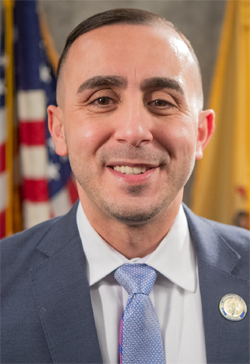
Al Abdelaziz
100% support rate
Top opponent
Al Barlas
0% support rate
Ranked legislators
10
5 support · 5 oppose
Key legislators

Who's moving criminal justice in New Jersey

Legislators moving criminal justice in New Jersey
Legislator Party Stance Support rate Decisive votes
Al Abdelaziz
Al Abdelaziz House · District 35
D
Strong +
100% 8
Alixon Collazos-Gill
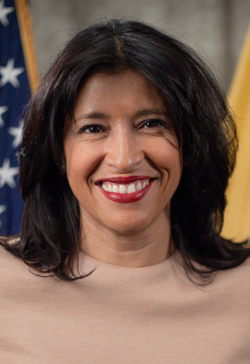
Alixon Collazos-Gill House · District 27
D
Strong +
100% 8
Angela McKnight
Angela McKnight Senate · District 31
D
Strong +
100% 8
Annette Quijano
Annette Quijano House · District 20
D
Strong +
100% 8
Avi Schnall
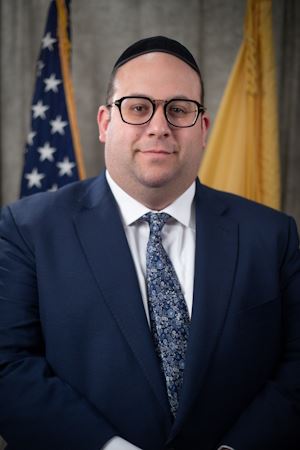
Avi Schnall House · District 30
D
Strong +
100% 8
Al Barlas
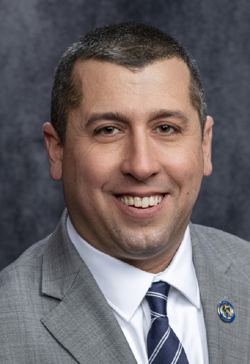
Al Barlas House · District 40
R
Strong −
0% 8
Bob Auth
Bob Auth House · District 39
R
Strong −
0% 8
Brian Bergen
Brian Bergen House · District 26
R
Strong −
0% 8
Carmen Amato
Carmen Amato Senate · District 9
R
Strong −
0% 8
Dawn Fantasia
Dawn Fantasia House · District 24
R
Strong −
0% 8
Showing 611–620 of 1,156 bills

All criminal justice bills

in committee · New Jersey · General Assembly Jan 13, 2026

A 3452: Establishes criminal penalties for production, sale, and use of false COVID-19 vaccination verification card; requires AG to establish COVID-19 vaccination fraud prevention program.

This New Jersey bill criminalizes the creation, sale, or use of fake COVID-19 vaccination verification cards. It imposes penalties including up to 10 years in prison and $150,000 fines for selling or making fake cards (second-degree crime), up to 5 years and $15,000 for displaying them (third-degree), and up to 18 months and $10,000 for possessing them (fourth-degree). The Attorney General must establish a fraud prevention program within 30 days, using confidential data from the state's immunization system solely to investigate fake card cases. The program targets individuals and businesses involved in producing or distributing counterfeit cards to falsely claim vaccination status.
Sub-Topics Corrections
in committee · New Jersey · General Assembly Jan 13, 2026

A 344: Removes criminal liability for law enforcement officers who have investigative encounter with underage person for possession of alcohol or cannabis unless civil rights are violated.

This bill removes criminal liability for New Jersey law enforcement officers who interact with underage individuals regarding alcohol or cannabis possession, unless the officer intentionally discriminates based on race, gender, religion, or other protected characteristics. Currently, officers face criminal charges for such encounters regardless of intent, but this bill changes that by requiring proof of discriminatory purpose to trigger liability. Key provisions clarify that officers cannot be charged for routine actions like issuing warnings or conducting stops without reasonable suspicion - unless they act with discriminatory intent. The change directly affects officers responding to underage possession calls and the young people involved in these encounters.
in committee · New Jersey · General Assembly Jan 13, 2026

A 2000: Clarifies court procedure for considering expungement applications when no objections are filed.

This bill clarifies New Jersey's expungement process for individuals seeking to clear criminal records. It requires courts to automatically consider unopposed expungement petitions on the 61st day after filing if prosecutors and law enforcement (State Police, Attorney General, county prosecutors) fail to file objections within a 60-day review period. The bill mandates an electronic filing system for petitions and requires these agencies to verify criminal history records within 60 days. It directly affects people applying for expungement, courts, and law enforcement agencies by reducing delays when no objections are raised. The change ensures expungement petitions move forward without unnecessary waiting when all parties confirm no issues exist.
in committee · New Jersey · General Assembly Jan 13, 2026

ACR 71: Urges U.S. President and Congress to enact "Visible Identification Standards for Immigration-Based Law Enforcement Act of 2025."

New Jersey's Assembly Concurrent Resolution 71 (ACR 71) is a resolution urging the U.S. President and Congress to pass the federal "VISIBLE Act" (S.2212), which would require immigration enforcement officers to display visible identification during public enforcement actions. The resolution does not create new law but advocates for a federal requirement that officers show their agency name, last name, or badge number - while prohibiting non-medical face coverings during public enforcement - unless for covert operations or environmental hazards. It also calls for accountability measures, including disciplinary actions for non-compliance and annual reports to Congress and civil rights offices. This resolution directly affects U.S. immigration enforcement officers (e.g., CBP, ICE) and aims to increase transparency amid concerns about impersonation of federal agents.
in committee · New Jersey · Senate Feb 5, 2026

S 3327: Requires notice to be provided by municipal court to applicant for public defender of fee and process to waive fee for inability to pay.

This bill requires municipal courts in New Jersey to inform applicants for public defender services about the $200 application fee (capped by existing law) and the process to request a fee waiver if they cannot afford it. It directly affects individuals applying for public defender representation in municipalities that require such a fee under current law. The bill mandates that courts provide this notice to all applicants, ensures no additional fees can be charged beyond the $200 limit, and reinforces that waivers must be granted if applicants demonstrate the fee would be an unreasonable burden. The notice requirement applies to all municipalities with such fee ordinances, aiming to clarify eligibility for fee waivers.
Sub-Topics Courts
in committee · New Jersey · General Assembly Jan 13, 2026

A 759: Requires AG to study law enforcement use of facial recognition technology and issue report with recommendations for Statewide policy.

This bill requires New Jersey's Attorney General to study how law enforcement agencies currently use facial recognition technology and issue a report with recommendations for statewide policy within six months. The report must assess the technology's accuracy, summarize existing law enforcement usage (including for police reports), and propose guidelines for its future use. It applies to all state and local police departments. The study does not create new laws but aims to inform potential future policy decisions.
in committee · New Jersey · General Assembly Jan 13, 2026

A 221: Provides criminal and civil penalties for predatory marketing of fentanyl to minors.

This bill creates a new criminal offense for marketing fentanyl in ways specifically designed to appeal to minors, targeting manufacturers, distributors, or sellers. It prohibits tactics like packaging resembling candy, food, or popular characters, using minor-targeted advertising, or violating FDA/DEA packaging rules. Violators face a minimum 30-year prison sentence with no parole eligibility, and prior fentanyl distribution convictions create a strong presumption of guilt. The law directly affects businesses or individuals distributing fentanyl with marketing strategies targeting youth, aiming to deter such practices through severe penalties.
in committee · New Jersey · General Assembly Jan 13, 2026

A 864: Classifies xylazine as Schedule III controlled dangerous substance under certain circumstances.

This New Jersey bill (A 864) classifies xylazine - a sedative often misused in illicit drug mixtures - as a Schedule III controlled substance under state law, except when used by veterinarians for animal treatment. Schedule III means it has accepted medical use but potential for abuse leading to moderate dependence, subjecting unauthorized use to criminal penalties. Specifically, illegal possession, distribution, or use of xylazine would be a third-degree crime, punishable by 3-5 years in prison and fines up to $35,000, with enhanced penalties near schools or for distributing to minors. The bill directly affects individuals misusing xylazine (including in human drug use) and law enforcement, while exempting veterinary medical use.
passed · New Jersey · General Assembly Jun 11, 2026

A 2240: Requires law enforcement to notify State Parole Board when parolee violates domestic violence restraining order.

This bill requires New Jersey law enforcement to notify the State Parole Board when a parolee violates a domestic violence restraining order. It directly affects parolees under supervision who breach such orders, as well as law enforcement officers and the Parole Board. The key mechanism mandates officers to check the domestic violence central registry (which now includes parole status) and immediately alert the Parole Board if a parolee is charged with violating a domestic violence order. This ensures the Parole Board is informed to address potential violations of parole conditions. The bill amends existing statutes to streamline this notification process for safety and accountability.
in committee · New Jersey · General Assembly Jan 13, 2026

A 3224: Establishes rebuttable presumption that person charged with motor vehicle theft be detained prior to trial; imposes mandatory sentencing for thefts involving motor vehicle.

This bill establishes a rebuttable presumption requiring courts to detain individuals charged with motor vehicle theft (N.J.S.2C:20-2) before trial, unless the defendant proves they pose no flight risk or danger to the community. It directly affects defendants charged with stealing cars in New Jersey, shifting the burden to them to challenge the presumption of detention. Key mechanisms include: prosecutors automatically triggering the presumption for motor vehicle theft charges, a court hearing where defendants must rebut the presumption, and expedited appeals for detention orders. The bill does not address sentencing but focuses solely on pretrial detention requirements for this specific offense. (Note: This is a proposed bill introduced January 2026; it has not yet been enacted.)
Sub-Topics Courts Sentencing
Showing 611 to 620 of 1,156 bills
Previous 1 … 61 62 63 … 116 Next