Issue · Criminal Justice

Criminal Justice

Every criminal justice bill, vote, and legislator stance in New Jersey, automatically classified by Maddy, our AI policy reader.

Total bills
836
2026-2027 Regular Session
Top supporter
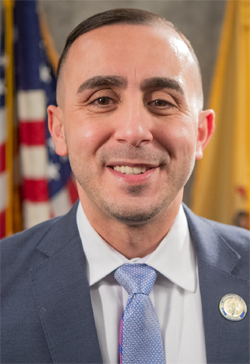
Al Abdelaziz
100% support rate
Top opponent
Al Barlas
0% support rate
Ranked legislators
10
5 support · 5 oppose
Key legislators

Who's moving criminal justice in New Jersey

Legislators moving criminal justice in New Jersey
Legislator Party Stance Support rate Decisive votes
Al Abdelaziz
Al Abdelaziz House · District 35
D
Strong +
100% 8
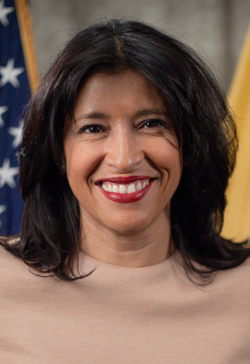
Alixon Collazos-Gill
Alixon Collazos-Gill House · District 27
D
Strong +
100% 8
Angela McKnight
Angela McKnight Senate · District 31
D
Strong +
100% 8
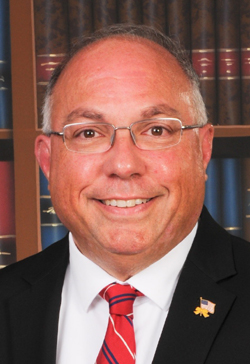
Annette Quijano
Annette Quijano House · District 20
D
Strong +
100% 8
Avi Schnall
Avi Schnall House · District 30
D
Strong +
100% 8
Al Barlas
Al Barlas House · District 40
R
Strong −
0% 8
Bob Auth
Bob Auth House · District 39
R
Strong −
0% 8
Brian Bergen
Brian Bergen House · District 26
R
Strong −
0% 8
Carmen Amato
Carmen Amato Senate · District 9
R
Strong −
0% 8
Dawn Fantasia
Dawn Fantasia House · District 24
R
Strong −
0% 8
Showing 281–290 of 836 bills

All criminal justice bills

in committee · New Jersey · General Assembly Feb 19, 2026

ACR 112: Directs SCI to examine human trafficking activity at certain places of business.

ACR 112 is a concurrent resolution directing New Jersey's State Commission of Investigation (SCI) to examine human trafficking activity at massage and bodywork therapy businesses. The SCI must investigate these locations - where employers are registered and therapists are licensed under state law - and submit a report with findings and recommendations within two years. The report may be delayed up to 120 days if the Attorney General objects to information suggesting potential trafficking or criminal activity. This resolution does not change existing laws but mandates an investigation to address concerns highlighted in a 2018 Polaris Project report about trafficking in such businesses.
Sub-Topics Human Trafficking
in committee · New Jersey · General Assembly Jan 13, 2026

A 1446: Requires person convicted, or fleeing charge, of sex offense in foreign country to register under Megan's Law; requires law enforcement to inquire about immigration status of sex offenders and cooperate with federal immigration authorities.

This bill expands New Jersey's Megan's Law to require individuals convicted of sex offenses in foreign countries (or fleeing charges there) to register with local police, similar to domestic offenders. It specifically mandates law enforcement to ask sex offenders about their immigration status and cooperate with federal immigration authorities. The law applies to anyone who is enrolled in an NJ school, employed in the state for specified periods, or resides in New Jersey after a foreign conviction. Registration requirements include submitting forms to local police within 10 days of moving to NJ or 120 days after the law's effective date, with penalties for non-compliance. The bill does not change the definition of "sex offense" but extends existing registration obligations to cover foreign convictions.
in committee · New Jersey · General Assembly Jan 13, 2026

A 1926: Upgrades assault on victims who are disabled.

This bill amends New Jersey's assault statute to elevate certain assaults against specific healthcare workers to aggravated assault. It directly affects direct care workers at State or county psychiatric hospitals, developmental centers, or veterans' homes who are clearly performing their duties. The key provision (added as subsection b(5)(k)) makes it aggravated assault to intentionally cause bodily injury to these workers while they're identifiable in their roles, increasing penalties. The law does not cover disabled individuals as victims but protects the workers who support them. The bill is currently pending before the Assembly Judiciary Committee after introduction on January 13, 2026.
in committee · New Jersey · General Assembly Feb 19, 2026

A 4396: Permits juveniles to be admitted to drug court program under certain circumstances.

This bill amends New Jersey law to allow juveniles (minors under 18) who have been found to have broken the law for drug-related offenses to enter drug court programs instead of facing incarceration, under specific conditions. To qualify, a juvenile must have a documented substance use disorder at the time of the offense, have committed the offense while under the influence or to support their addiction, and meet other criteria like no prior violent offenses or firearm possession. The court must verify these conditions through a professional assessment and ensure appropriate treatment facilities are available before placing the juvenile on special probation. This change expands access to treatment-focused sentencing for eligible juveniles who would otherwise face mandatory incarceration for certain drug offenses.
in committee · New Jersey · General Assembly Jan 13, 2026

A 3463: Imposes requirements on video visitation service contracts for inmates in certain correctional facilities; requires correctional facilities to allow contact visits.

This bill sets a maximum 11-cent-per-minute rate for inmate video visitation services in New Jersey state, county, and private correctional facilities, prohibits extra fees or commissions, and requires refunds for failed or low-quality sessions. It also bans charges for visits between inmates and attorneys, legal representatives, or clergy, and mandates that facilities allow in-person contact visits with only safety-related restrictions. Correctional facilities must follow state bidding rules when selecting video service providers and include financial penalties for unreliable service. The law applies immediately to all relevant facilities and contracts.
Sub-Topics Corrections
in committee · New Jersey · General Assembly Jan 13, 2026

A 2533: Revises law concerning bias intimidation to include members of press or media in protected class.

This bill (A 2533) updates New Jersey’s bias intimidation law to explicitly protect journalists and media workers. It adds "employment as a member of the press or media" to the list of protected classes, meaning intimidation targeting them because of their profession would be a crime. The law defines protected media workers as accredited press corps members, photojournalists, or individuals operating news equipment. This expands existing protections that already cover race, religion, sexual orientation, disability, and other characteristics under the statute.
died · New Jersey · General Assembly Jan 13, 2026

A 3494: Establishes "Incarcerated Women's Protection Act" and concerns correctional facility board of trustees.

This bill (A3494, "Incarcerated Women's Protection Act") requires New Jersey correctional facilities to implement gender-responsive policies for female inmates. Key provisions include: mandating gender-specific risk assessments during classification, creating a Division of Women’s Services to address trauma, parenting needs, and reentry support, providing doula services for pregnant incarcerated women, establishing a PREA Compliance Unit, and forming a Special Victims Unit to investigate sexual misconduct. The bill directly affects all female inmates in state correctional facilities and requires correctional staff to undergo annual training on gender-responsive practices. These changes aim to improve safety, dignity, and access to services for incarcerated women through specific, measurable policy changes.
in committee · New Jersey · General Assembly Jan 13, 2026

A 1176: Provides one-third of motor vehicle fine moneys generated through State Police issued tickets go to municipality where violation occurred.

This bill changes how motor vehicle fine money is distributed when violations are issued by the State Police. Specifically, it directs that one-third of the total fines collected from State Police-issued tickets must go to the municipality where the violation occurred, while two-thirds go to the State Treasurer for designated state funds. The municipality can use this one-third share to help cover costs like operating its municipal court. This applies only to violations where the State Police were the issuing agency, not to tickets from other law enforcement. The change aims to provide direct local funding for municipal court operations from these specific fines.
in committee · New Jersey · General Assembly Jan 13, 2026

A 1789: Provides that sterile syringe access programs are inherently beneficial uses.

This bill amends a state zoning law to explicitly list sterile syringe access programs as an "inherently beneficial use" under municipal zoning regulations. By adding this specific example to the definition, the bill ensures local governments cannot deny permits or block such programs based on zoning restrictions. It directly affects syringe access providers and local zoning boards, requiring municipalities to approve these programs as a matter of law. The key mechanism is updating the legal definition to include syringe programs among other universally recognized beneficial uses like schools or hospitals. This change removes a potential barrier to establishing these public health services in communities.
Sub-Topics Public Health
in committee · New Jersey · General Assembly Jan 13, 2026

A 222: Requires Attorney General to compile and publicly report certain statistics pertaining to permits to carry for handguns and firearm purchaser identification cards.

This bill requires New Jersey state and local law enforcement agencies to submit monthly, anonymized data on firearm permit applications - including applicant demographics (race, ethnicity, gender identity), application status, denial reasons, and location - to the Attorney General. The Attorney General must compile this data (starting retroactively from June 23, 2022) and publish initial and monthly public reports online. It directly affects all applicants for handgun carry permits, purchase permits, and firearm purchaser ID cards by mandating transparency in licensing outcomes. The law aims to provide public data on permit approvals and denials, including potential disparities, without altering existing licensing standards.
Showing 281 to 290 of 836 bills
Previous 1 … 28 29 30 … 84 Next