Issue · Criminal Justice

Criminal Justice (Law Enforcement)

Every criminal justice bill, vote, and legislator stance in New Jersey, automatically classified by Maddy, our AI policy reader.

Total bills
315
2026-2027 Regular Session
Top supporter
Paul Sarlo
100% support rate
Top opponent
Mike Testa
0% support rate
Ranked legislators
10
5 support · 5 oppose
Key legislators

Who's moving law enforcement in New Jersey

Legislators moving law enforcement in New Jersey
Legislator Party Stance Support rate Decisive votes
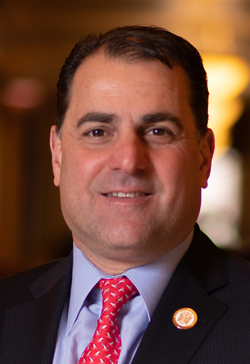
Paul Sarlo
Paul Sarlo Senate · District 36
D
Strong +
100% 10
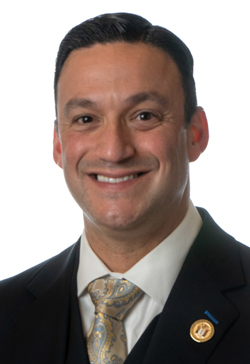
Renee Burgess
Renee Burgess Senate · District 28
D
Strong +
100% 10
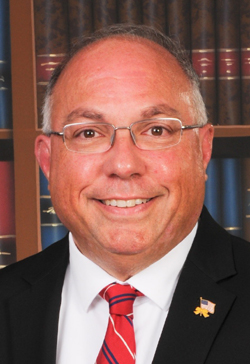
Bob Smith
Bob Smith Senate · District 17
D
Strong +
100% 9
Brian Stack
Brian Stack Senate · District 33
D
Strong +
100% 9
Joe Lagana
Joe Lagana Senate · District 38
D
Strong +
100% 9
Mike Testa
Mike Testa Senate · District 1
R
Strong −
0% 10
Kristin Corrado
Kristin Corrado Senate · District 40
R
Strong −
0% 9
Tony Bucco
Tony Bucco Senate · District 25
R
Strong −
0% 9
Carmen Amato
Carmen Amato Senate · District 9
R
Strong −
0% 7
Declan O'Scanlon
Declan O'Scanlon Senate · District 13
R
Strong −
0% 7
Showing 191–200 of 315 bills

All criminal justice bills

in committee · New Jersey · General Assembly Jan 13, 2026

A 1370: Requires AG to release bias incident data monthly.

This bill requires New Jersey's Attorney General to release bias incident data to the public every month, instead of only annually as currently required. It directly affects municipal and county law enforcement agencies, which must continue submitting quarterly reports on bias-related crimes to the Attorney General. The data - covering incidents based on race, religion, disability, sexual orientation, gender identity, national origin, or ethnicity - will be posted monthly on the Department of Law and Public Safety's website. The bill defines "bias incident" as suspected or confirmed violations of New Jersey's bias intimidation laws (C.2C:16-1). This change makes real-time data on bias crimes more accessible to the public.
Sub-Topics Law Enforcement
in committee · New Jersey · General Assembly Jan 13, 2026

A 3748: Makes supplemental appropriation of $3,000,000 to Division on Civil Rights.

This bill provides an additional $3 million in state funding to New Jersey's Division on Civil Rights specifically for upgrading the New Jersey Bias Investigation Access System (NJ BIAS). The system tracks bias crimes reported by state, county, and municipal law enforcement agencies. The funding ensures consistent and uniform reporting of bias incidents across all law enforcement levels. This is a procedural appropriation (not a new policy), directly supporting the operational capacity of law enforcement agencies to document bias crimes.
in committee · New Jersey · General Assembly Jan 13, 2026

A 3058: Establishes Deepfake Technology Unit in DLPS; appropriates $2 million.

This bill establishes New Jersey's Deepfake Technology Unit within the Division of Criminal Justice to combat AI-generated deceptive media (deepfakes). The unit will provide law enforcement, prosecutors, and courts with technical expertise, training, and evidence analysis to detect and investigate deepfakes - defined as AI-manipulated videos, audio, or images that falsely depict people or events. It requires the unit to issue annual reports on detection methods, technological advances, and policy recommendations, and appropriates $2 million from the General Fund to cover operational costs. The unit directly supports state and local agencies in addressing a growing threat to public safety and legal integrity.
in committee · New Jersey · General Assembly Jan 13, 2026

A 3534: Requires data collection and issuance of report on drug evidence testing by New Jersey State Police Office of Forensic Sciences.

This bill requires the New Jersey State Police Office of Forensic Sciences to collect specific data for six months on drug evidence testing conducted by law enforcement. It mandates recording details like whether field tests were performed, their results, whether lab analysis followed, and instances where field tests may have been incorrect. The Office must then issue a report to the legislature within 90 days, analyzing false positive rates and trends related to drug field test reliability. The data collection applies to all drug evidence specimens gathered during investigations of controlled substance violations. This is a data-gathering measure, not a policy change, aimed at understanding current testing practices.
in committee · New Jersey · General Assembly Jan 13, 2026

A 2443: Requires transfer of certain excess animal control funds to prosecutors, municipalities, police departments, and Police Training Commission for enforcement of animal cruelty laws and training of humane law enforcement officers.

This bill redirects unspent animal control funds that municipalities and the state have held for over three years. Instead of returning to general funds, excess municipal funds are sent to county prosecutors (40%) and redistributed to municipalities (60%). Excess state funds go to the State Police (40%), county humane law enforcement officers (50%), and the Police Training Commission (10%). These funds must be used exclusively for enforcing animal cruelty laws and training law enforcement officers.
in committee · New Jersey · General Assembly Jan 13, 2026

A 1049: Establishes "Cop 2 Cop Sustainability Fund" to support "Law Enforcement Officer Crisis Intervention Services" Cop 2 Cop telephone hotline program; appropriates $500,000.

This bill creates the "Cop 2 Cop Sustainability Fund" and appropriates $500,000 annually from the General Fund starting in fiscal year 2025 to support New Jersey's 24-hour confidential Cop 2 Cop hotline program for law enforcement officers and sheriff's officers. The program provides immediate crisis intervention, referrals to counseling services, and maintains strict confidentiality for callers experiencing psychological distress, trauma, or stress related to their work. Currently funded by up to $400,000 yearly from Body Armor Replacement Funds, this bill adds a dedicated, non-lapsing funding source to ensure the program's long-term stability. The hotline remains operated by Rutgers University Behavioral Health Care and does not alter existing services or eligibility.
in committee · New Jersey · General Assembly Jan 13, 2026

A 2776: Requires Attorney General to revise law enforcement use of force policy; implements certain reforms.

This bill requires New Jersey's Attorney General to revise the state's law enforcement use of force policy, which hasn't been updated since 2001. The revised policy must include specific requirements like mandating de-escalation techniques, ensuring force is proportional to the situation, requiring officers to report excessive force they witness, and establishing clear firearm use guidelines. It directly affects all New Jersey law enforcement agencies and officers who must follow the updated policy. The Attorney General must publish the revised policy within seven months of the bill's enactment.
in committee · New Jersey · General Assembly Jan 13, 2026

A 2086: "Stephanie's Law"; Requires AOC to establish publicly-accessible domestic violence registry; requires law enforcement officer to search State's domestic violence registries when conducting arrest.

"Stephanie's Law" requires New Jersey's Administrative Office of the Courts (AOC) to create a publicly accessible domestic violence registry. This registry will list individuals convicted of domestic violence crimes, subject to final restraining orders, or found in contempt of such orders, including their name, aliases, physical description, photo, vehicle details, and last known address. Law enforcement officers must search both this public registry and the existing private registry during arrests to check for domestic violence restraining orders. Individuals wrongly listed can petition for removal, and those listed must update their address within five days of a change.
in committee · New Jersey · General Assembly Jan 13, 2026

A 3204: Requires law enforcement agencies to obtain court order prior to use of imaging surveillance device.

This bill requires New Jersey law enforcement agencies to obtain a court order before using imaging surveillance devices that can see inside buildings (like through walls using radar or infrared). It directly affects police departments and the residents whose homes or properties might be scanned. To get the court order, law enforcement must submit a written application detailing the target, purpose, location, duration, and proof that other investigative methods were tried and failed or would be too dangerous. The bill aims to prevent warrantless surveillance by mandating judicial oversight for this technology.
in committee · New Jersey · General Assembly Jan 13, 2026

A 1421: Establishes Alternative Responses to Reduce Instances of Violence and Escalation (ARRIVE) Together Program.

This bill establishes the ARRIVE Together Program to provide mental health crisis response alternatives to law enforcement. It requires law enforcement agencies (including state police, county police, and municipal departments) to partner with licensed mental health providers who can respond to calls involving mental health or substance use crises instead of police-only interventions. The program mandates confidentiality for all personal health information collected during responses and protects mental health providers from civil liability for good-faith actions taken during crisis interventions. The law applies directly to law enforcement agencies, mental health service providers, and individuals experiencing mental health or substance use crises during emergency calls.
Showing 191 to 200 of 315 bills
Previous 1 … 19 20 21 … 32 Next