Issue · Criminal Justice

Criminal Justice (Policing)

Every criminal justice bill, vote, and legislator stance in New Jersey, automatically classified by Maddy, our AI policy reader.

Total bills
158
2026-2027 Regular Session
Top supporter
Paul Sarlo
100% support rate
Top opponent
Mike Testa
0% support rate
Ranked legislators
10
5 support · 5 oppose
Key legislators

Who's moving policing in New Jersey

Legislators moving policing in New Jersey
Legislator Party Stance Support rate Decisive votes
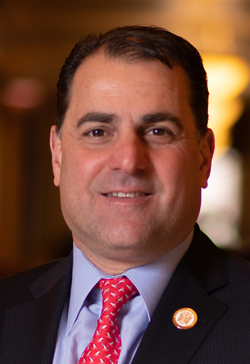
Paul Sarlo
Paul Sarlo Senate · District 36
D
Strong +
100% 4
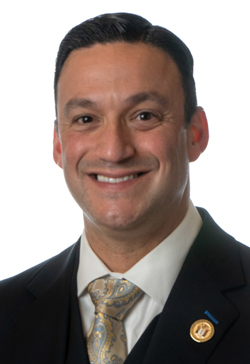
Renee Burgess
Renee Burgess Senate · District 28
D
Strong +
100% 4
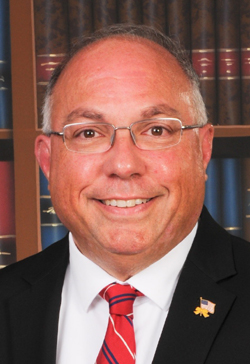
Bob Smith
Bob Smith Senate · District 17
D
Strong +
100% 3
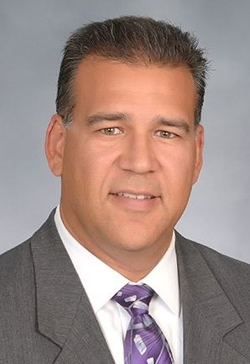
Brian Stack
Brian Stack Senate · District 33
D
Strong +
100% 3
Gordon Johnson
Gordon Johnson Senate · District 37
D
Strong +
100% 3
Mike Testa
Mike Testa Senate · District 1
R
Strong −
0% 4
Carmen Amato
Carmen Amato Senate · District 9
R
Strong −
0% 3
Declan O'Scanlon
Declan O'Scanlon Senate · District 13
R
Strong −
0% 3
Doug Steinhardt
Doug Steinhardt Senate · District 23
R
Strong −
0% 3
Kristin Corrado
Kristin Corrado Senate · District 40
R
Strong −
0% 3
Showing 91–100 of 158 bills

All criminal justice bills

in committee · New Jersey · General Assembly Jan 13, 2026

A 1648: Establishes database containing information on traffic stops by certain law enforcement officers.

This bill requires New Jersey's Attorney General to create a public, searchable database tracking all traffic stops by state and local police. It mandates that police departments submit quarterly reports containing detailed information about each stop, including the driver's race/ethnicity, age, gender, the reason for the stop, whether a search occurred, and outcomes like citations or arrests. The database will include even stops resulting only in oral warnings, covering all interactions with law enforcement. The public can access this data online through the Department of Law and Public Safety website, aiming to increase transparency in traffic enforcement practices.
in committee · New Jersey · General Assembly Jan 13, 2026

AR 55: Condemns publication and distribution of images inciting, glorifying, or justifying violence against law enforcement officers.

This Assembly Resolution (AR 55) is a symbolic statement condemning the publication and distribution of images that incite, glorify, or justify violence against law enforcement officers. It specifically references recent circulating images, including a graphic social media post by an NFL player depicting a police officer being harmed, and connects such content to extremist groups like ISIS. The resolution does not impose legal restrictions or penalties - it only formally expresses opposition to these images and urges citizens to counter offensive speech with more speech, while acknowledging First Amendment protections. It will be sent to state and federal officials, police associations, and the President as a formal expression of support for law enforcement.
in committee · New Jersey · Senate Feb 19, 2026

SJR 91: Establishes task force to study ways to increase diversity within law enforcement agencies.

SJR 91 establishes a 13-member task force to study methods for increasing diversity and community representation within New Jersey's law enforcement agencies, including state, local, and municipal departments. The task force will include representatives from the legislature, law enforcement associations, civil rights organizations, and community stakeholders (with specific urban and non-urban representation), and must hold at least three public hearings across the state. It will examine current data, research, and policies on diversity in law enforcement to develop recommendations. The task force will report its findings and suggestions to the legislature, though the bill does not mandate specific policy changes.
in committee · New Jersey · General Assembly Jan 13, 2026

A 639: Requires law enforcement officers in State to annually pass physical fitness examination; appropriates $500,000.

This bill requires all New Jersey law enforcement officers (including full-time, part-time, permanent, and temporary officers who enforce criminal laws and complete Police Training Commission-approved training) to pass an annual physical fitness exam. The Police Training Commission, working with the Attorney General, must develop age- and gender-specific fitness standards reviewed every two years, and recommend disciplinary actions (like demotion or termination) for officers who fail the exam. The bill appropriates $500,000 from the General Fund to the Commission to implement these requirements. It applies to officers currently subject to basic training fitness standards but extends them annually throughout their careers.
in committee · New Jersey · General Assembly Jan 13, 2026

AJR 83: Establishes task force to study ways to increase diversity within law enforcement agencies.

AJR 83 establishes the "New Jersey Diversity in Law Enforcement Task Force" to study ways to increase diversity within all state, local, and municipal law enforcement agencies across New Jersey. The 13-member task force includes legislators, law enforcement leaders, civil rights representatives, and community members from urban and non-urban areas, with specific requirements for balanced representation. It will examine current diversity data, identify effective recruitment and retention strategies, and develop recommendations to improve community representation within police departments. The task force must submit a final report to the Governor and Legislature within one year of its formation, with the resolution expiring 30 days after the report is issued.
in committee · New Jersey · General Assembly Jan 13, 2026

A 1957: Requires DLPS to establish and make available to law enforcement agencies training materials concerning interactions with hearing impaired; requires annual training for law enforcement and contracting with qualified interpreters.

This bill requires New Jersey's Department of Law and Public Safety to create and share training materials about interacting with hearing-impaired individuals for all law enforcement agencies. It mandates annual officer training using these materials and requires agencies to contract with qualified interpreters who can respond within two hours of a request. The law directly affects all state, county, municipal, and campus police departments in New Jersey, ensuring they provide accessible communication during interactions. It defines "hearing impaired person" as someone unable to understand oral communication due to hearing loss and specifies "qualified interpreter" as a nationally certified professional.
in committee · New Jersey · General Assembly Jan 13, 2026

A 1690: Requires civil service examination for police and correctional police officers to include questions to identify implicit racial bias.

This bill requires New Jersey's Civil Service Commission to add questions about implicit racial bias to the entry-level civil service exam for all law enforcement officer applicants, including municipal police, correctional officers, and sheriff's deputies. It directly affects candidates applying for these positions by mandating that the exam assesses unconscious biases related to race and other characteristics. The key mechanism is the Commission's obligation to include these questions, developed with testing professionals, before the exam is administered. The law aims to address implicit bias in hiring practices through this specific examination requirement.
in committee · New Jersey · General Assembly Jan 13, 2026

A 206: Expands function of Commission on Human Trafficking to include promoting coordinated response by law enforcement to human trafficking.

This bill expands the Commission on Human Trafficking's duties to specifically promote coordinated responses among state and local law enforcement agencies - including the Attorney General's office, county prosecutors, and local police - to improve human trafficking investigations and prosecutions. It directly affects law enforcement agencies by requiring the Commission to develop mechanisms for better collaboration between these entities. The key provision adds a new requirement under Section f(3)(b) of the Commission's mandate, directing it to facilitate coordination "to facilitate human trafficking investigations and prosecutions." The bill does not create new penalties or funding but focuses on improving existing interagency communication and resource-sharing for law enforcement.
in committee · New Jersey · General Assembly Jan 13, 2026

A 956: The "Uniform Criminal Records Accuracy Act."

This New Jersey bill (A 956) requires state agencies involved in criminal justice to maintain accurate criminal records and track how those records are shared. It mandates that agencies create public logs for every record request, including who requested it, when, and why, and correct any inaccuracies within 14 days. The law directly affects individuals whose records are maintained (the "subjects") and agencies like courts, police departments, and correctional facilities that handle criminal history data. Key provisions include requiring agencies to submit biometric data within 5 days and notify other agencies of corrections within a year. The bill focuses on transparency and accuracy in record-keeping, not on changing criminal penalties or new legal standards.
Sub-Topics Policing
in committee · New Jersey · General Assembly Feb 19, 2026

A 4373: Requires immediate public reporting of bias incident; facilitates receipt of information from public for purposes of prosecuting bias incident.

This bill requires New Jersey law enforcement agencies to publicly report bias incidents within 24 hours. Specifically, the Attorney General, county prosecutors, and local police must post incident details (including relevant facts to aid investigation) and contact information for reporting additional information on official websites. The public can then provide tips to help investigate and prosecute these incidents. Updated information about case outcomes must also be shared online. This applies to incidents involving bias based on race, religion, sexual orientation, disability, or other protected characteristics as defined by existing law.
Showing 91 to 100 of 158 bills
Previous 1 … 9 10 11 … 16 Next