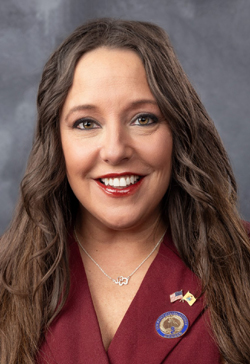
This bill, A4524, aims to make homeownership more accessible in New Jersey by restricting institutional investors (like large real estate firms) from dominating the single-family home market. It creates tax disincentives for institutional buyers purchasing homes for rental purposes, while offering tax incentives and down payment assistance for individual homebuyers seeking starter homes. The bill also requires developers to streamline construction of single-family homes and establishes new definitions for "beneficial owners" to identify controlling entities behind institutional purchases. These provisions directly affect institutional investors, individual homebuyers, and developers, targeting the market imbalance that the bill claims has made homeownership unaffordable for many.
New Jersey's bill A 3160 creates special license plates displaying Autism Awareness messaging for motor vehicle owners. Vehicle owners applying for these plates must pay a $50 initial fee plus a $10 annual renewal fee, with all fees deposited into the "Autism Awareness License Plate Fund." The fund directs monies annually to the University of Medicine and Dentistry of New Jersey for autism research, in consultation with the Governor's Council for Medical Research and Treatment of Autism. The bill specifies that initial costs for plate design and implementation cannot be covered by state funds, requiring contributions from the Governor's Council or other donors.
This bill expands New Jersey's Lifeline Credit Program to cover water utility bills, adding them to existing electricity and gas assistance. It directly affects low-income households already eligible for specific federal or state benefits, such as Supplemental Security Income (SSI), disability benefits, or Pharmaceutical Assistance to the Aged and Disabled. The program provides a $200 annual credit applied across utility bills (one-third to water, one-third to electricity, one-third to gas), with special rules for households receiving SSI benefits. It also creates a separate Tenants' Lifeline Assistance Program for renters without individual utility bills who meet the same eligibility criteria.
This bill establishes a Climate Change Mitigation and Resilience Financing Program within the New Jersey Infrastructure Bank. It would impose a per-kilowatt-hour charge on all electricity consumption in the state, added to utility bills for residential, commercial, and industrial consumers. The collected funds would finance projects like flood-resistant infrastructure, coastal protection, and other climate resilience initiatives. The program aims to address climate impacts through targeted infrastructure investments, funded directly by electricity users.
This bill establishes a program to help veterinarians repay student loans by working in underserved areas for five years. It provides full loan redemption (100% of eligible costs) for full-time veterinarians (40+ hours/week) or partial redemption (50%) for part-time (20-39 hours/week) who focus on large animal care at approved sites within designated underserved areas or within five miles of them. Eligible costs include tuition, fees, room, board, and interest for veterinary school. The program is funded annually with $500,000 from the state, administered by the Higher Education Student Assistance Authority.
This bill requires all New Jersey municipalities to provide basic life support (BLS) ambulance services as an essential service for their residents. Municipalities must arrange these services through one of four options: licensing private companies, contracting with public/private/nonprofit entities, entering mutual aid agreements with other towns, or partnering with hospitals. The bill also creates a state appropriation to reimburse municipalities for the costs of establishing these services. It defines BLS as pre-hospital care including CPR, wound care, and fracture stabilization, and amends prior laws to clarify hospital partnerships for these services.
This bill establishes the Office of Permitting and Broadband Deployment and Development Efficiency within New Jersey's Department of State and creates the NJ Permit Fast Track Program. The Office will regulate access to utility poles and rights-of-way, enforce strict timelines for permit processing (30 days for pole disputes, 180 days for others), publish a statewide permit list online, and recommend efficiency improvements to the Governor and Legislature. It directly affects project developers (especially for critical infrastructure or economic development projects), utilities managing poles/conduits, and local governments issuing permits. The bill appropriates $2 million to fund the Office's operations and the Fast Track Program.
This bill establishes safety standards for fire stations in New Jersey to protect firefighters exposed to hazardous substances. It requires paid and part-paid fire departments to conduct regular testing for asbestos, mold, and lead (more frequently for pre-1978 stations), remediate hazards within six months, install HEPA-filtered HVAC systems, and add detoxification rooms. The bill creates a $140 million fund to cover station modifications, equipment replacement, and maintenance costs for eligible municipalities. It directly affects professional fire departments statewide by mandating specific health and safety upgrades to their facilities.
This bill creates the "Bring Veterans to New Jersey Program" within New Jersey's Department of Military and Veterans' Affairs. It helps employers recruit veterans by reimbursing them up to $5,000 for relocation costs, provided veterans accept jobs with participating employers and stay employed for at least 12 months. The program is administered by a contracted nonprofit, which vets veterans and matches them to employer positions. Veterans who leave before 12 months must repay the employer (and subsequently the state), but exceptions exist for involuntary separations like layoffs or family emergencies.
This bill authorizes New Jersey to create special "U.S. Navy Retired" license plates for eligible veterans. To qualify, applicants must provide proof of honorable Navy discharge (via DD-214 form) and pay a $50 application fee plus a $10 annual renewal fee. All fees collected fund the "U.S. Navy Veteran License Plate Fund," which the Department of Military and Veterans' Affairs uses to support programs for Navy veterans. The plates must display "U.S. Navy Retired" and Navy insignia, with design finalized in consultation with the Adjutant General. The bill does not create new programs but establishes a funding mechanism through license plate fees.